
Why in news?
A new study has warned that mangrove estuaries across the tropics are slipping into a chemical state called hypercapnic hypoxia, where carbon dioxide (CO2) levels are high and oxygen concentrations are very low. Researchers examined 23 sites and found that the problem is already widespread and is expected to intensify as the climate warms. These conditions threaten young fish that rely on mangrove nurseries and the livelihoods of millions who depend on coastal fisheries.
Background
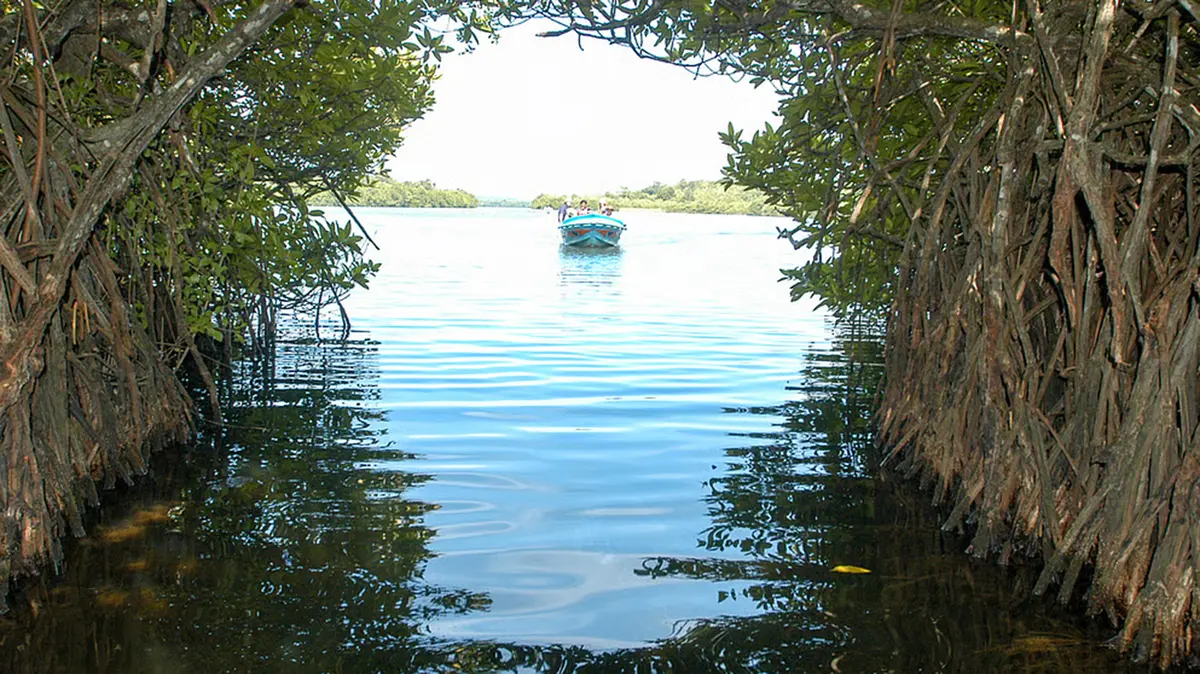
Mangroves line the edges of tropical coasts and estuaries. They trap sediment and organic matter, creating waters rich in decaying material. When this organic matter breaks down it releases CO2 into the water. At low tide there is less mixing with the sea, so CO2 levels can spike and oxygen levels fall. This combination of high CO2 (hypercapnia) and low oxygen (hypoxia) makes it difficult for fish and other organisms to breathe. Until recently, the phenomenon was thought to be rare, but scientists have now shown it occurs regularly and will become more common as waters warm.
Key findings
- Widespread stress: The survey found that most mangrove sites already experience mild hypercapnic hypoxia 34 – 43 percent of the time and severe events 6 – 32 percent of the time.
- Climate projections: Modelled scenarios suggest that by 2100 oxygen levels in mangrove waters could fall by 5 – 35 percent while CO2 concentrations could rise by 8 – 60 percent. Extreme events are likely to be 15 times more frequent and may last 12 – 24 hours at a stretch.
- Temperature link: Warming amplifies the problem; a 10 °C rise in water temperature can reduce dissolved oxygen by 30 percent and increase CO2 by 50 percent. Heatwaves shrink the safe window during which juvenile fish can enter mangroves to feed and shelter.
- Impacts on fisheries: Fish species that tolerate low oxygen are small and less valuable. Larger reef‑associated species such as silver‑biddy, silver grunt and pink‑ear emperor require higher oxygen levels. If mangrove nurseries become hypoxic more often, valuable species will decline and catch composition will shift.
- Socio‑economic importance: Mangroves support about 20,000 extra fish per hectare each year, an ecological service worth around US$10 million per hectare. Globally an estimated 4 million coastal fishers rely on mangrove ecosystems for their livelihood.
Significance
- Early warning: The research shows that hypercapnic hypoxia is not a distant threat but a present reality in many estuaries. Recognising this helps policymakers prioritise mangrove protection and restoration.
- Call for action: Managing freshwater inflows, reducing nutrient run‑off and conserving mangroves can improve water quality and buffer the impacts of climate change. Monitoring programmes are needed to detect low‑oxygen events and protect fish habitats.
- Livelihoods at stake: Millions of people in tropical countries depend on mangrove fisheries. Without intervention, declining fish nursery function could undermine food security and local economies.
Conclusion
Hypercapnic hypoxia in mangrove waters highlights how rising temperatures and carbon emissions affect even sheltered coastal ecosystems. By understanding the drivers and impacts of this phenomenon, communities and governments can implement measures to safeguard both biodiversity and human livelihoods.
Source: Down To Earth

