

Why in news?
India and Brazil signed a telecommunications and Information and Communication Technologies cooperation agreement in Pune on 21 August 2026. Communications Minister Jyotiraditya M. Scindia and Brazilian Communications Minister Frederico de Siqueira Filho signed it. The agreement followed the twelfth Brazil, Russia, India, China and South Africa (BRICS) Communications Ministers’ Meeting. India chaired the wider grouping during 2026. The arrangement covers connectivity, cybersecurity, digital public infrastructure and emerging technologies. Specific projects will still require separate plans, funding and technical decisions.
Areas covered by the agreement
The Memorandum of Understanding (MoU) includes telecom policy, regulation and spectrum management. It also covers artificial intelligence, fifth-generation and sixth-generation networks. Other fields include Open Radio Access Networks and the Internet of Things. The countries may cooperate on satellite communications, non-terrestrial networks and direct-to-device services.
Infrastructure cooperation can include fibre networks and submarine cables. The document also mentions cybersecurity, consumer protection and capacity building. Digital public infrastructure offers another area for exchanging experience. Officials can share regulatory practices and support institutional contact. The breadth is useful, but later work must identify priorities and timelines.
Why India and Brazil are natural partners
Both countries are large federal democracies with wide internal development gaps. They must connect remote communities while keeping services affordable. India has experience with population-scale digital identity, payments and public platforms. Brazil has developed extensive electronic government and instant-payment systems. Each country can learn without copying the other’s model unchanged.
Their telecom markets also serve large populations across difficult terrain. Both need resilient networks and greater technology choice. Joint testing or standards work could support local industry. Cooperation may improve bargaining within global standard-setting bodies. It can also connect companies, research institutions and regulators.
Brazil’s geography and connectivity challenge
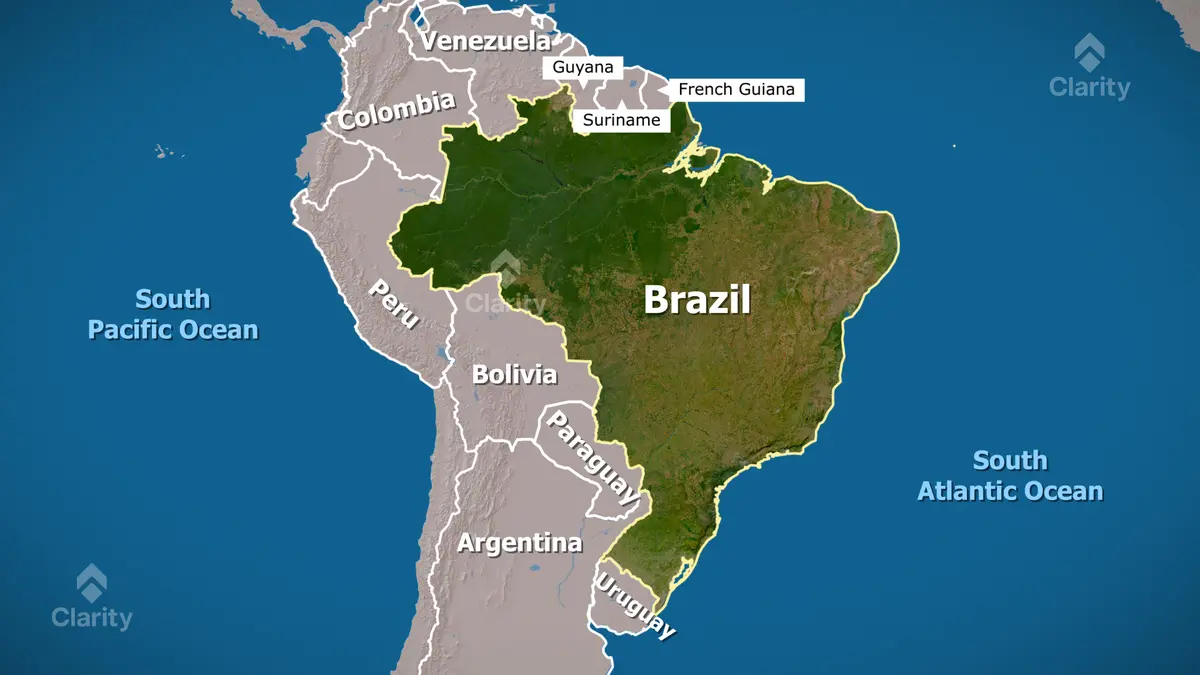
Brazil occupies nearly half of South America and faces the Atlantic Ocean. It borders every South American country except Chile and Ecuador. Its neighbours include Argentina, Bolivia, Colombia, Guyana, Paraguay, Peru, Suriname, Uruguay and Venezuela. It also meets French Guiana, an overseas territory of France. This geography creates long terrestrial and maritime communication routes.
The Amazon basin covers much of northern Brazil. Rivers connect many settlements where road access remains limited. Dense forest, seasonal floods and enormous distances raise network costs. The populous Atlantic coast has major urban and industrial centres. Brazil therefore combines remote-connectivity needs with sophisticated metropolitan demand.
Digital public infrastructure and inclusion
Digital public infrastructure includes shared systems supporting identity, payments and trusted data exchange. These foundations can lower the cost of public and private services. They also create concentrated risks. Weak cybersecurity or poor consent rules can affect millions of users. Accessibility and offline options remain essential for inclusion.
India can share lessons from large digital platforms and rural service delivery. Brazil can contribute experience from its banking, government and Amazon connectivity programmes. Any transfer must follow domestic law. Technical systems should respect language, federal responsibilities and local institutions. Cooperation should therefore focus on principles, interoperability and tested use cases.
New networks and technological choice
Open Radio Access Networks separate some mobile-network components through open interfaces. Supporters expect wider vendor choice and local innovation. Integration can be complex because equipment from several suppliers must work reliably together. Joint laboratories could test security and performance. Commercial deployment should follow evidence rather than promotional claims.
Non-terrestrial networks use satellites or high-altitude platforms to extend coverage. Low Earth orbit systems may reach isolated areas faster than terrestrial fibre. They still need spectrum coordination, ground infrastructure and affordable user equipment. Direct-to-device links can support emergency communication. They cannot replace all high-capacity terrestrial networks.
Cybersecurity and strategic importance
Telecom networks carry government, financial and personal information. Supply-chain security therefore matters alongside price. India and Brazil can exchange incident-response practices and security testing methods. They can also coordinate against fraud and network abuse. Sensitive information sharing will require clear safeguards and trusted institutional channels.
The partnership also strengthens cooperation between two major Global South countries. Both belong to BRICS, the Group of Twenty and other multilateral forums. Shared positions can influence debates on standards and digital inclusion. However, strategic language should lead to practical outcomes. Training numbers, pilots and adopted standards should be reported publicly.
From agreement to implementation
A Memorandum of Understanding usually records intentions and cooperation areas. It does not automatically create a funded project or binding market access. Working groups must identify responsibilities and deadlines. Regulators and companies should participate where relevant. Privacy, procurement and competition law continue to apply.
Early projects could focus on skills, rural connectivity or test laboratories. Clear benchmarks would make progress visible. Each pilot should state costs, beneficiaries and cybersecurity controls. Evaluation should compare promised and actual service improvements. Successful models can then expand through regular public processes.
A broad framework needs focused delivery
The agreement covers many promising fields. Its value will depend on a small number of well-designed projects. Shared standards, technical training and rural-connectivity pilots offer practical starting points. Public milestones can prevent the framework from remaining only diplomatic language.
Conclusion
The India–Brazil agreement brings digital cooperation into a stronger institutional framework. Their scale and federal systems create useful common ground. Geographic differences also offer complementary lessons in remote connectivity. The next stage should select practical, secure and measurable projects. Cooperation will matter most when it lowers access costs, strengthens resilience and protects users. Broad ambition must now become transparent implementation.