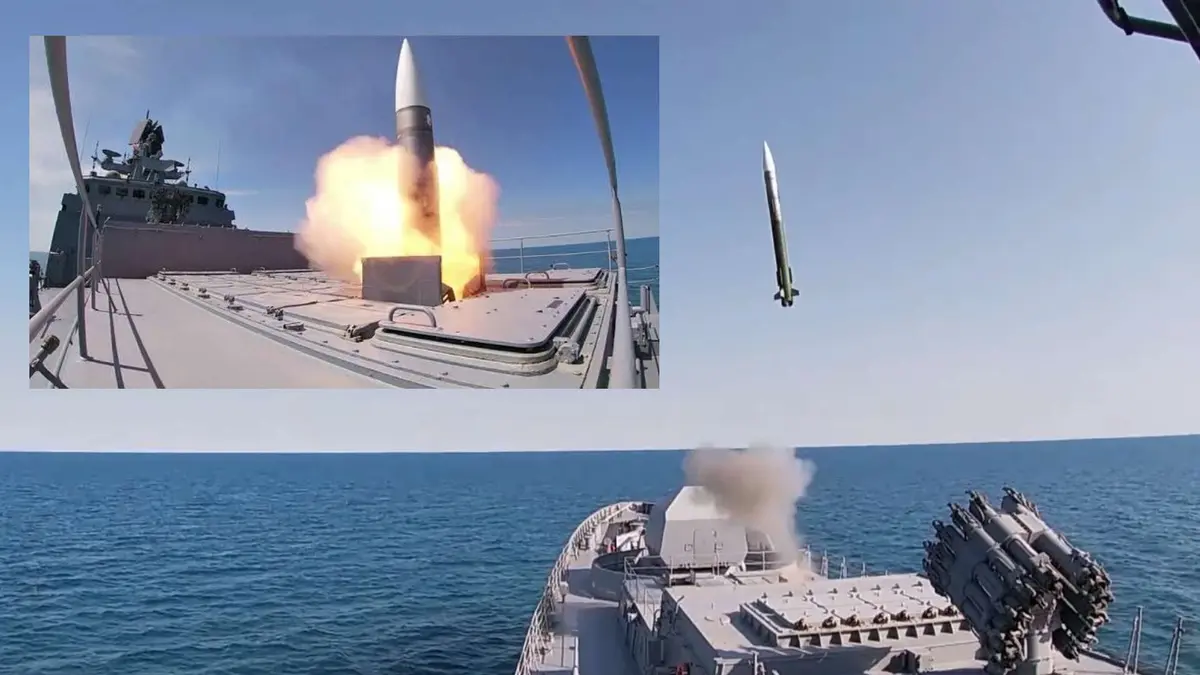
Why in news?
India signed a contract in early March 2026 worth roughly ₹21.8 billion (about $238 million) with Russia’s state arms exporter, Rosoboronexport, to procure Shtil‑1 vertical‑launch surface‑to‑air missiles for the Indian Navy. The purchase aims to bolster the layered air‑defence capability of frontline warships.
Background
The Shtil‑1 system is a naval adaptation of Russia’s Buk family of medium‑range surface‑to‑air missiles. Earlier Indian frigates, particularly those of the Russian‑designed Talwar‑class, already use Shtil missiles launched from trainable rails. The vertical‑launch variant, however, allows missiles to be fired in any direction almost instantly, providing all‑round defence against modern aerial threats.
Key features of the Shtil‑1 system
- Vertical launch: Missiles are housed in vertical cells below deck and can be launched straight upward, after which they tilt toward the target. This design offers 360‑degree coverage and faster reaction times compared with older rail‑launch systems.
- Medium‑range interception: The 9M317ME missile used in the system can engage aircraft, helicopters, unmanned aerial vehicles and sea‑skimming anti‑ship missiles at ranges up to about 50 kilometres and altitudes up to 15 kilometres.
- High speed and guidance: The missile travels at speeds exceeding Mach 3. It uses semi‑active radar homing guided by the ship’s fire‑control radars to track and destroy manoeuvring targets.
- Role in layered defence: On a warship, Shtil‑1 acts as a medium‑range layer between long‑range area‑defence missiles and short‑range close‑in weapon systems. Together, these layers provide comprehensive protection against multiple simultaneous threats.
- Platform integration: The new missiles will equip existing Indian Navy frigates fitted with vertical launchers. Each vessel typically carries around 24 missiles, enabling sustained operations during extended deployments.
Strategic importance
- Countering evolving threats: Anti‑ship missiles and armed drones are proliferating in the Indo‑Pacific region. Upgraded air‑defence capabilities are essential to safeguard India’s carrier battle groups, amphibious task forces and merchant shipping.
- Interoperability with Russian platforms: The procurement underscores the long‑standing defence partnership between India and Russia. Many Indian Navy frigates and submarines are of Russian origin, so acquiring compatible missile systems simplifies logistics and training.
- Enhancing mission readiness: Having ample stocks of medium‑range interceptors ensures that ships can remain at sea for longer without resupply, maintaining combat effectiveness during crises.
Conclusion
The Shtil‑1 missile contract represents a significant investment in the Indian Navy’s air‑defence umbrella. By adopting vertical‑launch technology and replenishing missile stocks, India is enhancing the survivability of its surface fleet in contested waters.
Source: Army Recognition · Naval Today