
Why in news?
Severe flooding struck central and southern provinces of Mozambique in early 2026 after weeks of torrential rain. Responding to appeals from Maputo, India dispatched 500 metric tonnes of rice, 10 tonnes of relief supplies and 3 tonnes of critical medicines on board an Indian Navy vessel. This humanitarian assistance reflects India’s role as a first responder in the Indian Ocean region.
Background
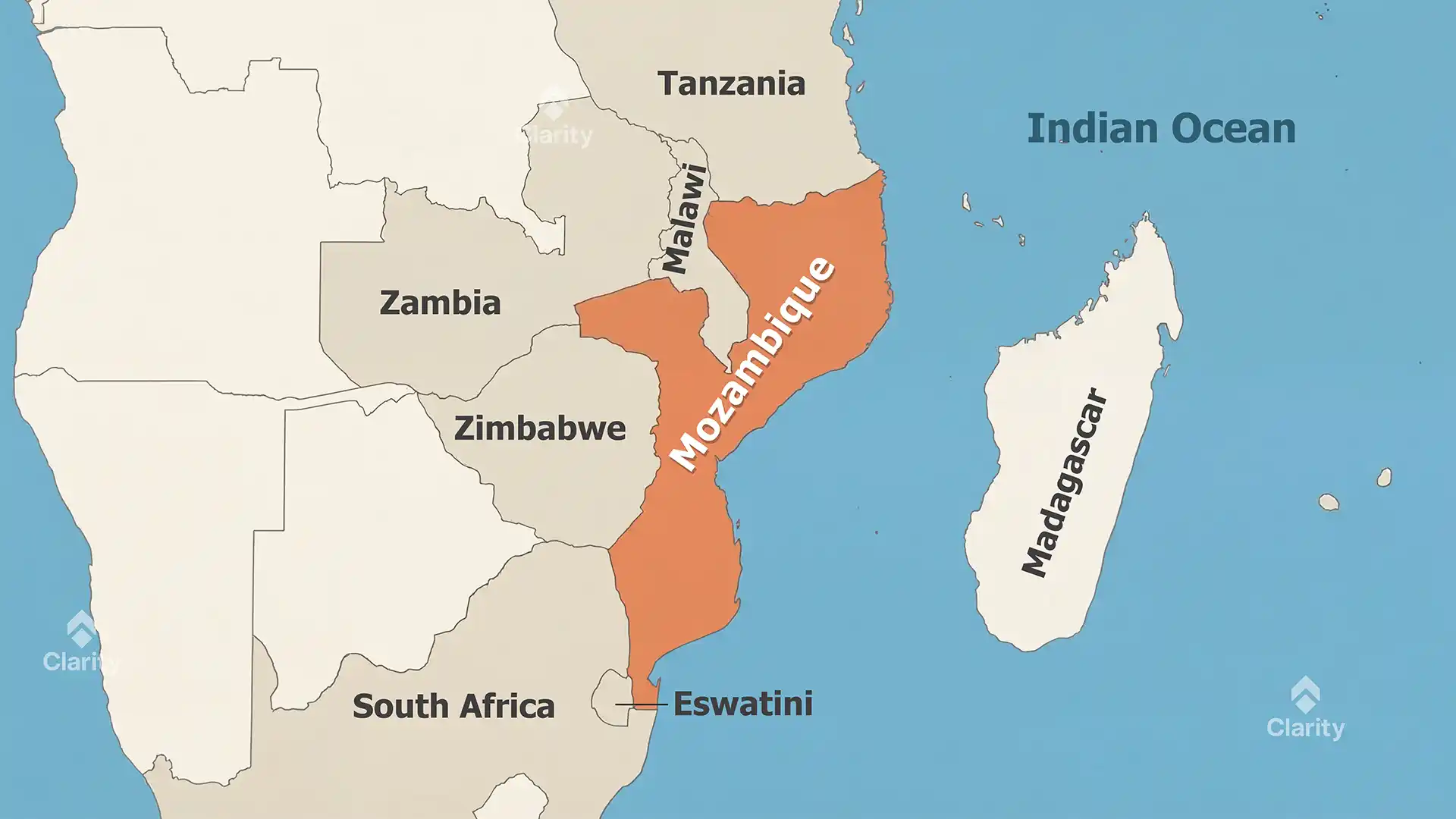
Mozambique lies on Africa’s south‑east coast along the Mozambique Channel. Its long coastline and the presence of major rivers like the Zambezi and Limpopo make it highly vulnerable to cyclones and floods. The country frequently ranks among the world’s most climate‑exposed nations.
About the 2026 floods
- Nature of the disaster: Unusually heavy rains from January to March caused rivers to burst their banks, inundating farmland and towns in provinces such as Zambezia, Sofala and Gaza. Hundreds of thousands of people were displaced, and roads and bridges were damaged.
- India’s assistance: The Indian government sent 500 tonnes of rice to alleviate food shortages, along with tents, tarpaulins, hygiene kits and water‑purification tablets. Three tonnes of medicines were dispatched to treat water‑borne diseases. Earlier, India had shipped 86 tonnes of life‑saving medicines by sea.
- Part of broader engagement: India and Mozambique have long‑standing ties, especially in energy and agriculture. Under the “Security and Growth for All in the Region” (SAGAR) vision, India aims to be the first responder to humanitarian crises in the Indian Ocean. Relief missions also demonstrate solidarity with African partners.
- Mozambique’s vulnerability: Located downstream of large river basins, the country is prone to flooding even from rains in neighbouring countries. Poor drainage infrastructure and deforestation exacerbate the impact.
The way forward
Experts emphasise investment in early warning systems, resilient infrastructure and mangrove restoration to reduce future flood damage. India’s aid is immediate relief, but long‑term solutions will depend on climate adaptation and sustainable development in Mozambique.
Sources: News on Air.

