

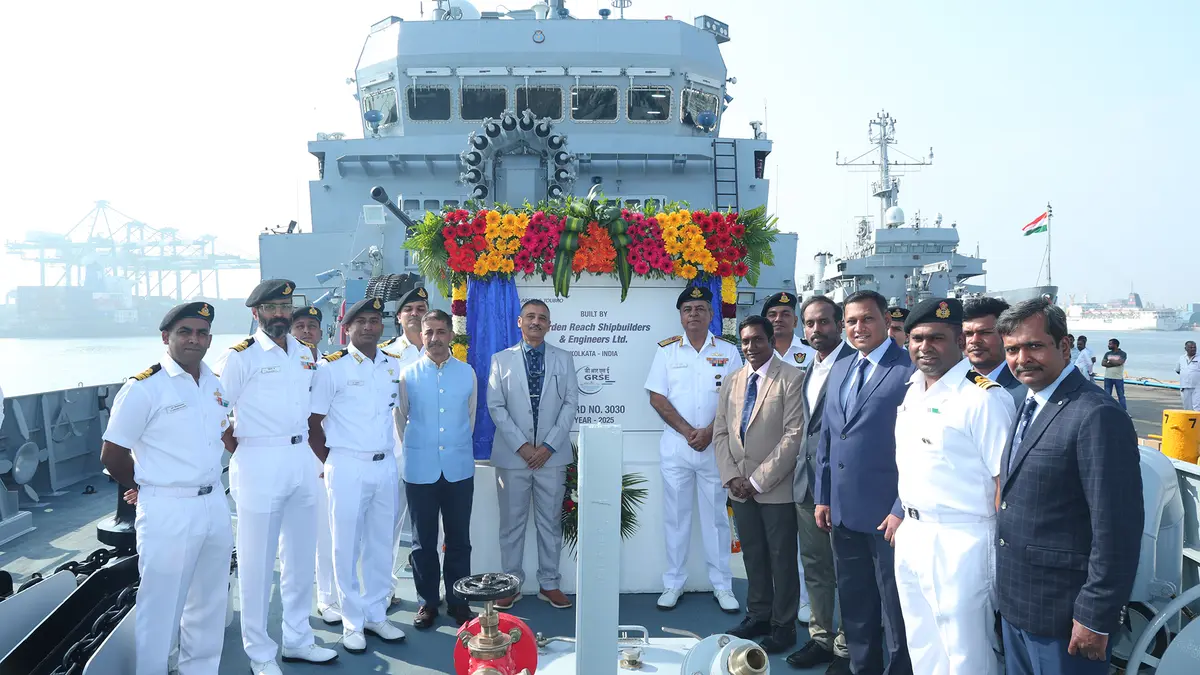
Why in news?
The Indian Navy took delivery of Anjadip on 22 December 2025 in Chennai. It is the third in a series of eight Anti‑Submarine Warfare Shallow Water Craft (ASW SWC) designed and built in India. The vessel is expected to strengthen coastal defence and showcases the success of the “Atmanirbhar Bharat” programme.
Background
In April 2019 the Ministry of Defence signed a contract with Garden Reach Shipbuilders & Engineers (GRSE) to build eight ASW SWC ships for the Indian Navy. These vessels are designed to protect India’s coastal waters from enemy submarines and to perform mine‑laying and surveillance missions. The name Anjadip honours the former INS Anjadip corvette and the island off Goa known for its naval heritage.
Key features
- Size and propulsion: The ship is about 77 metres long, displaces around 900 tonnes and uses water‑jet propulsion. It can reach speeds of up to 25 knots and has an endurance of roughly 1 800 nautical miles.
- Weapons and sensors: Anjadip carries lightweight torpedoes, indigenous anti‑submarine rockets and a shallow‑water hull‑mounted sonar. It also has small‑calibre guns for surface defence and can lay mines.
- Stealth and technology: The hull incorporates acoustic dampening and low‑observation features to reduce detectability. Indigenous content exceeds 80 per cent, including the propulsion system, sensors and combat management system.
- Mission role: The vessel will conduct anti‑submarine patrols in coastal and shallow waters, escort high‑value assets, support search‑and‑rescue missions and undertake surveillance. It will replace ageing Abhay‑class corvettes.
- Programme status: GRSE and Cochin Shipyard are building eight ASW SWCs each. Deliveries will continue through 2027. Despite delays in sensor supply, the programme demonstrates India’s capacity to design and build sophisticated warships.
Significance
- Strengthens India’s anti‑submarine capabilities in littoral zones where diesel‑electric submarines can operate stealthily.
- Boosts indigenous shipbuilding under the “Make in India” initiative, creating jobs and technology transfer within the country.
- Enhances coastal surveillance and maritime security, contributing to the safety of sea lanes, ports and offshore assets.
Source: Press Information Bureau