

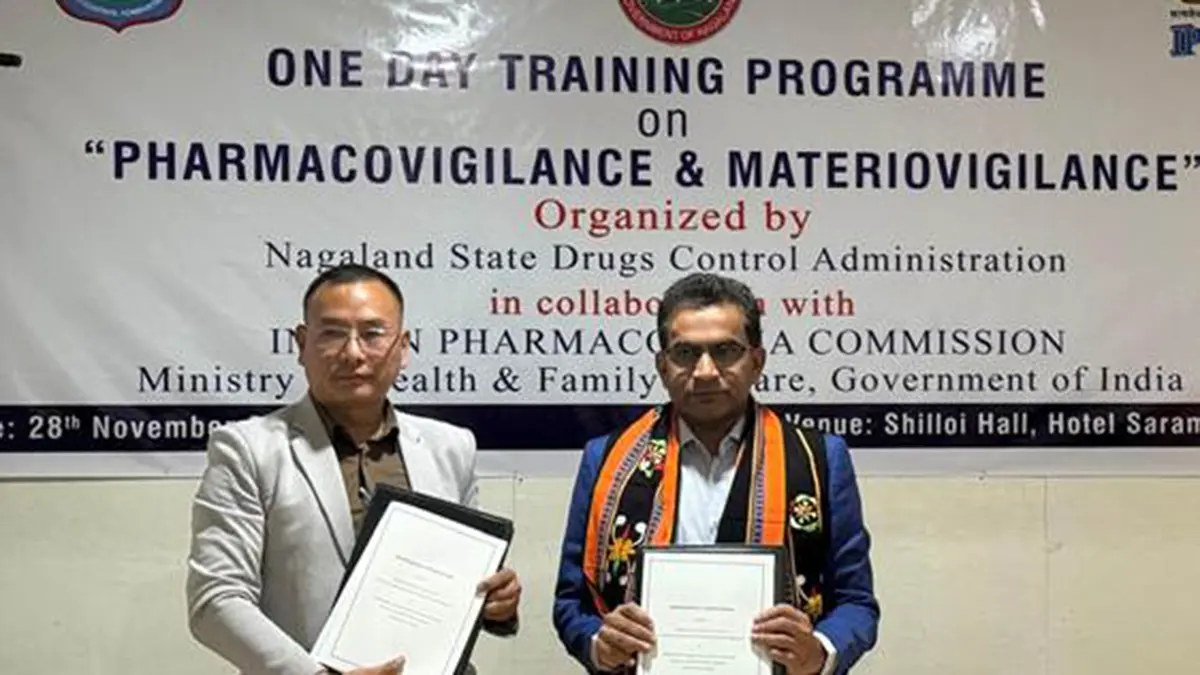
Why in news?
On 28 November 2025 the Indian Pharmacopoeia Commission (IPC) signed memoranda of understanding with the Nagaland Medical Council, the State Drugs Control Administration and the Nagaland State Pharmacy Council. The agreements aim to enhance monitoring of adverse drug reactions and the safe use of medicines and medical devices across the state.
Background
Established in 2005 and functioning since 2009, the IPC is an autonomous institution under the Ministry of Health & Family Welfare. Headquartered in Ghaziabad, it is responsible for setting and updating standards for the quality, purity and strength of medicines marketed in India. It publishes the Indian Pharmacopoeia – the official compendium of drug standards – and supplies reference standards for laboratory testing. The Commission also compiles the National Formulary of India and runs the Pharmacovigilance Programme of India, which monitors the safety of medicines.
Key elements of the MoUs
- Pharmacovigilance and materiovigilance: The agreements aim to strengthen the reporting and investigation of adverse drug reactions and medical device incidents. New monitoring centres will be established in hospitals and rural health centres.
- Capacity building: Doctors, pharmacists and healthcare workers will receive training on identifying, documenting and reporting adverse events. Emphasis will be placed on using the National Formulary of India to ensure rational prescribing.
- State–national collaboration: Nagaland Medical Council becomes the first state medical council to partner formally with the IPC. The collaboration is expected to improve drug safety surveillance in remote areas where reporting has traditionally been weak.
- Public awareness: Awareness campaigns will educate patients about the importance of reporting side‑effects and using medicines responsibly. Feedback mechanisms will help regulators identify unsafe products quickly.
Role of the Indian Pharmacopoeia Commission
Beyond setting standards, the IPC undertakes several functions:
- Revision and publication of monographs for pharmaceutical ingredients, excipients and dosage forms.
- Certification and distribution of reference substances to laboratories and manufacturers for quality assurance.
- Training of analysts, pharmacists and regulatory officials in quality control and Good Laboratory Practices.
- Collaboration with international bodies such as the World Health Organization to harmonise standards.
Conclusion
The MoUs between the IPC and Nagaland’s medical and regulatory institutions mark an important step toward strengthening drug and device safety at the state level. By building local capacity and fostering a culture of pharmacovigilance, the initiative aims to ensure that patients receive safe, effective and quality‑assured medicines.
Source: PIB