

Why in news?
Civil‑society naturalists in Visakhapatnam recently documented large groups of Indian Pond Herons and Cattle Egrets undertaking nocturnal flights along India’s east coast. The birds were seen leaving inland roosts after sunset and travelling southwards over several nights, reviving observations first reported from Chennai in the 1990s. These sightings suggest that some pond herons may perform previously unknown seasonal movements.
Background
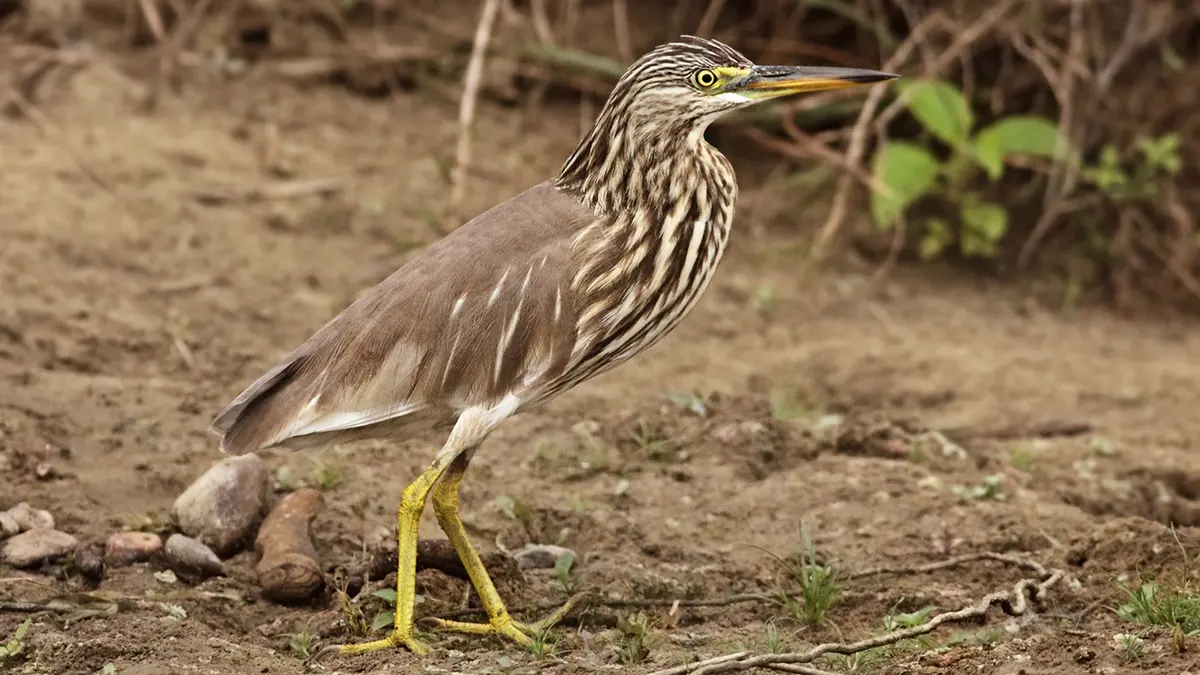
The Indian Pond Heron (Ardeola grayii), also called the paddybird, is a small heron found across South and Southeast Asia. It has a stocky build with a short neck and thick bill. In its non‑breeding plumage the bird appears dull brown and buff, blending seamlessly into muddy wetlands. During the breeding season, however, it develops maroon and chestnut back plumes and a long crest. The wings remain white throughout the year, flashing brightly when the bird takes flight. The species inhabits shallow wetlands – both natural and man‑made – including ponds, rice fields, marshes, mangrove creeks and urban tanks. Its range extends from Iran across the Indian subcontinent to Myanmar and Sri Lanka. Indian Pond Herons are solitary feeders, often seen standing motionless at the water’s edge before striking rapidly at fish, frogs, crustaceans and insects.
Recent observations
- Night flights: Citizen scientists in Andhra Pradesh observed herons and egrets leaving wetland roosts after dusk and flying southwards in loose formations over several nights between June and September.
- Historical records: Similar movements were noted by ornithologists in Chennai in the 1990s. The new observations indicate that this pattern continues and may be more widespread than previously thought.
- Possible drivers: Researchers speculate that falling water levels in northern wetlands or changing agricultural cycles may prompt the birds to move to wetter areas further south. Systematic monitoring is needed to understand these movements fully.
Conservation status
- IUCN status: Least Concern, reflecting its wide distribution and adaptability to modified habitats.
- Legal protection: The species is listed in Schedule IV of India’s Wildlife (Protection) Act, 1972, affording it basic safeguards.
- Threats: Habitat loss due to wetland drainage and pollution, disturbance at breeding colonies and indiscriminate use of pesticides can affect local populations. However, its ability to live alongside humans has allowed the species to remain common.
Conclusion
The Indian Pond Heron is a familiar sight in rice paddies and urban ponds, yet aspects of its behaviour remain poorly understood. The recent sightings of nocturnal movements along the east coast highlight the importance of citizen science in uncovering such patterns. Continued observation and protection of wetlands will ensure that these elegant birds continue to thrive.
Sources: Heron Conservation · TH