

Why in news?
The Bombay Natural History Society (BNHS), with support from the National Mission for Clean Ganga, launched a new project to safeguard breeding habitats of the Indian skimmer and other river birds. The project, inaugurated by Union Minister C.R. Patil, will monitor nesting sandbars along the Ganga and Chambal rivers and involve local communities as “nest guardians”.
Background
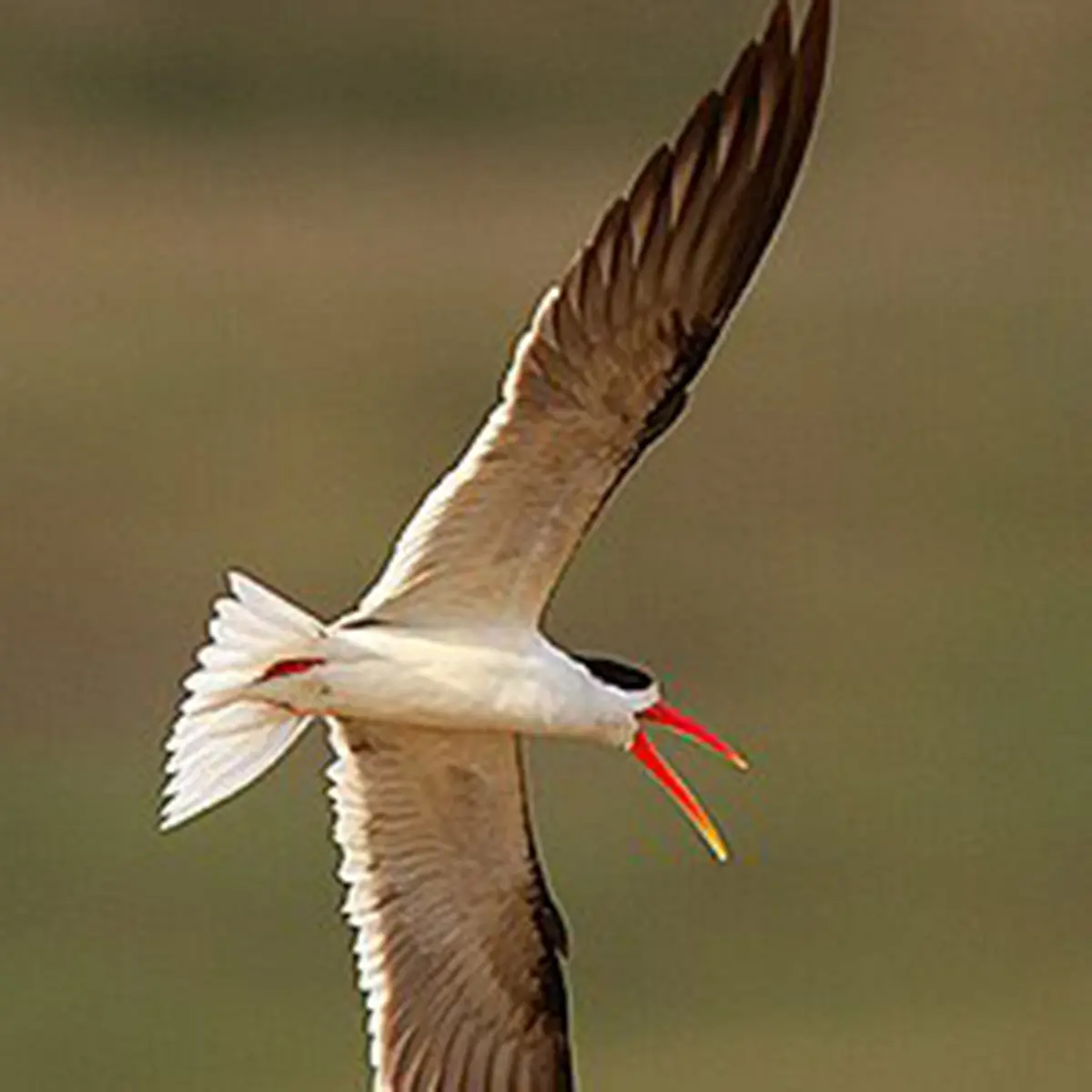
The Indian skimmer (Rynchops albicollis) is an Endangered river bird known for its distinctive orange bill with a longer lower mandible. It inhabits large rivers and estuaries in India, Pakistan, Bangladesh and Myanmar, where it feeds by skimming the water surface to catch fish. Once found across the Indian subcontinent, it has disappeared from Laos, Cambodia and Vietnam. The global population is estimated at fewer than 4,000 adults. The species nests on bare sandbanks during the dry season, making its eggs and chicks vulnerable to disturbance and predators.
About the conservation project
- Monitoring sandbars: BNHS teams will survey nesting sites along stretches of the Chambal and Ganga rivers to record breeding success, threats and habitat condition.
- Community participation: Local villagers will be trained and employed as “nest guardians” and “river guardians”. They will protect eggs and chicks from dogs, jackals and human disturbance while earning a livelihood.
- Threat mitigation: The project will work with authorities to regulate sand mining, manage water releases from dams and minimise human activities that disrupt nesting birds.
- Broader impact: Protecting sandbars will also benefit other river birds such as black‑bellied terns, river terns, lapwings and pratincoles that share the habitat.
Why the species is threatened
- Habitat loss: Dams, sand mining and altered river flows reduce the number of suitable nesting sandbars.
- Disturbance and predation: Livestock, feral dogs and human visitors often trample nests or prey on eggs and chicks.
- Pollution: Industrial effluents and plastic waste degrade river ecosystems, affecting fish populations and the birds’ health.
Significance
- Saving an Endangered species: With India hosting about 90 percent of the global population, local action is crucial for the survival of the Indian skimmer.
- Community livelihoods: Involving local people provides employment and fosters stewardship, ensuring that conservation benefits those who depend on river resources.
- Riparian ecosystem health: Protecting sandbars helps maintain the ecological integrity of rivers, benefiting fish, amphibians and other wildlife.
Conclusion
The BNHS project represents a hopeful step for the Indian skimmer. By combining scientific monitoring with community involvement and policy advocacy, it aims to secure the future of this graceful river bird and the rich ecosystems on which it depends.
Sources: Down To Earth