
Why in news?
Wildlife officers in Uttar Pradesh intercepted a vehicle in Greater Noida and rescued 16 Indian softshell turtles that were being smuggled for sale on the black market. The reptiles were seized and later released into the wild, while the trafficker was arrested and charged under India’s wildlife laws.
Background
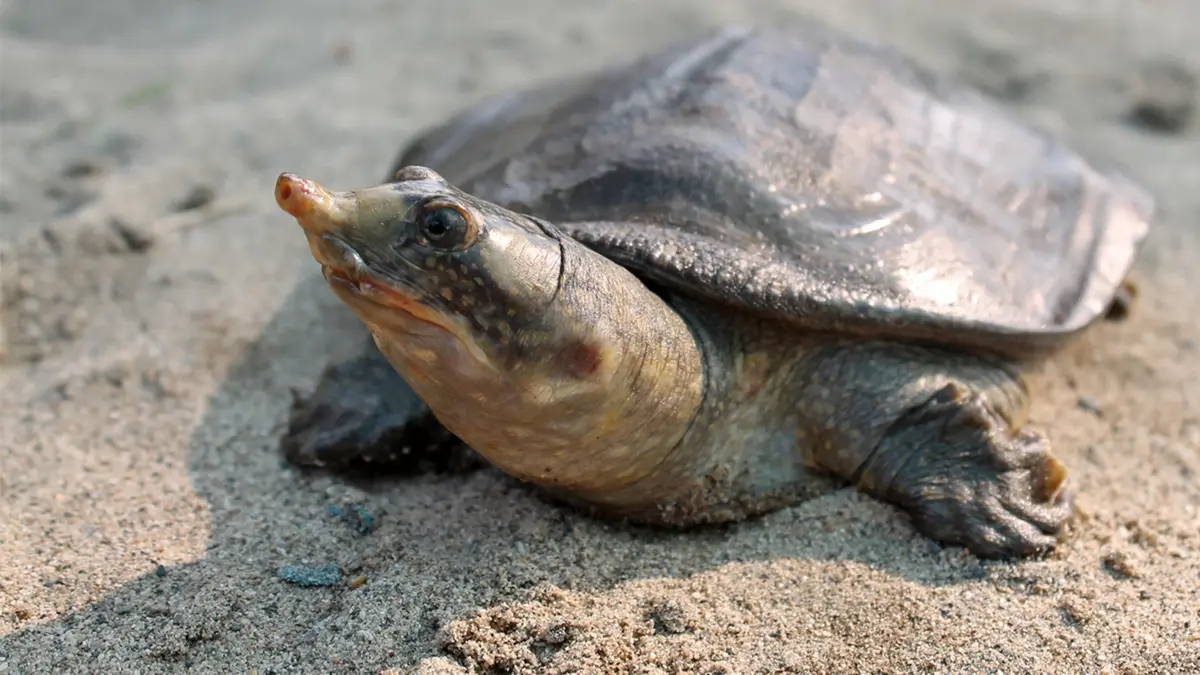
The Indian softshell turtle (Nilssonia gangetica) is a large freshwater turtle found in major river systems such as the Ganga, Indus, Brahmaputra, Narmada and Mahanadi across India, Pakistan, Bangladesh, Nepal and Afghanistan. It has a leathery carapace that can grow up to 94 centimetres and a long neck with a snorkel‑like snout. Carnivorous by nature, it feeds on fish, molluscs and carrion. The species is listed as Endangered on the IUCN Red List and is protected under Schedule I of India’s Wildlife (Protection) Act, 1972, which affords the highest level of legal protection.
Threats and trade
- Illegal trade: Softshell turtles are valued for their meat and perceived medicinal properties. Poachers collect them from rivers and wetlands and transport them to markets in neighbouring states and abroad, fetching high prices. Organized smuggling networks often transport dozens of turtles at a time.
- Habitat loss: Pollution, dam construction, sand mining and riverbank encroachment reduce the turtles’ breeding and basking habitats. Diminishing water flows in rivers further stress their populations.
- Population decline: Slow maturation and long lifespans mean that hunting adults significantly reduces reproductive output. Without effective enforcement and habitat conservation, populations may continue to decline.
Significance of the rescue
- Enforcing wildlife laws: The operation demonstrates the vigilance of police and forest officials in curbing illegal wildlife trade. Arresting traffickers and seizing protected species act as a deterrent.
- Saving endangered species: By releasing the turtles back into suitable habitats, authorities give them a chance to survive and reproduce, contributing to the species’ conservation.
- Public awareness: Media coverage of such rescues educates the public about the importance of riverine biodiversity and encourages people to report poaching incidents.
Conclusion
The recovery of Indian softshell turtles in Greater Noida is a reminder of the threats facing freshwater fauna. Strong enforcement, community vigilance and habitat protection are essential to safeguard this ancient species and uphold India’s conservation commitments.
Sources: The Indian Express, Indian softshell turtle – Wikipedia

