
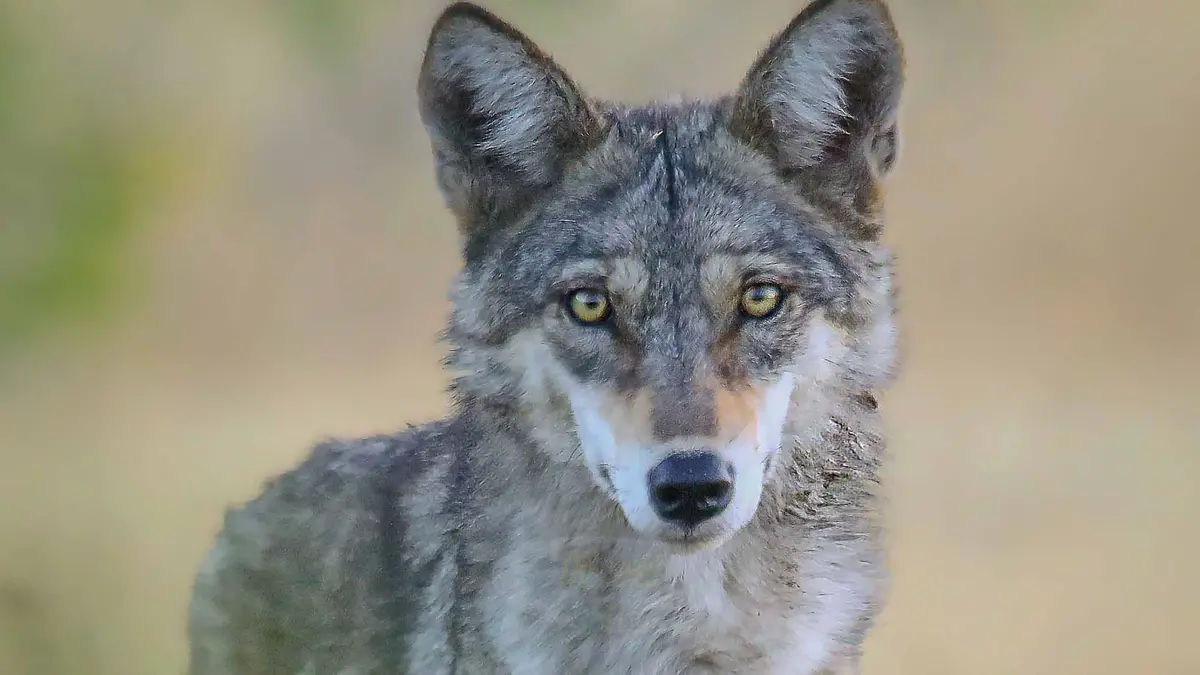
Why in news?
The International Union for Conservation of Nature (IUCN) released a 2025 assessment treating the Indian wolf as a distinct taxon and categorising it as Vulnerable. The assessment estimates only about 2,877–3,310 mature individuals in India and Pakistan, with fewer than 13 percent of their range falling within protected areas. Conservationists warn of continuing declines due to habitat loss and human conflict.
Background
The Indian wolf (Canis lupus pallipes) is an ancient lineage of the grey wolf that diverged from other wolves roughly 110 thousand years ago. Two populations exist: one in the Himalayan region (about 400–1,100 animals) and a larger group of roughly 4,000–6,000 in the semi‑arid grasslands and scrublands of peninsular India. These wolves have a tawny coat and smaller stature adapted to hot, open plains.
Ecology and threats
- Habitat: Indian wolves inhabit scrub, thorn forests and semi‑arid grasslands. Most live outside protected areas, often sharing space with pastoralists.
- Diet and conflict: They hunt antelopes, hares and smaller mammals but increasingly prey on livestock due to the decline of wild herbivores, leading to conflict with shepherds. Adequate compensation for livestock losses can improve tolerance.
- Threats: Major threats include habitat loss to agriculture and development, persecution in retaliation for livestock predation, hybridisation and disease transmission from feral dogs, and road kills in landscapes lacking wildlife corridors.
- Conservation status: Only about 12 percent of the wolf’s distribution lies inside protected areas, making community‑based conservation and habitat corridors essential for its survival.
Significance
- The Indian wolf is among the oldest wolf lineages and an apex predator in grassland ecosystems, helping regulate herbivore populations.
- Protecting wolves can conserve India’s dwindling grasslands and associated species like the blackbuck and great Indian bustard.
Source: The Hindu

