

Why in news?
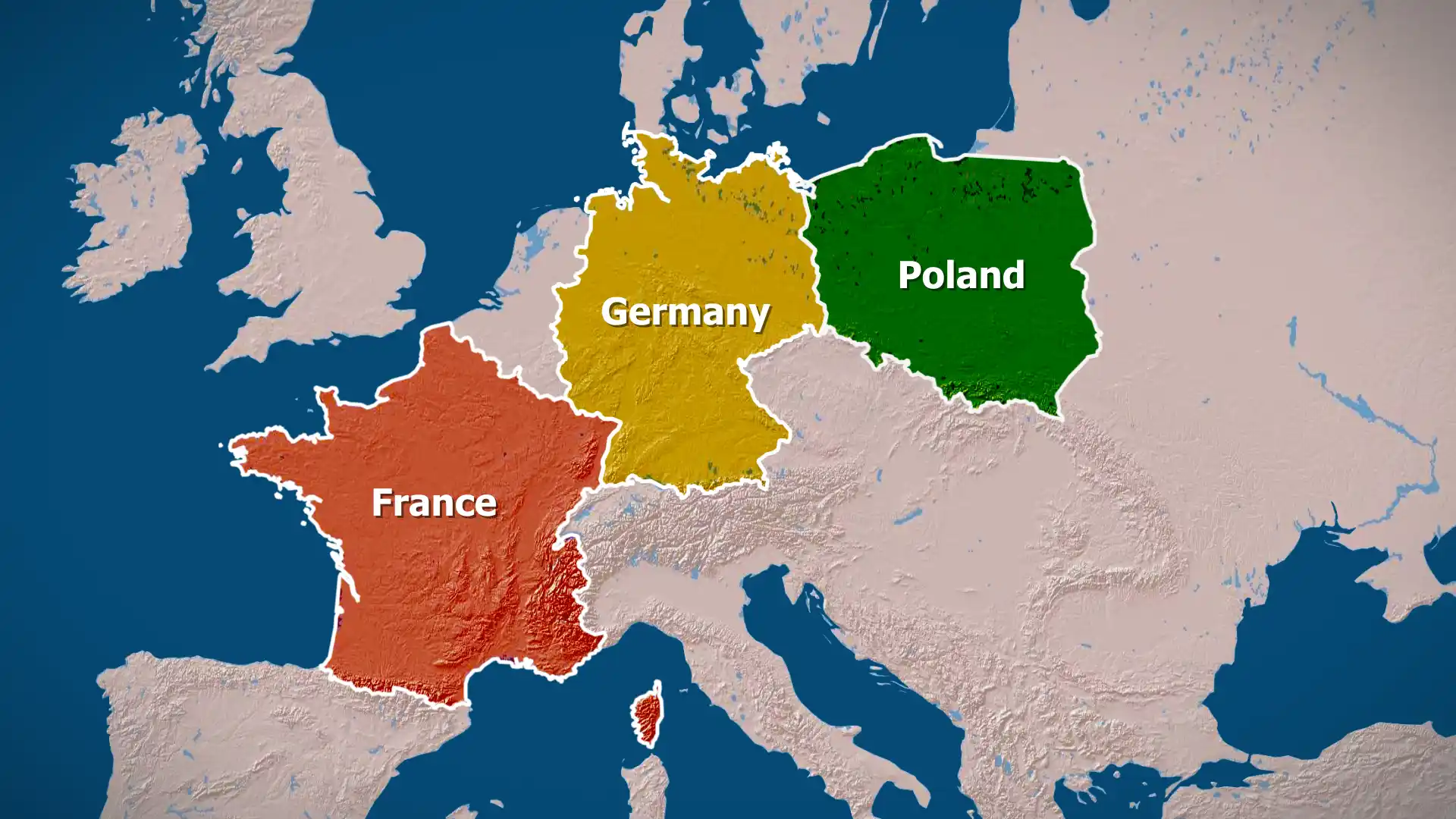
For the first time, India participated in a meeting of the Weimar Triangle, a political grouping of France, Germany and Poland. External Affairs Minister S. Jaishankar met his French and Polish counterparts in Paris, reflecting India’s growing engagement with European political forums.
Background
The Weimar Triangle was established in 1991 in the German city of Weimar. France, Germany and Poland created the forum to support Poland’s integration into the European Union and NATO after the Cold War. The grouping has no permanent secretariat, but it provides a platform for dialogue on European security, economic cooperation and regional reconciliation.
Key points from the meeting
- Focus on Ukraine: Discussions centred on ending Russia’s invasion of Ukraine and coordinating humanitarian and reconstruction assistance. The ministers emphasised respect for international law and the need for a just peace.
- India–EU cooperation: The meeting reviewed progress on a potential EU–India free‑trade agreement, highlighting opportunities in technology, climate action and sustainable connectivity. India’s efforts to diversify energy supplies away from Russia were noted.
- Strategic signalling: By inviting India, the Weimar Triangle signalled its desire to build bridges with Indo–Pacific democracies. India in turn underscored its commitment to a multipolar world order and rules‑based international system.
Significance for India
- Enhanced dialogue: Participation gives India a voice in European security discussions and helps harmonise positions on global challenges such as energy security, supply chains and emerging technologies.
- Diversified partnerships: India’s engagement with the trio complements its bilateral relations with France, Germany and Poland, strengthening its outreach in Europe beyond traditional partners.
- Demonstrating balance: Engaging with a European forum while maintaining strategic autonomy illustrates India’s ability to work with diverse partners without aligning exclusively with any bloc.
Conclusion
India’s invitation to the Weimar Triangle reflects growing recognition of its geopolitical weight. Continued engagement can deepen India’s ties with Europe, contribute to conflict resolution and open new avenues for cooperation in trade, innovation and security.
Sources: Hindustan Times