

Why in news?
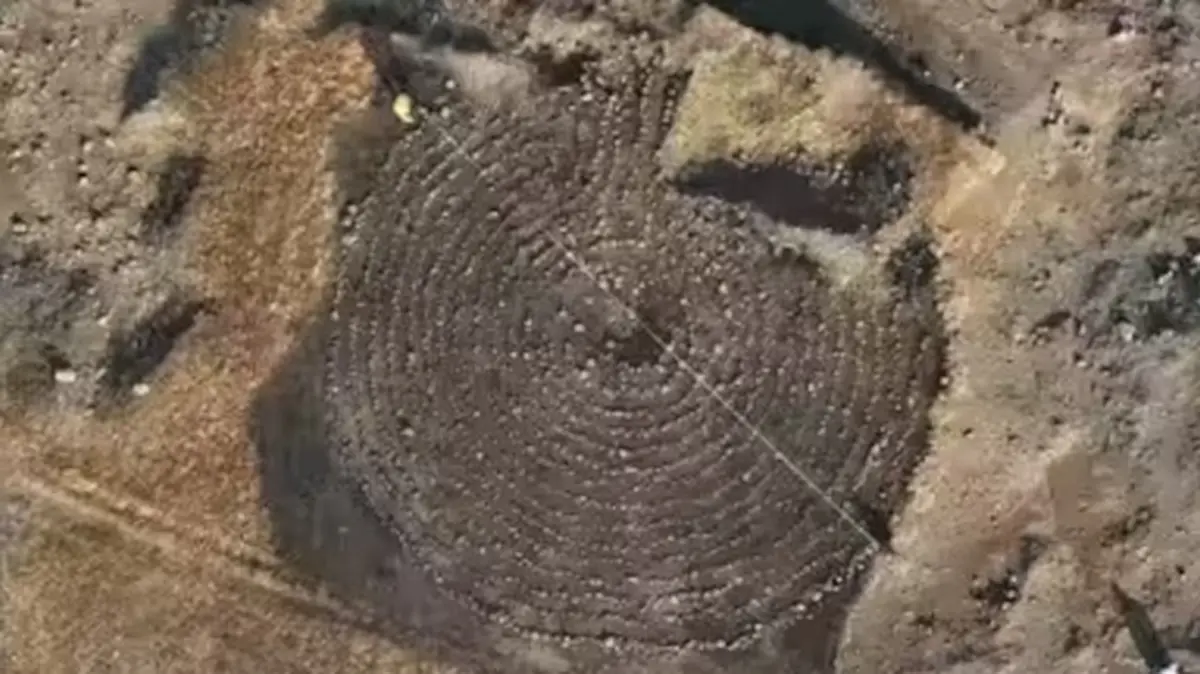
Archaeologists in Maharashtra discovered a 50‑foot‑wide circular stone labyrinth consisting of 15 concentric rings in the Boramani grasslands near Solapur. Dating back around two thousand years, it is the largest stone labyrinth found in India and offers clues about ancient trade networks.
Background
Labyrinth versus maze: A labyrinth is a single, winding path leading to a central point and back out again. Unlike a maze, it has no dead ends or branching paths and was often used for rituals, meditation or navigation.
The Boramani discovery:
- Location: The labyrinth sits on a plateau in the Boramani grasslands near the Maharashtra–Karnataka border, not far from Solapur.
- Structure: Fifteen stone circles form a spiral path covering roughly 15 m (about 50 ft) in diameter. The path leads to the centre and back out through the same opening.
- Age and culture: Archaeologists estimate it dates to the Satavahana period (around 1st–3rd century CE). Similar motifs appear on Indo‑Roman coins from that era, suggesting contact between Indian and Roman merchants.
- Discovery: A wildlife conservation NGO spotted the formation while monitoring the critically endangered Great Indian Bustard. The find was reported to archaeologists who mapped and documented the site.
- Purpose: Researchers believe the labyrinth may have served as a navigational marker for merchants or travellers, a place for ritual gatherings or a symbolic representation of the journey of life.
Significance
- Historical insight: The labyrinth reveals sophisticated knowledge of geometry among early Indian societies and hints at cultural exchanges with the Mediterranean world.
- Conservation: As the largest known stone labyrinth in India, it underscores the importance of protecting lesser‑known archaeological sites.
- Educational value: The find can be used to teach differences between labyrinths and mazes and to discuss ancient trade routes across peninsular India.
Source: IndiaToday