
Why in news?
India’s negotiations with Zambia over access to cobalt and copper deposits have stalled. A planned exploration programme covering around 9,000 square kilometres was paused because the Zambian government has not provided clear assurances regarding mining rights. India, which imports most of its copper and cobalt for use in electric vehicles and renewable‑energy technologies, is now seeking to revive talks and explore alternatives.
Background
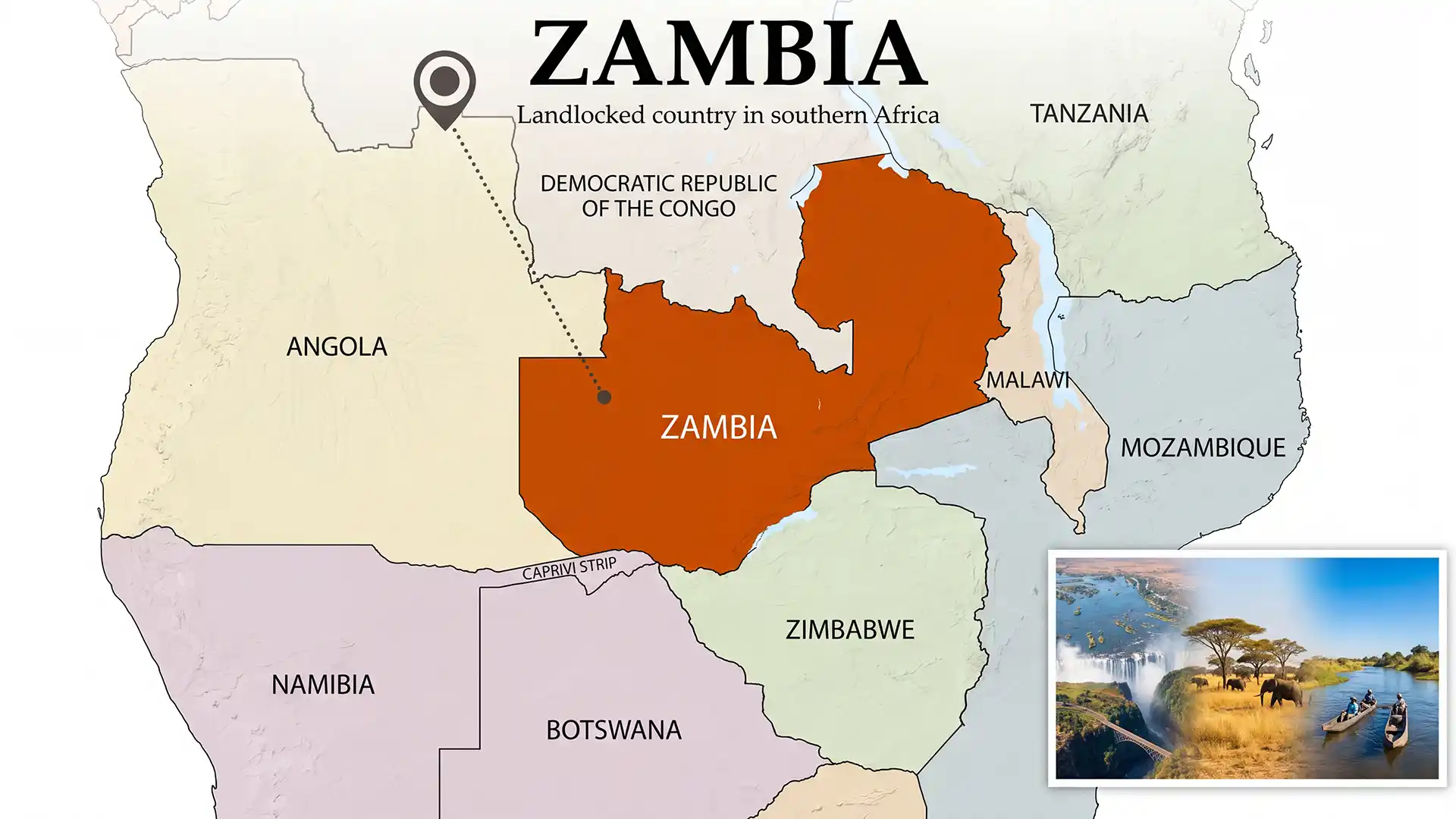
Zambia is a landlocked country in southern‑central Africa covering about 752 thousand square kilometres. It shares borders with Tanzania to the north, Malawi and Mozambique to the east, Zimbabwe and Botswana to the south, Namibia and Angola to the west and the Democratic Republic of the Congo to the north‑west. Much of Zambia lies on a high plateau 1,000–1,600 metres above sea level, intersected by deep valleys and rivers. The Zambezi River forms much of the southern border, while other major rivers include the Kafue and Luangwa. Zambia’s climate is tropical with a distinct rainy season and dry season. The country is rich in natural resources, particularly copper and cobalt, making mining a key sector of its economy. However, Zambia has faced debt pressures and seeks foreign investment to develop its mineral resources responsibly.
Key points on the stalled talks
- Exploration block: Under a memorandum of understanding signed in 2023, India was allocated a 9,000 km² area in Zambia to explore for copper, cobalt and other minerals. This was part of India’s broader strategy to secure critical minerals for its energy transition.
- Lack of assurances: Negotiations paused because Zambia did not provide clear assurances on mining rights, including the legal framework and terms for eventual extraction. Indian geologists returned home with samples but could not commence full‑scale exploration.
- Resource importance: Copper and cobalt are essential for electric vehicle batteries, power grids and electronics. India imports copper and cobalt from countries such as the Democratic Republic of the Congo and Australia and is seeking to diversify supply to reduce vulnerability to disruptions.
- Future prospects: Indian officials have said they remain interested in collaborating with Zambia and other African countries. Private‑sector participation may be invited once secure mining rights are ensured.
Significance
- Securing a stable supply of critical minerals is essential for India’s plans to expand electric mobility and renewable energy.
- For Zambia, attracting foreign investment could boost economic growth, create jobs and help manage its debt burden.
- The stalled talks highlight the importance of transparent legal frameworks and mutually beneficial agreements in cross‑border mining ventures.
Conclusion
While discussions between India and Zambia have faced hurdles, the long‑term need for critical minerals will keep both sides engaged. A fair and transparent agreement that respects Zambia’s sovereignty and ensures a reliable supply for India could benefit both nations.

