Why in news?
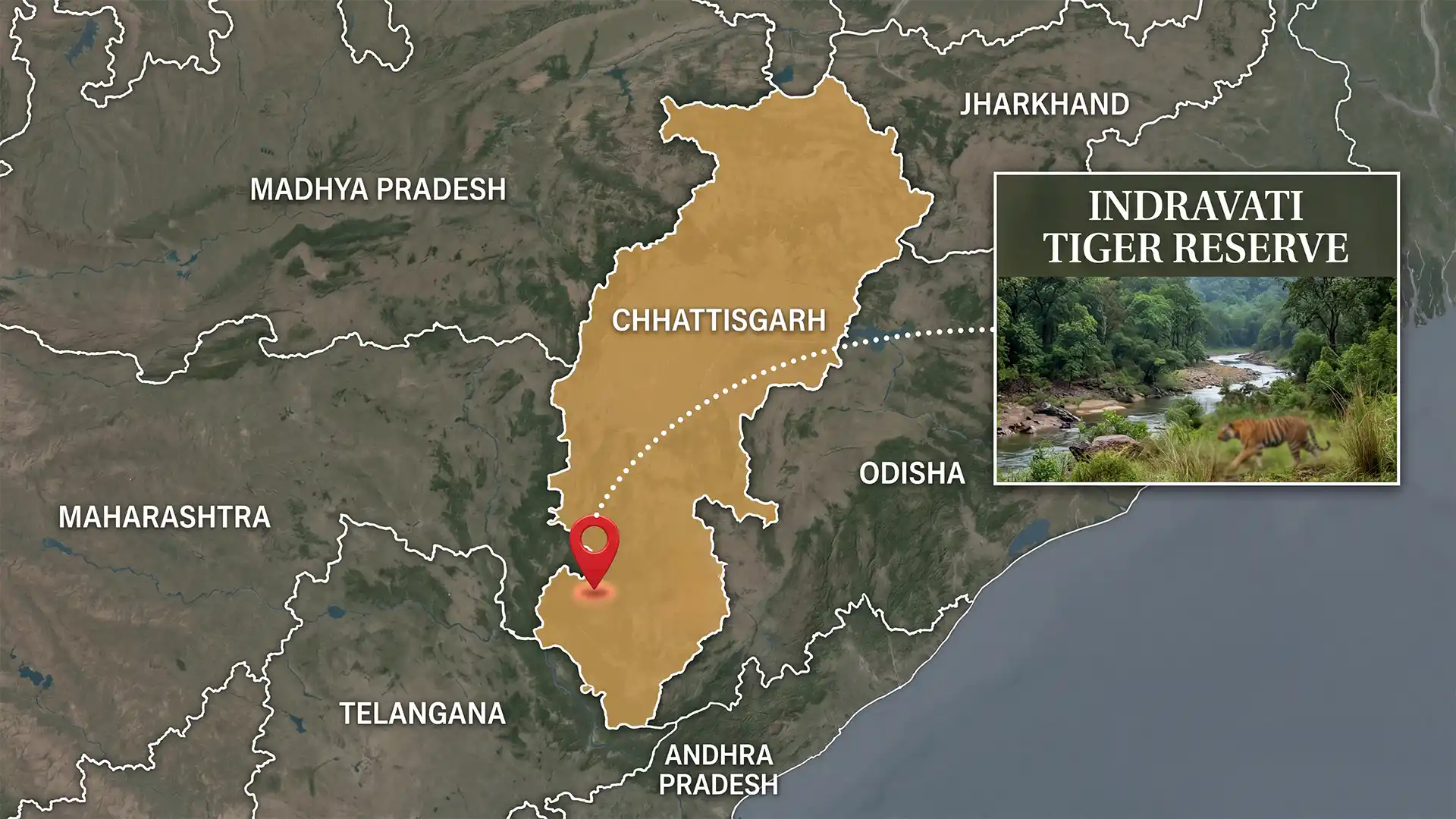
With security improving in Chhattisgarh, authorities announced plans to reopen the Indravati Tiger Reserve to tourists. The reserve had been largely inaccessible for years due to Maoist insurgency. Officials now propose creating a tourism village on the riverbank, providing eco‑tourism opportunities and training local youth as guides.
Background
The Indravati Tiger Reserve is located in the Bijapur district of southern Chhattisgarh. It began as the Indravati National Park in 1981 and was declared a tiger reserve in 1983 under the Project Tiger programme. Named after the Indravati River which flows along its northern boundary, the protected area covers about 2 799 km². It is one of the last strongholds of wild water buffaloes in central India and provides habitat for tigers, leopards, sloth bears, spotted deer and many bird species.
Key initiatives
- Tourism village: Plans include setting up a model village near the Indravati river to offer homestays, cultural experiences and nature trails, ensuring that tourism benefits local communities.
- Eco‑tourism training: Young people from nearby villages will receive training as nature guides, drivers and hospitality staff, helping them earn livelihoods while promoting conservation.
- Infrastructure development: After years of neglect due to insurgency, roads, camps and watchtowers are being improved to facilitate safe travel and wildlife monitoring.
Importance
- Conservation: Reopening the park provides funds for habitat management and anti‑poaching efforts, which help protect rare species like wild buffalo.
- Community engagement: By involving local people in tourism, authorities aim to create economic alternatives to forest exploitation and build support for conservation.
- Cultural exchange: Visitors can learn about the traditions of indigenous communities living around the reserve while enjoying nature.
Sources
Sources: TOI