

Why in news?
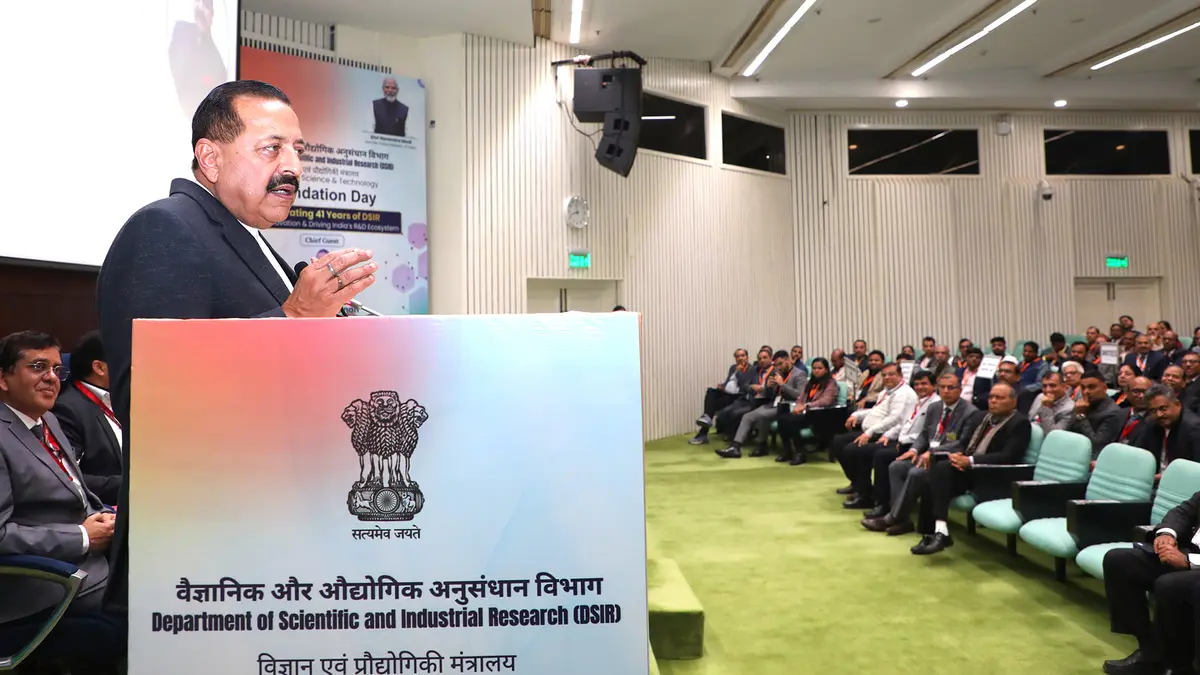
The Department of Scientific and Industrial Research (DSIR) celebrated its 42nd foundation day on 6 January 2026. On this occasion, the government announced that deep‑technology startups no longer need to be at least three years old to gain recognition under the Industrial Research and Development Promotion Programme. New guidelines and initiatives were also unveiled to accelerate research funding and disaster preparedness.
Background
The Industrial Research and Development Promotion Programme is a scheme operated by the DSIR that recognises companies with in‑house R&D facilities and enables them to access tax incentives, government grants and other forms of support. Until now, startups had to demonstrate three years of existence before they could apply. This requirement hindered early‑stage deep‑tech companies that often need substantial funding and recognition from the outset. The DSIR, which functions under the Ministry of Science and Technology, works closely with the Council of Scientific and Industrial Research (CSIR) to promote industrial innovation and foster collaboration between public research bodies and the private sector.
Key announcements
- Relaxed eligibility: Deep‑tech startups can now obtain DSIR recognition without waiting three years. This change aims to enable quicker access to tax benefits, public funding and collaborative research opportunities.
- Guidelines for in‑house R&D centres: The department released revised guidelines outlining how startups can establish and maintain recognised research centres. This includes norms for staffing, equipment, intellectual‑property management and periodic evaluation.
- PRISM Network and Creative India 2025: DSIR launched a digital platform called the Promoting Innovations in Individuals, Startups and MSMEs (PRISM) Network, nicknamed the TOCIC Innovator Pulse. It will connect innovators with technology incubators and venture capitalists. An initiative named Creative India 2025 was also announced to showcase indigenous technologies and facilitate partnerships.
- Disaster Management Plan: A new DSIR Disaster Management Plan was released to ensure that industrial R&D laboratories are prepared for emergencies such as fires, earthquakes or biohazard incidents.
Significance
- Boost to deep‑tech startups: By removing the waiting period for recognition, the government is signalling strong support for emerging fields like artificial intelligence, quantum technologies and advanced materials. Early recognition can attract investors and help startups commercialise innovations quickly.
- Strengthening innovation ecosystem: The new guidelines and digital platforms aim to build bridges between industry, academia and government labs. This collaboration can accelerate the translation of research into market‑ready products.
- Inclusive development: The revised programme emphasises gender and regional diversity among beneficiaries. By encouraging participation of women entrepreneurs and enterprises from tier‑2 and tier‑3 cities, it seeks to spread the benefits of scientific advancement.
- Preparedness: The disaster management plan underscores the need to protect valuable research infrastructure and personnel. It emphasises risk mitigation and continuity planning for laboratories and companies.
Conclusion
The refreshed Industrial Research and Development Promotion Programme reflects the government’s intent to nurture cutting‑edge innovation at the earliest stages. By lowering barriers for startups and providing structured support, the initiative hopes to transform promising ideas into commercially viable technologies and strengthen India’s position in the global knowledge economy.
Source: Press Information Bureau