

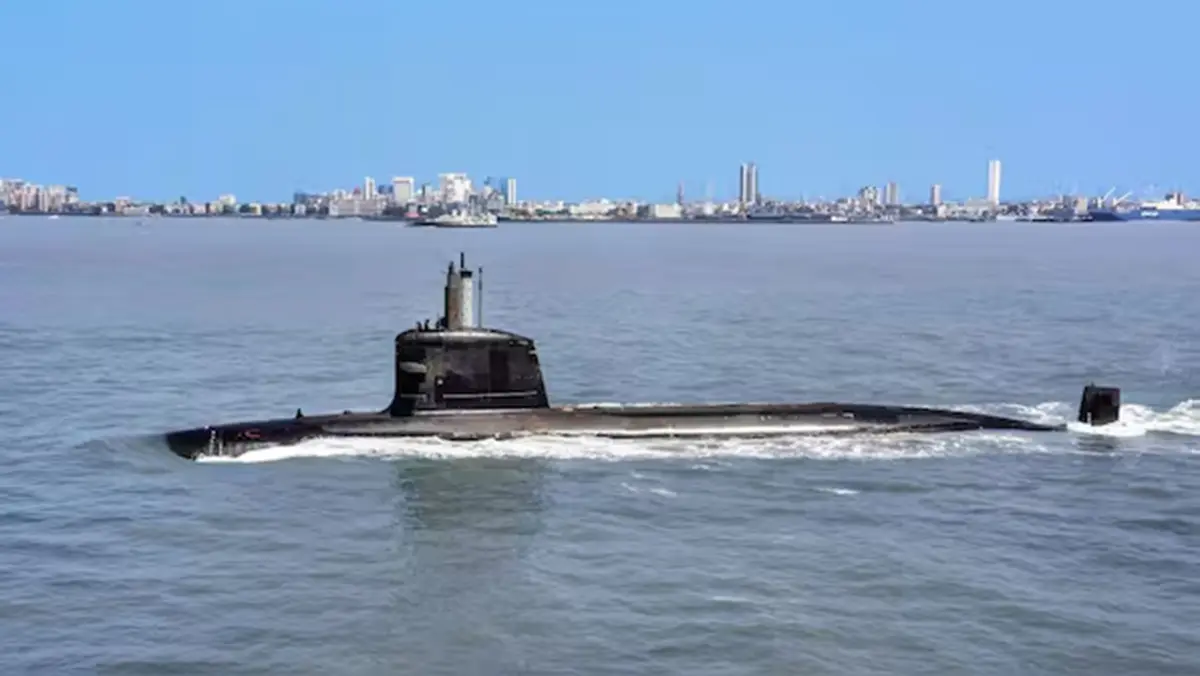
Why in news?
The Indian Navy is set to commission INS Aridhaman, its third nuclear‑powered ballistic missile submarine (SSBN), in early 2026. The vessel will enhance India’s sea‑based nuclear deterrent by carrying more missiles and remaining at sea for extended periods.
Background
India’s nuclear doctrine emphasises a credible minimum deterrent and no first use policy. A nuclear triad – delivery of nuclear weapons by land‑, air‑ and sea‑based platforms – is critical for assured retaliation. SSBNs form the core of the sea‑based leg because they can hide underwater and launch ballistic missiles from undisclosed locations.
India’s first SSBN, INS Arihant, entered service in 2016, followed by INS Arighaat. Both have four missile tubes and displace about 6,000 tonnes. Aridhaman, built at the Ship Building Centre in Visakhapatnam, represents the second generation of the Arihant class.
Features of INS Aridhaman
- Larger and more capable: With an estimated displacement of 7,000 tonnes and length of around 125 m, Aridhaman is bigger than its predecessors. It carries eight vertical launch tubes capable of firing K‑4 missiles (range ~3,500 km) or K‑15 missiles (range ~750 km).
- Crew and systems: The submarine will be manned by about 95 sailors and officers. It is equipped with sonar suites, electronic warfare systems and countermeasures to enhance stealth and survivability.
- Indigenous design: Aridhaman is built under the Advanced Technology Vessel programme using Indian expertise and aims to boost self‑reliance in strategic defence.
Strategic significance
The induction of Aridhaman will allow India to maintain continuous at‑sea deterrence by rotating SSBNs on patrol. A larger missile payload improves retaliatory capability, especially vis‑à‑vis regional adversaries. The submarine will also serve as a stepping stone to future, more advanced SSBNs and nuclear‑powered attack submarines (SSNs), strengthening India’s influence in the Indo‑Pacific.
Source: ET