
Why in news?
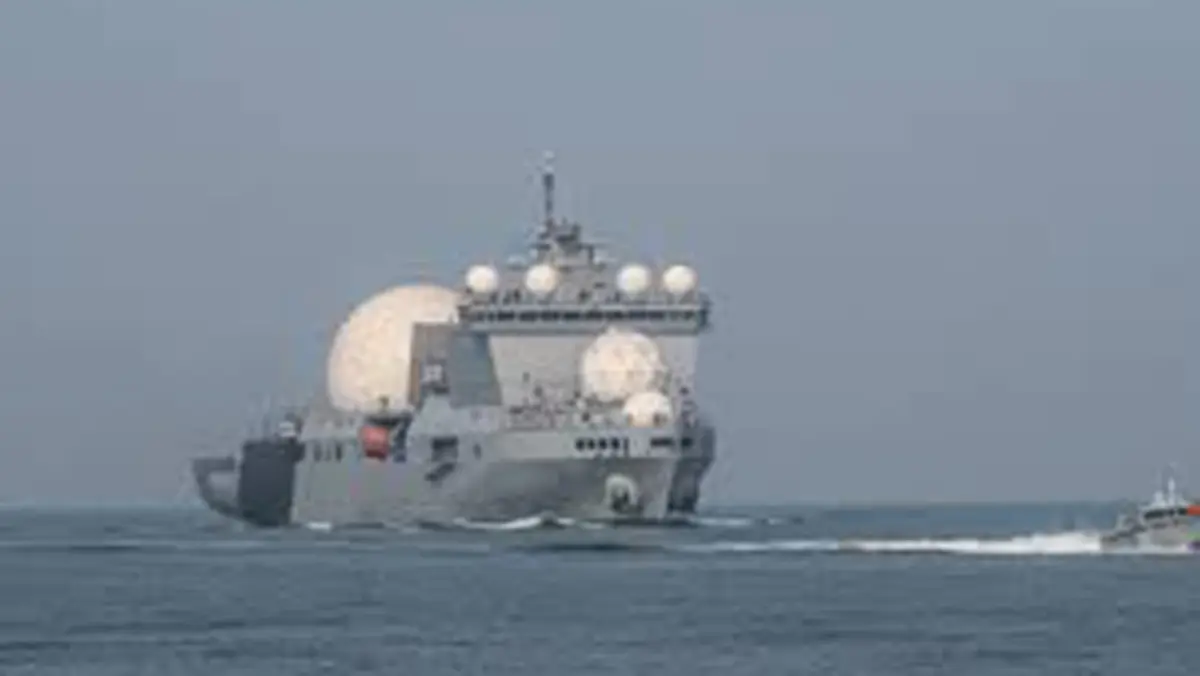
In early April 2026 India quietly deployed the ocean‑going research vessel INS Dhruv in international waters outside Pakistan’s declared missile‑test window. The ship’s sensors monitored a ballistic missile test conducted by Pakistan and collected telemetry on the launch trajectory. This marked the first publicly reported operational use of India’s dedicated missile tracking ship and drew attention to the country’s growing capability to monitor adversaries’ missile activities.
Background
INS Dhruv is India’s first purpose‑built missile tracking and ocean‑surveillance ship. It was built by Hindustan Shipyard Limited in Visakhapatnam in collaboration with the Defence Research and Development Organisation (DRDO) and the National Technical Research Organisation (NTRO). The vessel was commissioned into service on 10 September 2021 and is jointly operated by the Indian Navy, DRDO and NTRO. Measuring around 175 m long and over 22 m wide, it displaces more than 10 000 tonnes and is powered by combined‑diesel‑and‑diesel (CODAD) engines that allow a maximum speed of about 21 knots. Its large deck houses multiple active electronically scanned array (AESA) radars operating in X‑ and S‑bands along with telemetry antennas. These radars can track ballistic and cruise missiles during their flight, monitor satellites in low‑earth orbit and gather electronic intelligence. The hull design also allows installation of additional tracking dishes when needed.
Key features and significance
- Early‑warning capability: By following missile launches in real time the ship provides early warning of potential threats and helps calibrate India’s ballistic missile defence systems.
- Ocean‑surveillance platform: Its long‑range radars and communications suites enable surveillance of vast ocean areas from the Gulf of Aden to the South China Sea, enhancing maritime domain awareness and anti‑submarine operations.
- Strategic deterrent: The ability to monitor adversaries’ missile trials deters clandestine tests and reassures India’s strategic planners about the effectiveness of their own missile programmes.
- Indigenous engineering: The vessel’s construction at Hindustan Shipyard and the use of DRDO‑developed AESA radars underline India’s growing self‑reliance in advanced defence technologies.
Conclusion
The deployment of INS Dhruv in the Arabian Sea shows how India now collects data on missile tests in its neighbourhood and uses that information to fine‑tune its own defence systems. As regional missile programmes proliferate, this sophisticated ship will play an increasingly important role in strategic surveillance and in safeguarding India’s maritime interests.
Source: Defence Security Asia · Wikipedia · Hindustan Times

