

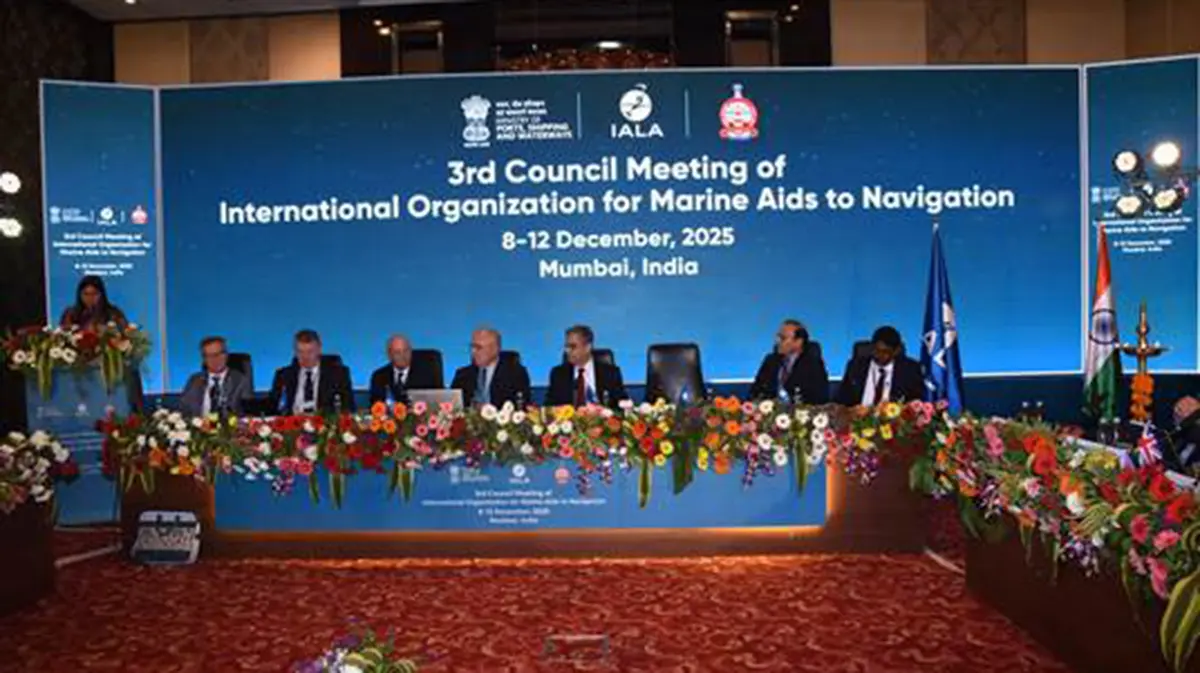
Why in news?
India hosted the third session of the council of the International Association of Marine Aids to Navigation and Lighthouse Authorities (IALA) in Mumbai in November 2025. During the meeting the Union Minister for Ports, Shipping and Waterways inaugurated a digital ticketing portal for lighthouse tourism and highlighted India’s commitment to safe and sustainable maritime navigation.
Background
IALA was formed in 1957 to harmonise maritime aids to navigation systems worldwide. It brings together national lighthouse authorities, manufacturers and experts to develop common standards for buoys, beacons, lights and radio navigation. Until 2024 it operated as a non‑governmental organisation headquartered in Saint‑Germain‑en‑Laye, France.
Recent developments
- Intergovernmental status: In August 2024 IALA officially became an intergovernmental organisation after the Convention on the International Organization for Marine Aids to Navigation entered into force with ratification by 34 states. This change allows governments to participate directly in decisions, strengthening global cooperation.
- India’s role: India operates 195 lighthouses and is modernising navigational aids along its 7,500‑km coastline. At the 2025 council session India launched an online portal to sell tickets for lighthouse visits, aiming to promote heritage tourism while maintaining safety.
- Harmonisation of standards: IALA develops recommendations on buoyage systems, vessel traffic services, e‑navigation and training. Its work helps ensure that mariners encounter consistent aids to navigation around the world.
Why it matters
- As an intergovernmental body, IALA can better support developing countries in upgrading navigation infrastructure and implementing new technologies such as satellite‑based systems.
- Standardised aids reduce maritime accidents, protect marine environments and facilitate international trade.
- India’s lighthouse tourism initiative demonstrates how historic maritime heritage can be preserved and leveraged for sustainable coastal development.
Sources: Press Information Bureau