
Why in news?
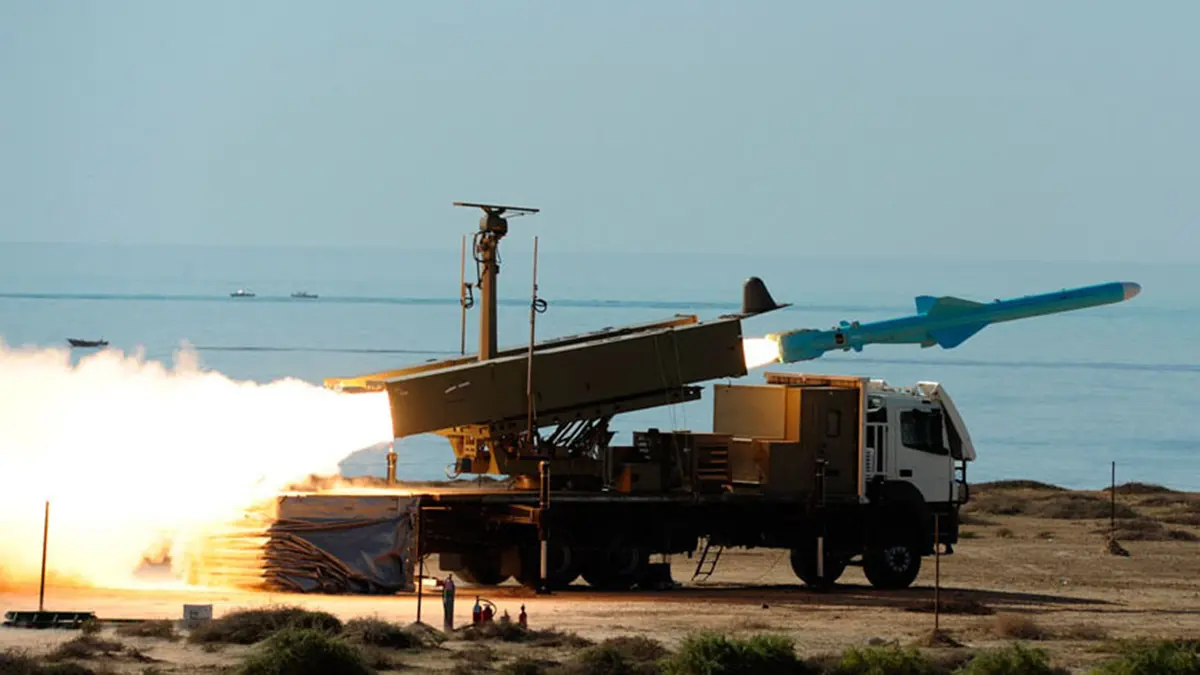
In late March 2026 Iran’s Revolutionary Guard claimed it had fired Qader cruise missiles at the U.S. aircraft carrier USS Abraham Lincoln during hostilities in West Asia. While the U.S. Navy reported no damage, the episode drew attention to the Qader missile’s capabilities and Iran’s growing anti‑ship arsenal.
Background
The Qader (meaning “capable” in Persian) is an Iranian anti‑ship cruise missile developed by the Iranian Aviation Industries Organization and unveiled in 2011. It evolved from the Noor missile, which itself is based on the Chinese C‑802 design. Unlike ballistic missiles that arc through space, cruise missiles are jet‑powered, guided weapons that fly within the atmosphere at relatively low altitudes. They can be launched from land, sea or air platforms and are designed to skim over the sea to evade radar and strike surface vessels.
Features of the Qader missile
- Range and warhead: Qader has a reported range of about 300 kilometres, allowing it to engage targets well beyond the horizon. It carries a high‑explosive warhead weighing roughly 200 kilograms, sufficient to inflict severe damage on large ships.
- Sea‑skimming flight: The missile cruises just a few metres above the sea surface, reducing its radar signature and making interception difficult. A digital autopilot and high‑precision navigation system help it maintain this low‑level flight.
- Guidance and counter‑measures: Qader employs active radar seeking in the terminal phase to home in on its target. Iranian officials claim the missile has advanced radar capabilities and some resistance to electronic counter‑measures, though independent assessments are limited.
- Launch flexibility: Iran has developed truck‑mounted coastal batteries as well as ship‑ and aircraft‑launched versions of the missile. Quick preparation times allow crews to fire within minutes of receiving orders.
Significance of the incident
The March 2026 claim underscored regional tensions and the threat posed by anti‑ship cruise missiles to naval operations. Even if the attack was unsuccessful, it demonstrated Iran’s willingness to use its missile arsenal to deter adversaries. For exam preparation, understanding the difference between cruise and ballistic missiles, the importance of sea‑skimming in evading defences and the strategic implications of missile proliferation is essential.
Sources: Wikipedia · Times of India · Economic Times
Organisation for Economic Cooperation and Development (OECD) and India’s Growth Outlook
Why in news?
On 26 March 2026, the OECD released its Interim Economic Outlook. The report lowered India’s projected growth rate for fiscal 2026–27 to around 6.1 %, citing global energy price spikes and geopolitical uncertainties. It forecast growth of 7.6 % in 2025–26 and 6.4 % in 2027–28, with inflation expected to rise to about 5.1 % in 2026–27.
Background on the OECD
The Organisation for Economic Cooperation and Development is an international forum of mostly high‑income democracies. Founded in 1961 and headquartered in Paris, it now has 38 member countries that together account for about two‑thirds of global GDP and three‑quarters of world trade. The OECD works to promote economic growth, trade liberalisation, efficient resource use and social well‑being. Instead of binding treaties, it relies on peer reviews, policy recommendations and legally binding instruments like the Anti‑Bribery Convention to encourage best practices among members.
India is not a member but has been an active partner since 2007. It participates in OECD committees, shares data and cooperates on issues such as taxation, corporate governance and development. The OECD’s economic forecasts are closely watched because they influence investor confidence and policy discussions.
Key points from the latest outlook
- Growth moderation: The OECD expects India’s GDP growth to ease to about 6.1 % in 2026–27 from an estimated 7.6 % in 2025–26, mainly due to higher energy costs, tight financial conditions and slowing global demand.
- Inflation concerns: With crude oil prices elevated following disruptions in West Asia, consumer prices in India are projected to rise, pushing inflation to around 5 %. The report suggests the Reserve Bank of India should remain vigilant to keep inflation within its target range.
- Medium‑term prospects: Growth is expected to stabilise near 6.4 % by 2027–28 as investment recovers and structural reforms take effect. The OECD emphasises continued reforms in infrastructure, education and labour markets to sustain momentum.
- Global context: The outlook also notes that the world economy faces headwinds from geopolitical conflicts, supply‑chain disruptions and climate‑related shocks. As a result, even large emerging economies like India must prepare for volatility.
Sources: New Indian Express · U.S. Trade Representative

