

Why in news?
The Indian government has launched the second nationwide survey of riverine and coastal dolphins under Project Dolphin. For the first time, the survey will count Irrawaddy dolphins in the Sundarbans and along the Odisha coast. The results will help assess population trends and threats.
Background
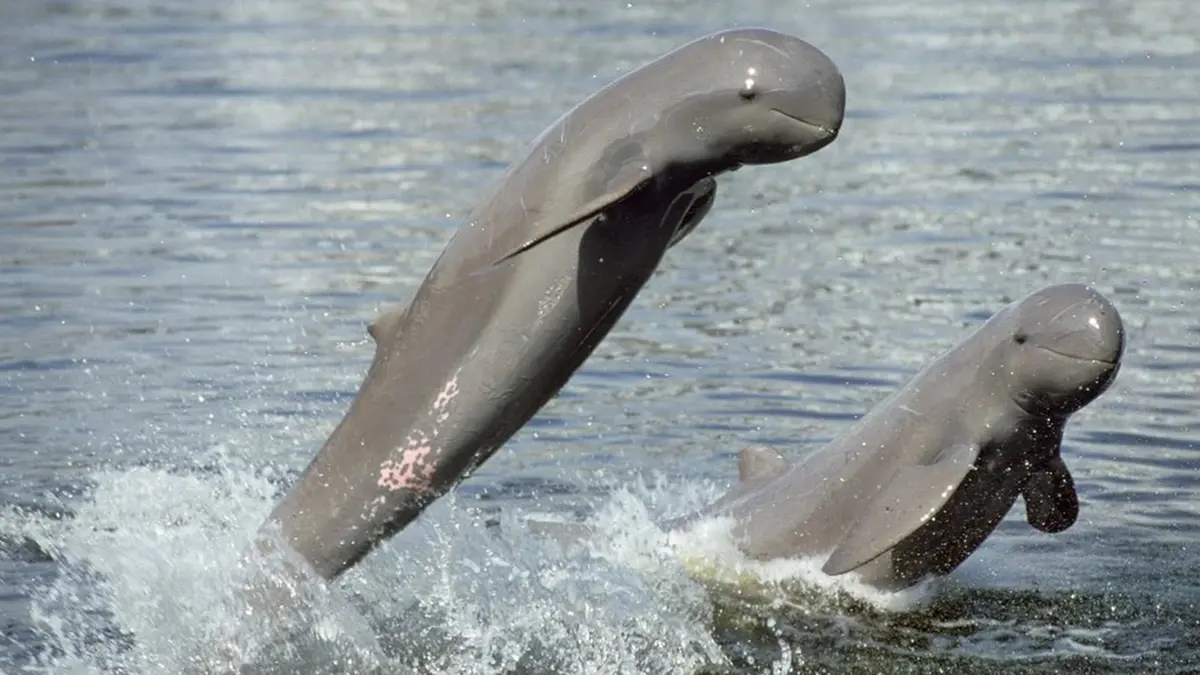
The Irrawaddy dolphin (Orcaella brevirostris) is a distinctive marine mammal found in coastal waters and certain river systems of South and Southeast Asia. It has a rounded forehead, short beak, broad paddle‑like flippers and a small dorsal fin. Adults weigh 90–200 kg and grow up to 2.3 metres long. It inhabits brackish estuaries and freshwater rivers such as the Mekong, Ayeyarwady and Ganges, and stays close to shore. The species is listed as Endangered by the IUCN.
Highlights of the 2026 survey
- Coverage: The survey is being coordinated by the Wildlife Institute of India with support from state agencies. It will use standard methodologies across the Ganga and Indus systems in the first phase and the Brahmaputra and coastal regions in the second phase.
- Irrawaddy focus: Special teams will estimate the Irrawaddy dolphin populations in the Sundarbans delta and Chilika Lagoon. These areas host small, isolated groups whose numbers are not well known.
- Habitat assessment: Scientists will record water quality, prey availability and human pressures such as fishing and boat traffic. The survey builds on the 2021–23 count, which estimated 6,327 river dolphins in India.
Biology and threats
- Behaviour: Irrawaddy dolphins are shy and surface quietly. They often swim in small groups of three to six animals. Their rounded head houses flexible neck vertebrae, allowing them to turn abruptly.
- Sacred status: In parts of South Asia, dolphins are considered sacred and bring good luck.
- Main threats: Bycatch in fishing nets is the leading cause of death. Habitat loss from dam construction, pollution and industrial activity also poses serious risks.
Conservation outlook
The nationwide survey will provide updated data to guide conservation strategies for Irrawaddy and other river dolphins. Protecting their habitats, enforcing fishing regulations and engaging local communities are essential to ensure these unique mammals survive.
Sources: New Indian Express