

Why in news?
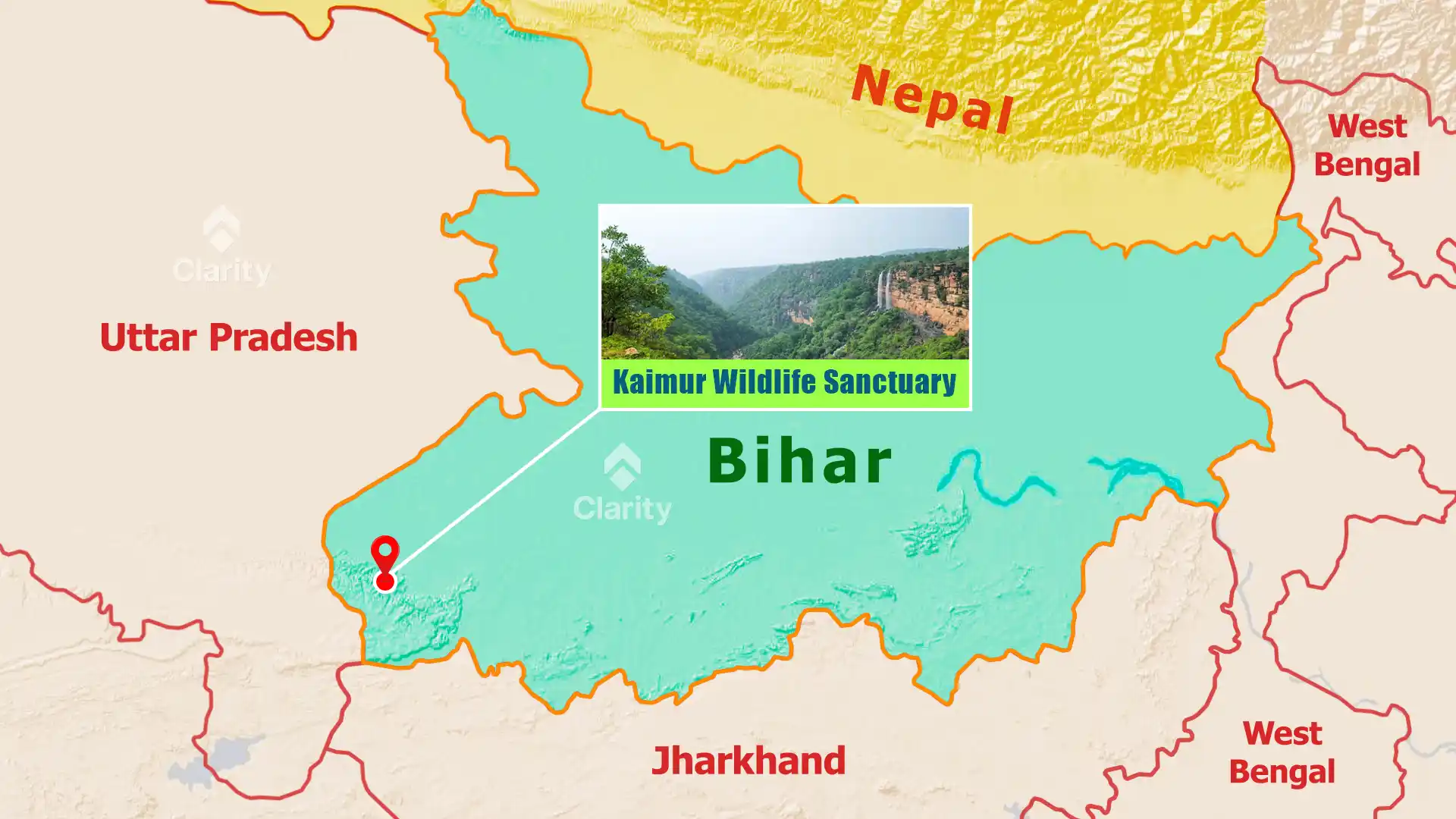
Forest officials recently seized deer heads, horns and animal flesh and arrested a poacher during a raid in Bihar’s Kaimur Wildlife Sanctuary. The incident highlights ongoing challenges of poaching and habitat protection in one of the state’s largest protected areas.
Background
Established in 1982, Kaimur Wildlife Sanctuary lies within the Kaimur and Rohtas districts of Bihar, covering more than 1,300 square kilometres. The sanctuary is part of the rugged Kaimur Hills range and includes sections of the Son and Karmanasa river basins. It forms a vital link in a larger tiger and elephant corridor that connects protected areas in Madhya Pradesh, Chhattisgarh and Jharkhand.
Key features
- Diverse landscapes: The sanctuary encompasses dry deciduous forests, sal woods and bamboo groves. Valleys contain picturesque waterfalls such as Karkat and Telhar and lakes like Anupam and Karamchat. Prehistoric rock paintings, fossils and fort ruins attest to human presence since ancient times.
- Rich wildlife: Residents include Bengal tigers, leopards, sloth bears, pangolins, sambar deer, chital, nilgai (blue bull) and the four‑horned antelope. The reserve is also home to numerous bird species, pythons, crocodiles and other reptiles.
- Cultural significance: The Mundeshwari Devi Temple—one of India’s oldest functioning Hindu temples—lies within the sanctuary’s foothills.
- Connectivity: The sanctuary provides a corridor linking wildlife populations in Bandhavgarh, Sanjay‑Dubri and Guru Ghasidas national parks with Palamau and Chhattisgarh forests.
Challenges
- Poaching and illegal trade: Incidents like the recent seizure underscore the threat posed by hunting of deer and other species for meat or trophies.
- Habitat fragmentation: Expansion of agriculture, mining and infrastructure projects along the Son basin has created gaps in the forest corridor, complicating wildlife movement.
- Human–wildlife conflict: Villages around the sanctuary sometimes face crop raiding or livestock predation, leading to tensions that require careful management.
Conclusion
Kaimur Wildlife Sanctuary is a biodiverse haven and cultural landscape that deserves vigilant protection. Stricter enforcement against poaching, community involvement in conservation and the establishment of the proposed Kaimur Tiger Reserve can help preserve this unique ecosystem for future generations.
Source: Hindustan Times