Why in news?
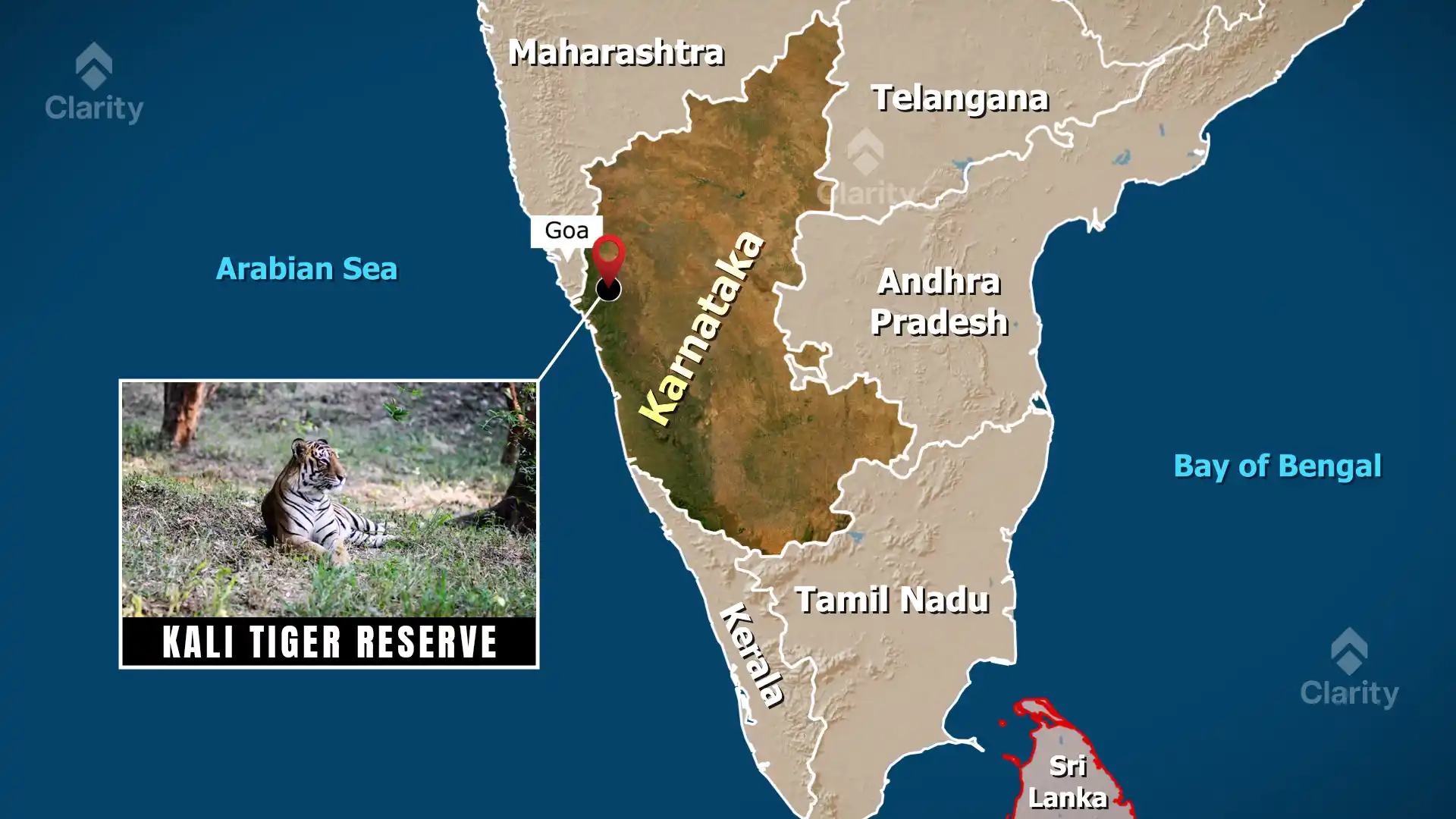
The Union Ministry of Environment, Forest and Climate Change has proposed declaring an Eco‑Sensitive Zone (ESZ) around Karnataka’s Kali Tiger Reserve. The draft notification suggests a protective buffer extending over 660 sq km, inviting public feedback within 60 days. Eco‑sensitive zones regulate development around protected areas to minimise habitat fragmentation.
Background
The Kali Tiger Reserve, formerly known as the Dandeli–Anshi Tiger Reserve, lies in the Uttara Kannada district of Karnataka. Established in 2015, it combines the Dandeli Wildlife Sanctuary and Anshi National Park, covering roughly 1,300 sq km of the Western Ghats. The reserve is named after the Kali River, which flows westwards through dense evergreen forests and gorges.
Key features of the reserve
- Biodiversity hotspot: The reserve is home to Bengal tigers, black panthers, Indian leopards, elephants, gaur, sambar, sloth bears and over 300 bird species. Reptiles such as king cobras and mugger crocodiles also inhabit its rivers and wetlands.
- Landscape: Rain‑soaked hills, deep river valleys and laterite plateaus create a mosaic of habitats. Annual rainfall varies widely from 1,700 mm to over 5,000 mm, supporting tropical evergreen and moist deciduous forests.
- Contiguous corridor: Together with tiger reserves in Goa and Maharashtra, Kali forms part of a 2,200 sq km contiguous protected area, providing a vital corridor for wide‑ranging species.
The proposed Eco‑Sensitive Zone
- Purpose: Eco‑sensitive zones act as transition areas between core wildlife habitat and human settlements. They restrict polluting industries, mining, large constructions and unregulated tourism while permitting eco‑friendly activities.
- Extent: The draft notification proposes a buffer of approximately 663 sq km around the reserve. It aims to protect the fragile Western Ghats ecosystem and the river catchments that supply water to downstream communities.
- Public involvement: Local residents, panchayats and environmental groups are invited to submit suggestions and objections. Final boundaries and regulations will be decided after considering public input.
Significance
- Conservation: Establishing an ESZ can prevent encroachment, curb sand mining and regulate tourism, safeguarding habitats for tigers and other wildlife.
- Water security: Protecting forested catchments maintains the health of the Kali River and tributaries, ensuring clean water for agriculture and hydropower downstream.
- Community livelihood: Ecotourism, sustainable harvesting of non‑timber forest products and conservation jobs can provide income alternatives for local communities.
Conclusion
The proposed eco‑sensitive buffer around the Kali Tiger Reserve reflects the government’s intent to balance development with ecological security. Effective management and community participation will be key to preserving the Western Ghats’ unique biodiversity for generations to come.
Source: Devdiscourse