
Why in news?
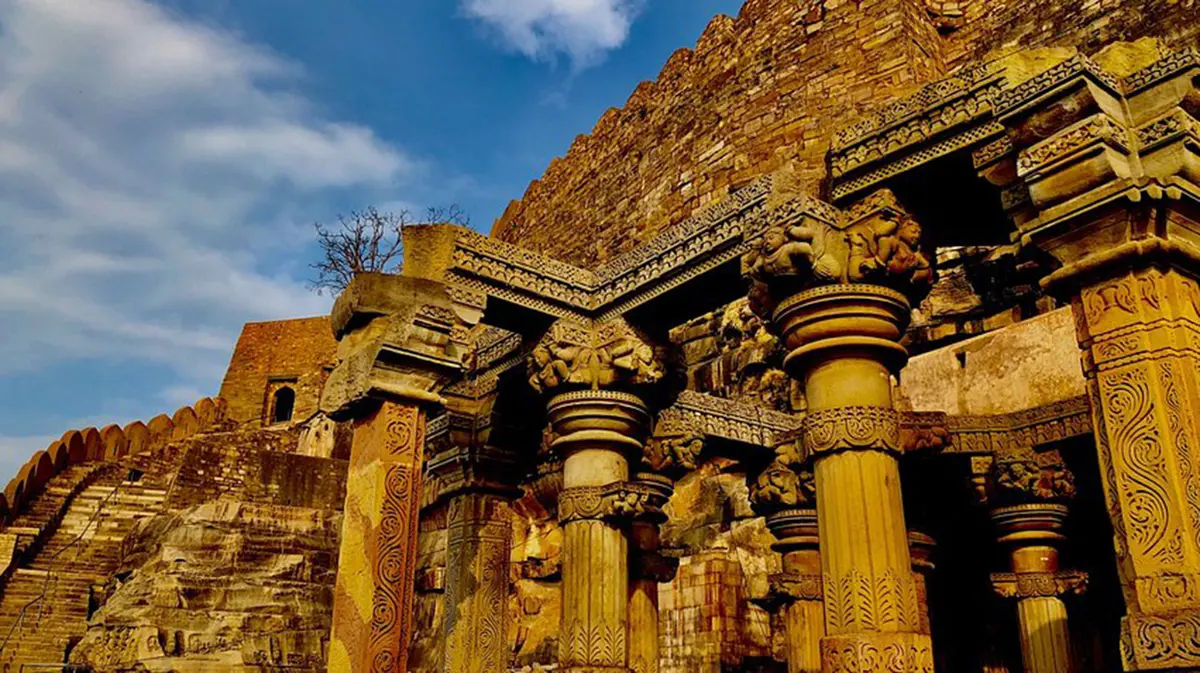
The Geological Survey of India (GSI) announced that the hill region around Kalinjar Fort in Banda district, Uttar Pradesh, has been designated a National Geo‑Heritage Site. The status recognises the area’s unique geology and is expected to boost conservation and tourism.
Background
Kalinjar Fort stands on an isolated hill of the Vindhya range near the Ken River. Believed to be more than 1,500 years old, it has witnessed battles and dynastic changes. The fort was established during the Gupta period and later became a capital of the Chandela dynasty (9th–13th century). Rulers such as Mahmud Ghaznavi and Sher Shah Suri attempted to capture it without success until Akbar finally seized it in 1569 and handed it to his minister Birbal. The fort contains temples, palaces and step‑wells, including the Neelkanth Temple where, according to legend, Lord Shiva drank poison from the churning of the cosmic ocean.
Why is the site special?
- Eparchaean unconformity: The area exhibits a rare geological phenomenon where 2.5‑billion‑year‑old Bundelkhand granite is overlain by 1.2‑billion‑year‑old Kaimur sandstone, providing insight into the Earth’s ancient history.
- Geo‑cultural heritage: Stones quarried locally were used to build the fort’s massive walls. The region’s distinctive geology contributed to the fort’s strategic strength and its architectural beauty.
- Tourism potential: Authorities plan to develop the site as part of a tourism circuit linking Kalinjar with other heritage destinations such as Khajuraho and Chitrakoot. An information board installed by GSI highlights the region’s geological and historical significance.
Significance
- Conservation: National Geo‑Heritage status ensures legal protection for the site and promotes awareness of its geological importance.
- Cultural preservation: Recognising the fort’s long history encourages the preservation of temples, palaces and artwork that reflect India’s heritage.
- Economic benefits: Increased tourism can provide livelihood opportunities for local communities while educating visitors about geology and history.
Conclusion
The designation of the Kalinjar Fort region as a National Geo‑Heritage Site blends geology with history. Protecting and promoting such sites helps preserve India’s diverse natural and cultural heritage for future generations.
Source: The Times of India

