

Why in news?
The Government of India’s Public Investment Board recently approved the 1,720‑megawatt Kamala Hydroelectric Project in Arunachal Pradesh. The decision clears the way for construction on one of the largest hydro projects in the northeastern region, which is expected to bolster energy security and provide flood relief downstream.
Background
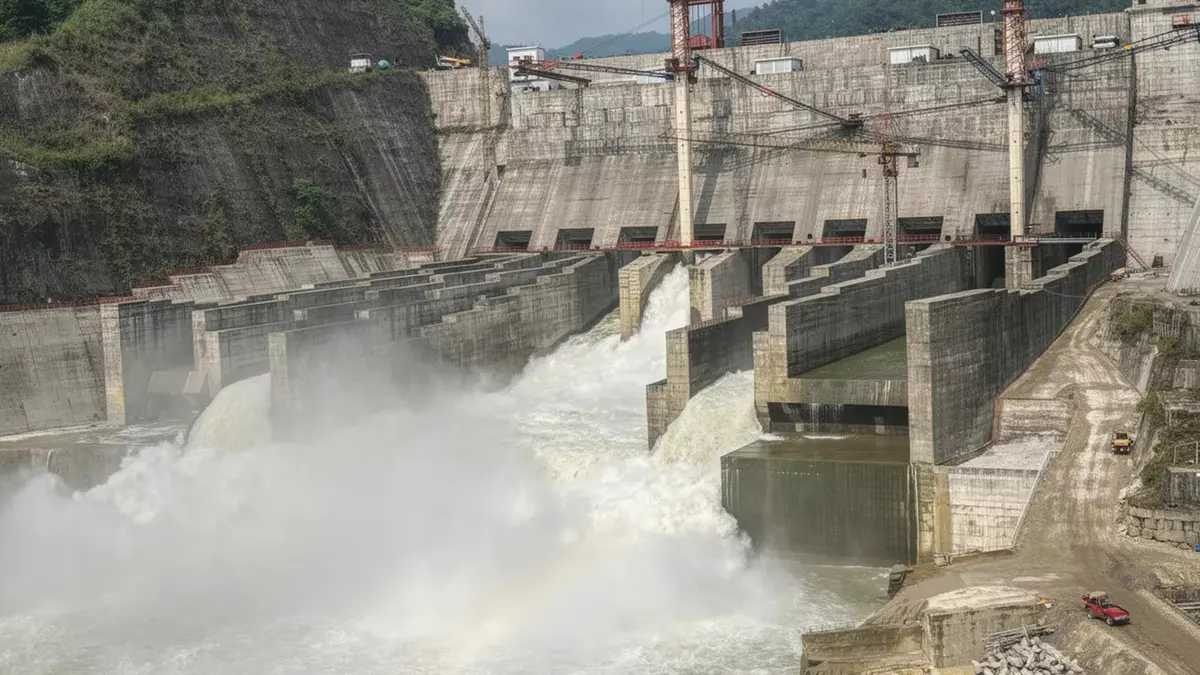
The Kamala project is located on the Kamala River, a tributary of the Subansiri River, in the Kamle district of Arunachal Pradesh. The scheme involves building a 216‑metre‑high concrete gravity dam and an underground powerhouse. It will generate about 6,870 million units of electricity annually. The project is to be executed on a Build–Own–Operate–Transfer (BOOT) basis by a joint venture between NHPC Limited (holding 74 percent) and the Government of Arunachal Pradesh (26 percent).
Key features
- Large capacity: At 1,720 MW, it will be one of the largest hydroelectric projects in northeastern India, helping to meet rising demand in the region and neighbouring states.
- Dam and powerhouse: The 216‑metre dam will create a reservoir, and the underground power station will house multiple turbines to harness the river’s energy. Flood moderation components are integrated into the design to reduce the intensity of flooding downstream in the Brahmaputra valley.
- Project cost and financing: The estimated cost is around ₹26,070 crore. Central grants cover enabling infrastructure and flood‑mitigation measures, while the remainder will be financed through a mix of debt and equity. The project is expected to generate employment for hundreds of skilled and unskilled workers during construction.
- Project timeline: Construction is planned to be completed within about eight years from the start date. The project’s long gestation period reflects the need for extensive civil works and careful environmental management.
Significance
- Energy security: The plant will provide reliable renewable power to Arunachal Pradesh and neighbouring regions, reducing dependence on fossil fuels.
- Flood mitigation: By regulating the flow of the Kamala and Subansiri rivers, the dam will help moderate floods in the lower Brahmaputra valley during the monsoon season.
- Regional development: Construction of roads and other infrastructure for the project is expected to boost local employment, improve connectivity and spur allied economic activities.
- Strategic value: Enhancing hydroelectric capacity in the border state supports national grid stability and provides leverage in water‑resource negotiations with downstream countries.
Conclusion
The Kamala Hydroelectric Project reflects India’s strategy of harnessing Himalayan rivers to meet energy needs and manage floods. Successful implementation will require careful environmental safeguards, rehabilitation measures for affected communities and cooperation between central and state agencies.
Sources: The Times of India