

Why in news?
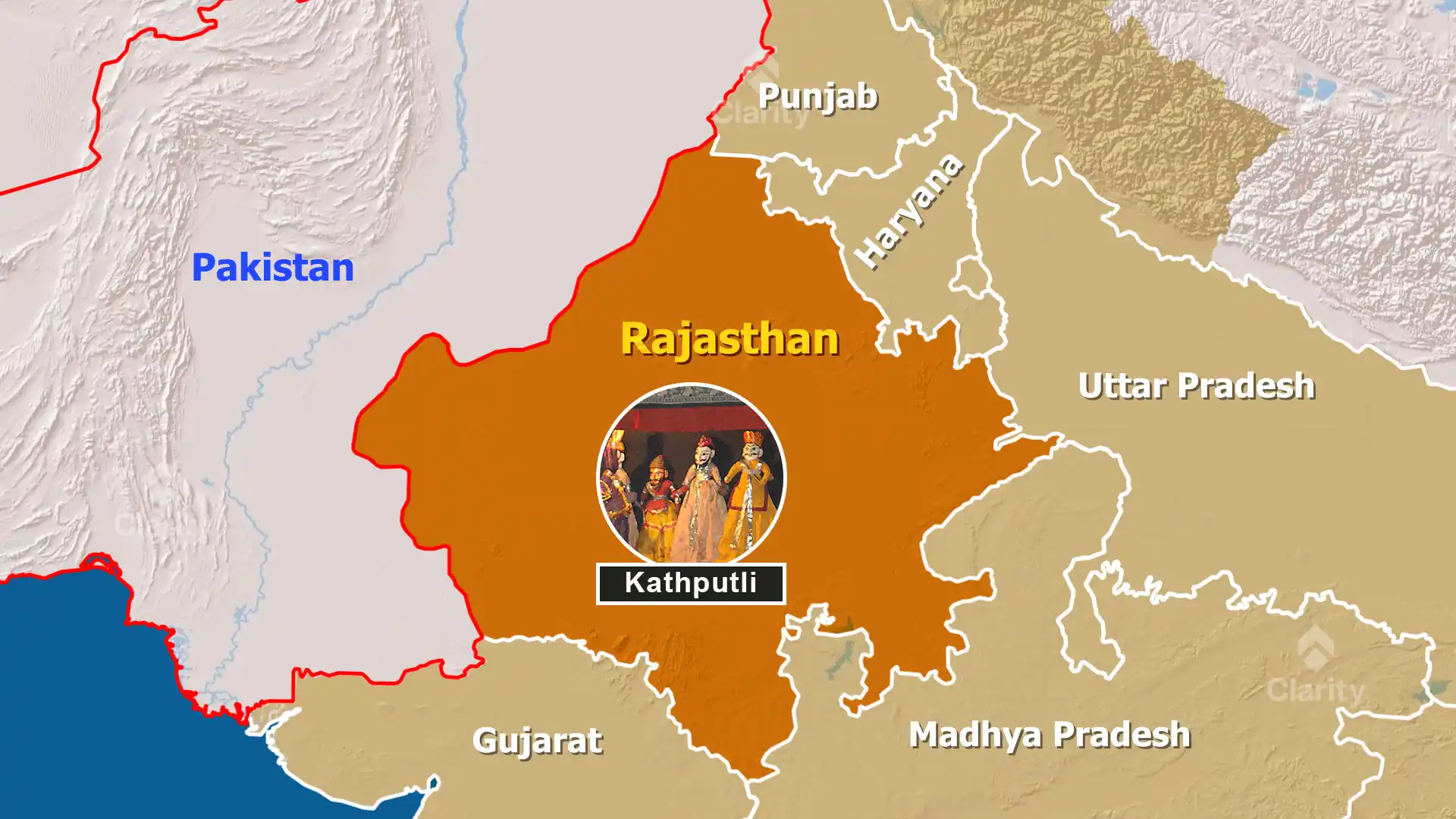
Traditional art forms often resurface in discussions around cultural preservation. Kathputli, the string puppetry of Rajasthan, has gained renewed attention as artists call for support to keep this thousand‑year‑old craft alive. Recognising its heritage value, cultural bodies and tourism agencies are promoting performances and workshops across India.
Background
The word “Kathputli” combines katha (story) and putli (doll). It refers to a form of glove and string puppetry practised by the Bhatt community of Rajasthan. Historical references indicate that puppeteers have been telling stories through Kathputli since at least the 17th century, though oral traditions suggest an even older origin. Traditionally, families travelled from village to village staging shows in exchange for food, grain or small coins.
Making and performing
- Puppet construction: Puppets are carved from soft woods like mango or neem and stand about 1.5 to 2 feet tall. Their bodies are stuffed with rags and they wear brightly coloured costumes. The faces are painted with exaggerated features such as large eyes and long noses. Often, the dolls have no legs; long flowing skirts hide the lower half.
- Strings and voice: Performers manipulate the puppets using strings looped over their fingers and wrists. A distinctive reed instrument called a boli is held in the mouth to produce a squeaky voice that gives the puppets character.
- Stage setting: Shows are staged on a simple wooden cot (charpoy) covered with cloth to create a miniature theatre. Musicians accompany the performance with drums and cymbals, narrating folk tales involving kings, queens and heroic outlaws like Amar Singh Rathore. The emphasis is on skillful puppet manipulation rather than elaborate plot.
Challenges and significance
- Declining patronage: With the advent of cinema, television and digital media, fewer villagers engage travelling puppeteers, forcing many families to abandon the craft. Income from performances is often insufficient to support artisans.
- Cultural heritage: Kathputli encapsulates storytelling traditions, social satire and music. It reflects the ingenuity of rural communities and fosters a connection between performer and audience. Some puppeteers incorporate contemporary themes to stay relevant.
- Preservation efforts: Government and cultural organisations now conduct fairs, training programmes and exhibitions to revive interest. Tourism initiatives that include puppet shows in heritage circuits help generate income and preserve this intangible heritage.
Conclusion
Kathputli remains a vibrant symbol of Rajasthan’s folk culture. Sustained support, documentation and adaptation will be vital to ensure that future generations can enjoy and learn from these expressive wooden storytellers.
Source: The Hindu