

Why in news?
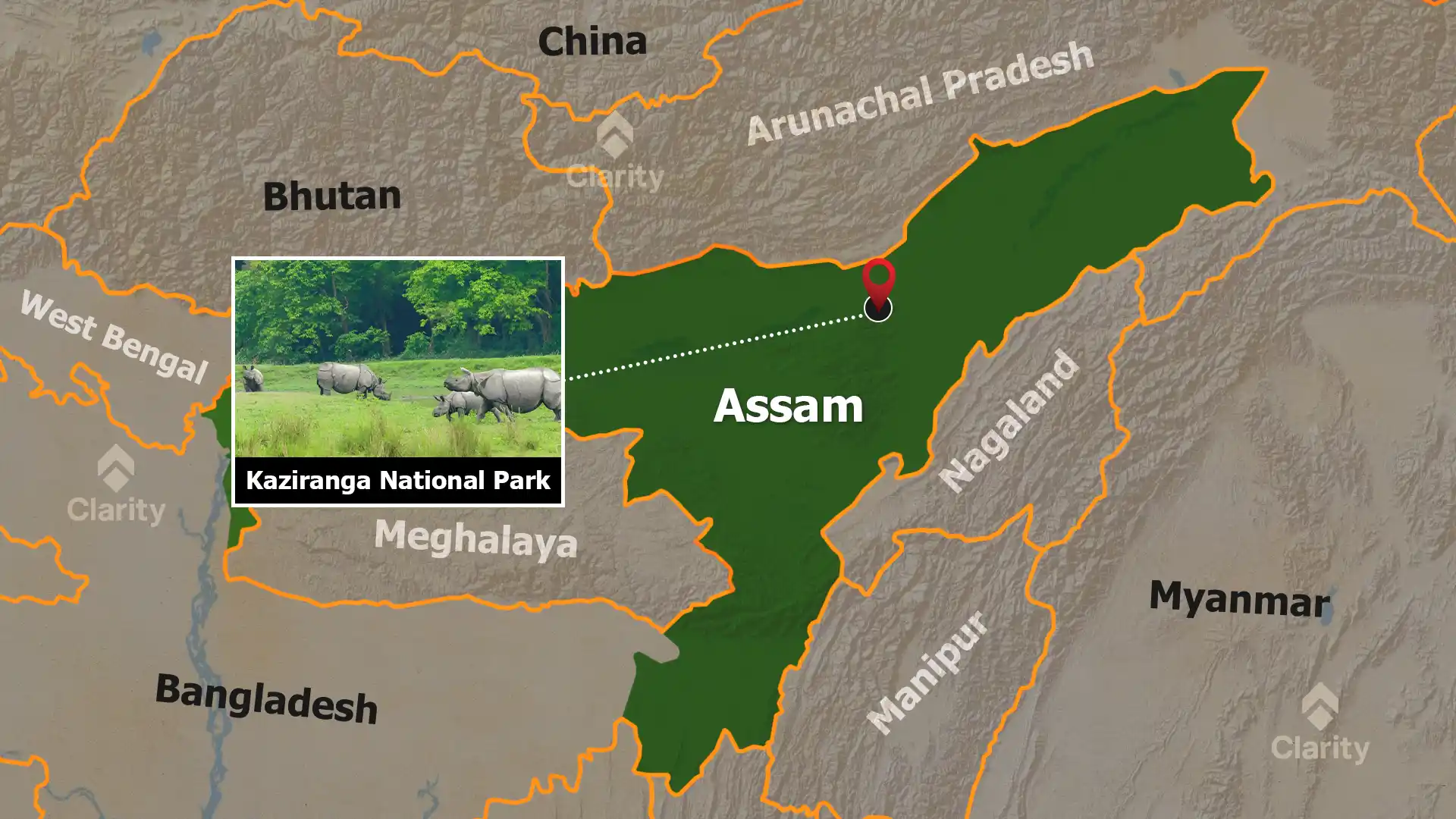
Prime Minister Narendra Modi performed the bhoomi poojan (ground‑breaking ceremony) for a 34.5‑kilometre elevated corridor through the Kaziranga National Park and Tiger Reserve in Assam on . The ₹6,950‑crore project aims to provide animals safe passage across National Highway‑715 while improving connectivity between central and upper Assam. With thousands of animals killed by vehicles each year, the corridor is seen as a long‑term solution to human–wildlife conflict.
Background
Kaziranga National Park, a UNESCO World Heritage Site, lies on the floodplains of the Brahmaputra River in Assam and harbours the world’s largest population of one‑horned rhinoceroses, along with tigers, elephants, wild buffalo and swamp deer. National Highway‑715 (formerly NH‑37) runs along the park’s southern boundary and forms a barrier between the park and the Karbi Anglong Hills to the south. During annual floods animals migrate from the low‑lying park to the highlands, often crossing the busy highway. Studies by Gauhati University recorded over 6,000 animal deaths on this road in a single year, highlighting the urgency of mitigation.
Project details
- Elevated design: The project will four‑lane an 86.675‑kilometre stretch of NH‑715 between Kaliabor and Numaligarh. A 34.5‑kilometre segment will be elevated, leaving space underneath for animals to move freely between the park and the Karbi Anglong Hills.
- Bypasses and upgrades: About 30.22 kilometres of the existing road will be upgraded, and 21 kilometres of new bypasses will be built around the towns of Jakhalabandha and Bokakhat to reduce congestion.
- Implementation: The corridor will be executed by the National Highways & Infrastructure Development Corporation Limited (NHIDCL) under the Ministry of Road Transport and Highways. Construction is expected to take 36 months and will follow guidelines of the Wildlife Institute of India and Supreme Court directives.
- Eco‑tourism potential: Officials note that the elevated roadway could boost tourism by providing panoramic views of the park while keeping vehicles away from animal crossing points.
Why it is needed
- Reducing roadkill: Heavy traffic on the existing highway results in frequent collisions with wildlife, particularly during flood seasons. Slower speeds and elevated crossings can dramatically reduce fatalities.
- Balancing development and conservation: Assam’s economy relies on road connectivity for trade and industry. The elevated corridor aims to accommodate growing traffic while protecting biodiversity.
- Compliance with court directives: The project has been designed in line with Supreme Court orders and recommendations from the Wildlife Institute of India to mitigate environmental impact.
Conclusion
The Kaziranga elevated corridor reflects a commitment to sustainable infrastructure. If carefully executed, it could set a precedent for wildlife‑sensitive highway design, demonstrating that development and conservation need not be mutually exclusive.
Sources: The Indian Express