

Why in news?
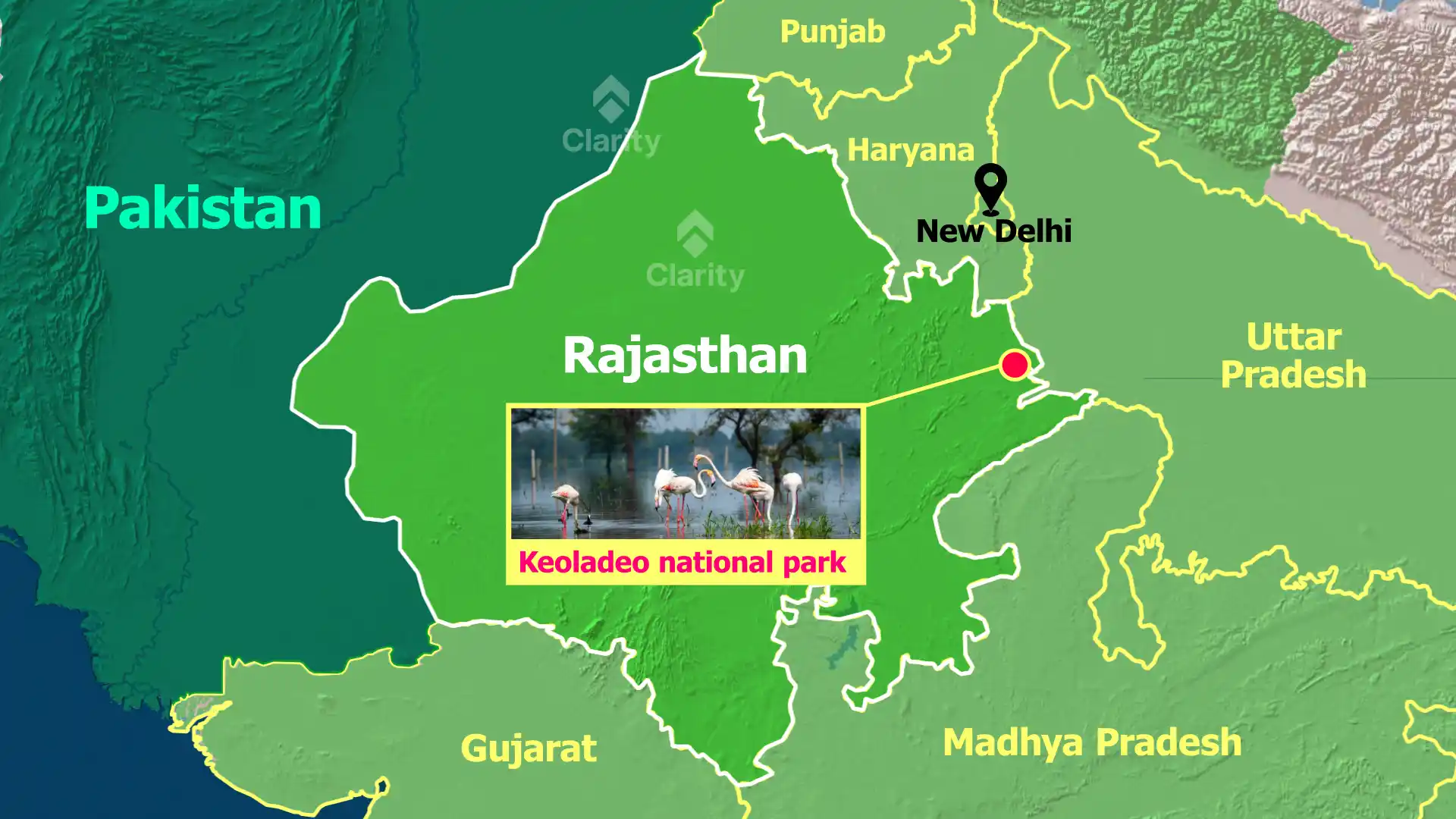
Keoladeo National Park in Rajasthan—also known as Bharatpur Bird Sanctuary—is frequently highlighted for its rich birdlife and conservation successes. It remains in the spotlight during the winter migration season when thousands of birds arrive from distant regions.
Background
Situated in Bharatpur district, Keoladeo National Park covers about 2,873 hectares of wetlands, grasslands and woodland. Its network of dykes and sluices originated in the late 19th century when the area served as a royal duck‑shooting reserve. Recognised as a National Park in 1982 and a UNESCO World Heritage Site in 1985, Keoladeo lies on the Central Asian flyway and provides a crucial wintering ground for migratory birds.
Habitat and wildlife
- Diverse wetlands: The park comprises freshwater marshes, swamps and dry grass patches. Water levels are maintained by pumping from the nearby Ajan Bund reservoir.
- Bird diversity: Over 370 bird species have been recorded. These include ducks, geese, pelicans, herons, cormorants, storks and raptors. Keoladeo hosts one of the region’s largest heronries and historically served as a wintering site for the critically endangered Siberian crane.
- Migratory visitors: Birds such as the sarus crane, oriental darter, black‑necked stork and greater flamingo arrive from Siberia, Central Asia and Europe between October and March.
- Other fauna: The park also shelters mammals like nilgai (blue bull), jackal, wild boar and rhesus macaque, as well as reptiles including marsh crocodiles and turtles.
Management and challenges
- Water management: The park’s wetland ecosystem depends on controlled water inflow from reservoirs. Droughts and disputes over water allocation can threaten habitat quality.
- Invasive species: Exotic plants such as Prosopis juliflora (Vilayati babool) compete with native vegetation, requiring regular removal.
- Human pressures: Nearby towns, agricultural runoff and tourism can affect water quality and disturb wildlife. Community outreach and eco‑development programmes promote conservation awareness among local residents.
Significance
- International recognition: Its designation as a Ramsar site and World Heritage Site underscores its global ecological value.
- Bird sanctuary: Keoladeo provides critical refuge along a major migratory flyway, supporting bird populations that travel thousands of kilometres.
- Eco‑tourism and education: The park attracts birdwatchers and students, generating income for local communities and raising awareness about wetland conservation.
Conclusion
Keoladeo National Park demonstrates how managed wetlands can support extraordinary biodiversity. Continued efforts to secure water supplies, control invasive species and engage local communities will ensure that this treasure remains a haven for birds and a source of inspiration for visitors.
Source: ETVB