

Why in news?
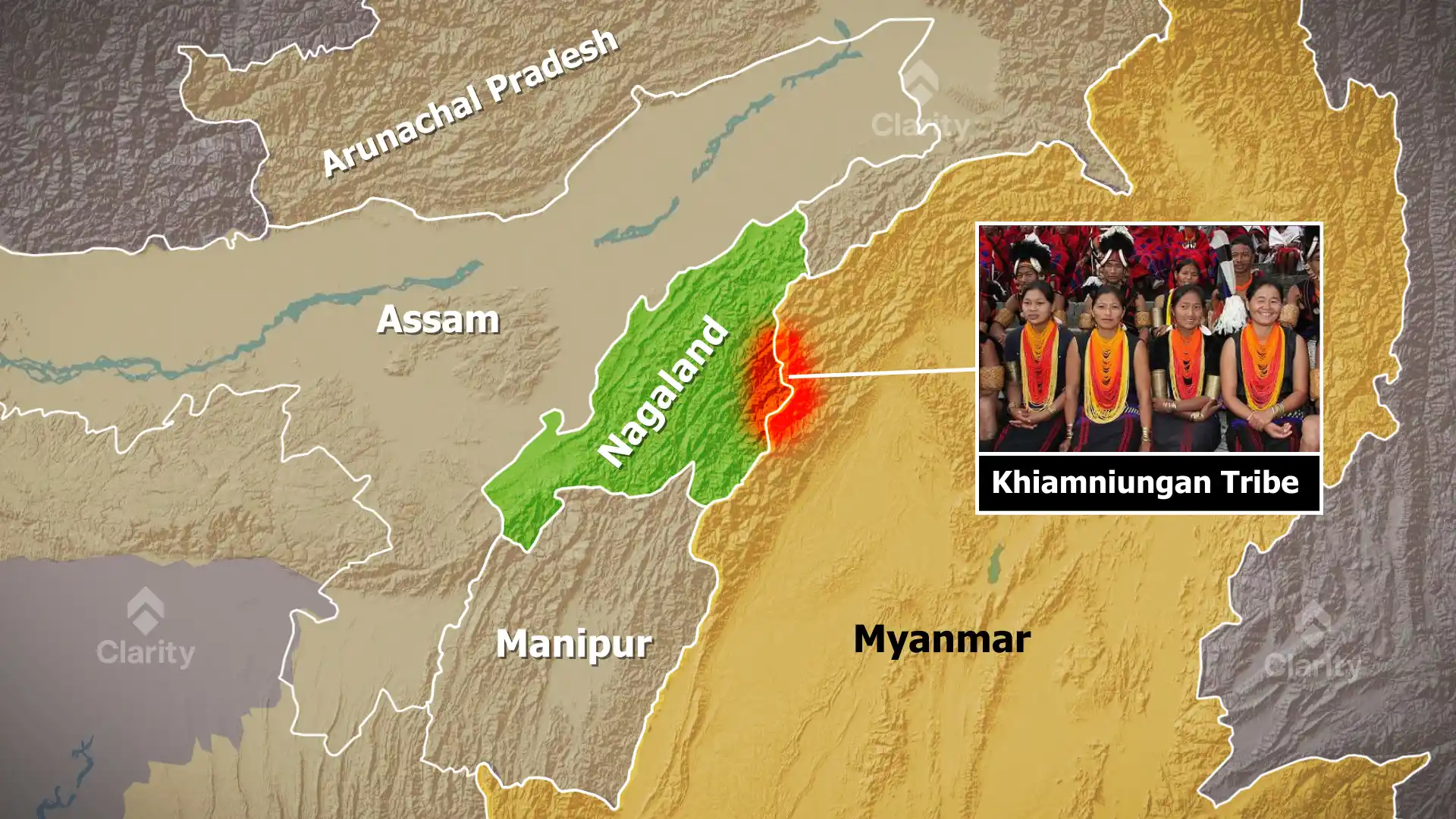
In the same Mann Ki Baat episode, the Prime Minister mentioned the Khiamniungan (also spelled Khiamniungan or Khiamni‑Yangan) tribe of Nagaland for their traditional cliff‑honey harvesting practices. This reference drew attention to the tribe’s unique culture and the role their honey gathering plays in local livelihoods.
Background
The Khiamniungan people are one of the major Naga tribes with settlements on both sides of the India‑Myanmar border. Their homeland lies in eastern Nagaland and north‑western Myanmar. The name ‘Khiamniungan’ is derived from three words: “Khiam” (water), “Niu” (great) and “Ngan” (source) — together meaning “source of great water or river.” Legend narrates that their ancestors migrated from a place called Khiamngan after surviving a great flood, spreading out to form various villages across present‑day Noklak district in Nagaland and beyond.
Society and traditions
- Clan‑based social structure: The society is organised around clans, with elders playing key roles in decision‑making. Traditional village councils manage community affairs.
- Language: The tribe speaks Khiamniugan, a Sino‑Tibetan language written using the Roman script. Oral traditions and folk songs are an important part of cultural transmission.
- Agriculture: Most families practise jhum cultivation (slash‑and‑burn farming) on hill slopes, growing millet, rice and vegetables. They also rear livestock and collect forest produce.
- Cliff‑honey hunting: The tribe is renowned for harvesting honey from beehives built on high cliffs. Before collecting the honey, hunters perform rituals, speak to the bees and ask permission. This sustainable practice reflects a deep respect for nature and involves considerable risk.
- Festivals:
- Tsokum Sumai: A harvest festival celebrated in late September or early October. Families brew rice beer, offer animal sacrifices to the gods for a bountiful harvest and perform rituals in their fields. The eight‑day celebration culminates with community feasts and traditional games.
- Khaotzao Sey Hok‑ah: Marking the end of the agricultural season, this festival expresses gratitude for the year’s bounty and provides time for rest and social bonding.
By acknowledging the Khiamniungans in Mann Ki Baat, the Prime Minister highlighted both the tribe’s resilience and the contribution of indigenous knowledge to India’s apiculture sector.