

Why in news?
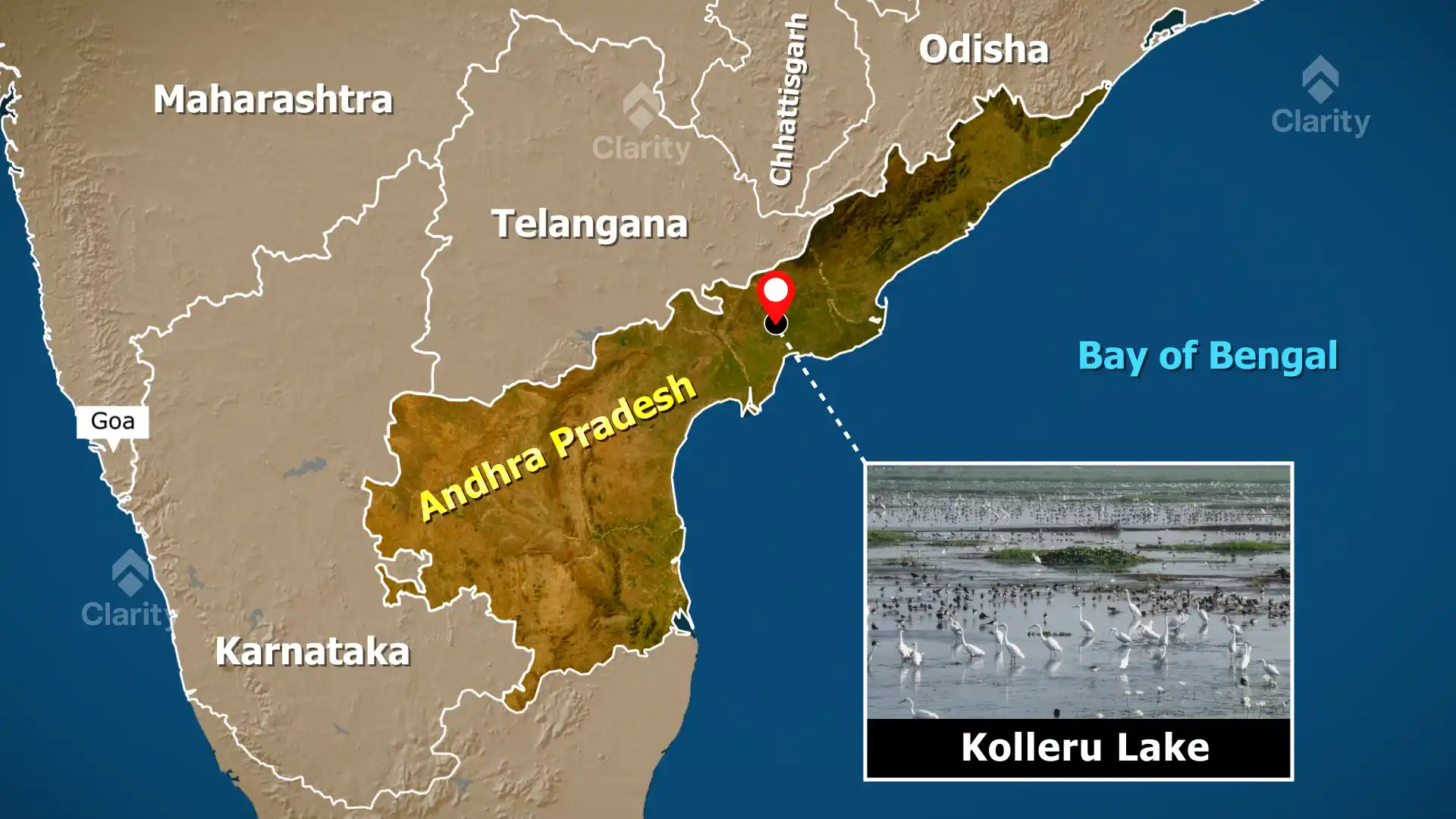
Kolleru Lake, a vast freshwater lake in Andhra Pradesh, has recently been highlighted for the revival of its traditional dried fish delicacy and for ongoing conservation efforts. As local communities gain recognition for their sustainable practices, officials are also drawing attention to the ecological importance of this lake.
Background
Kolleru Lake lies in the coastal plains between the Krishna and Godavari river deltas in Andhra Pradesh. It spans parts of the West Godavari and Krishna districts and receives water from seasonal rivers such as Budameru and Tammileru, irrigation channels and numerous drains. Because it sits between two large deltas, the lake acts as a natural flood‑balancing reservoir, storing excess river water during the monsoon season and releasing it slowly into the Bay of Bengal. In 1999 the government declared it a wildlife sanctuary, and in 2002 it was recognised as a Ramsar wetland of international importance due to its rich biodiversity.
Key features
- Large freshwater body: Kolleru Lake is among India’s largest freshwater lakes. It covers an area of up to 90 square kilometres during the dry season and expands greatly after heavy rains. The shallow depth and broad expanse allow sunlight to penetrate the water, supporting diverse plant life.
- Habitat for birds: The lake provides nesting and feeding grounds for an estimated 20 million resident and migratory birds, including the grey pelican, painted stork, ibis and spot‑billed pelican. Many species visit from distant regions such as Siberia and Central Asia.
- Ecological services: By buffering floods and recharging groundwater, the lake protects nearby villages and farmlands. Aquatic vegetation filters pollutants and provides food for fish and waterfowl.
- Livelihoods and local products: Communities around Kolleru depend on fishing, traditional paddy cultivation and small‑scale aquaculture. A dark, sun‑dried fish made from the lake’s catch — locally called karuvadu — has regained popularity and is now marketed as a high‑value delicacy.
- Threats: Encroachment for aquaculture, pollution from agricultural runoff and the growth of invasive weeds such as water hyacinth have reduced open‑water areas. Efforts are under way to clear encroachments and restore the natural hydrology.
Conclusion
Kolleru Lake is more than a scenic water body — it is a natural flood‑control system, a haven for millions of birds and a source of livelihood for thousands of families. Conserving the lake’s wetlands and regulating aquaculture are essential to maintain its ecological balance and ensure that both people and wildlife can continue to thrive.
Sources: Eluru Tourism