
Why in news?
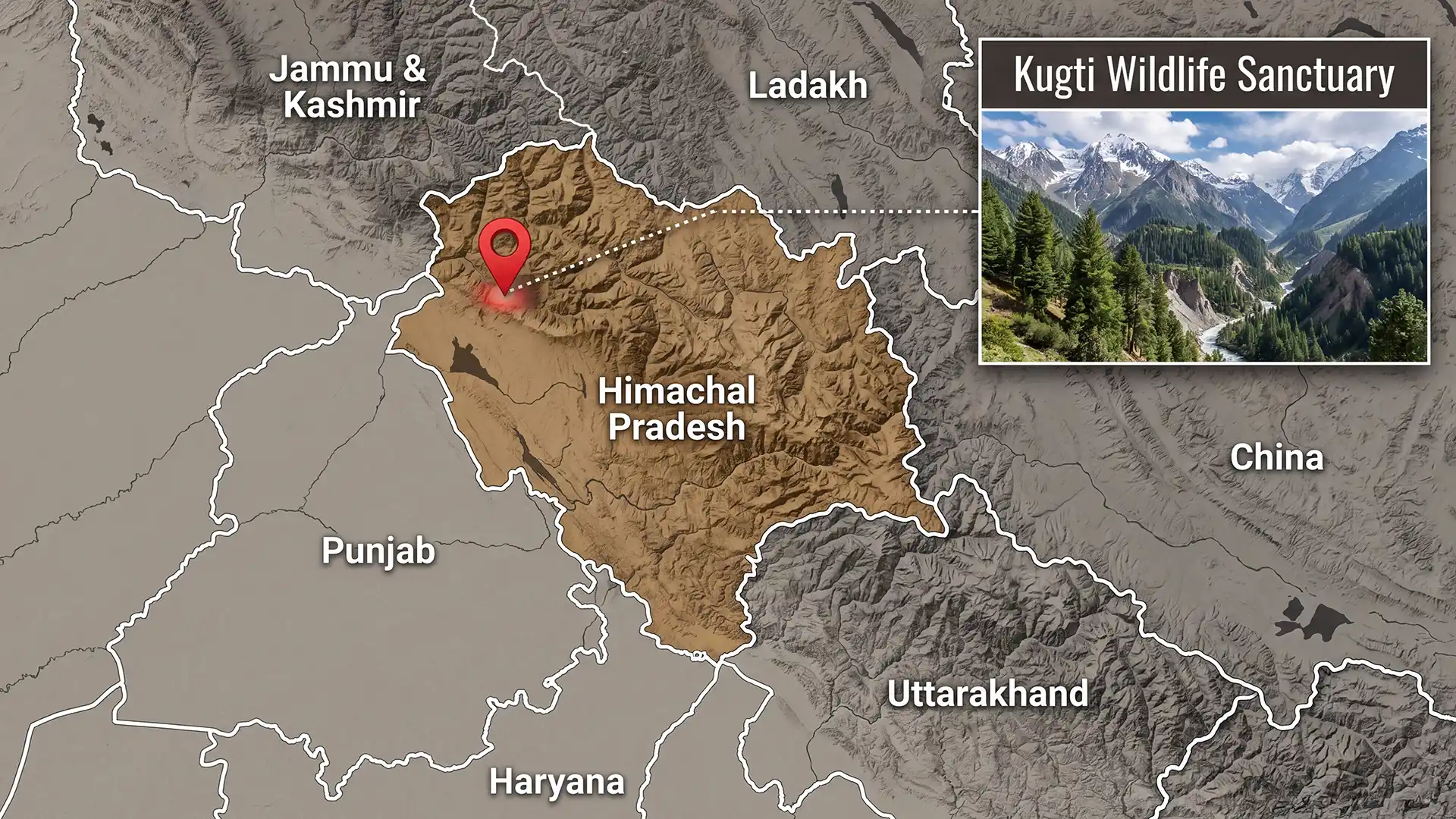
A rare albino Himalayan tahr was recently spotted in Kugti Wildlife Sanctuary in Himachal Pradesh. Sightings of albino tahr are extremely uncommon, underscoring the sanctuary’s rich biodiversity and the need for conservation.
Background
Established in 1962, Kugti Wildlife Sanctuary covers about 378 square kilometres in Chamba district. It lies between the Ravi and Chenab river valleys and includes part of the Dhauladhar range. The terrain ranges from 2,195 metres to 5,040 metres above sea level, encompassing alpine meadows, moist deodar forests and mixed coniferous woodlands.
The sanctuary is home to several sacred sites, including the Manimahesh Temple, and is connected to Tundah Wildlife Sanctuary via mountain passes. Glaciers and springs feed streams that support a mosaic of habitats, making Kugti part of an internationally recognised Key Biodiversity Area.
Flora and fauna
- Vegetation: Dense forests of deodar, blue pine, spruce and oak dominate lower altitudes, while alpine pastures harbour medicinal herbs and flowering plants.
- Mammals: The area shelters snow leopards, Himalayan brown bears, musk deer, goral, serow and Himalayan tahr. The albino tahr sighting is notable because albinism occurs in only a small fraction of individuals.
- Birdlife: Birds such as the Himalayan monal, koklass pheasant and golden eagle thrive in the varied habitats.
- Threats: Hydroelectric projects, road construction, livestock grazing and illegal hunting pose challenges to the sanctuary’s ecological balance.
Significance
- Biodiversity hotspot: Kugti’s diverse ecosystems support rare and endangered species, making it vital for conservation in the western Himalayas.
- Cultural and ecotourism value: The presence of pilgrimage routes and trekking trails draws visitors, providing livelihood opportunities for local communities while fostering appreciation of nature.
- Scientific interest: The albino tahr sighting offers researchers insight into genetic variations and emphasises the importance of protecting breeding populations.
Conclusion
The discovery of an albino tahr serves as a reminder of the unique wildlife that Kugti harbours. Sustained conservation efforts, careful infrastructure planning and community involvement are essential to preserve this fragile high‑altitude sanctuary.
Source: The Tribune

