Why in news?
On 22 January 2026, tribal artist J. Krishnan from Velaricombai village in the Nilgiris was posthumously awarded the Padma Shri for his dedication to Kurumba painting. The honour drew national attention to this endangered indigenous art form, practised by fewer than ten artists today.
Background
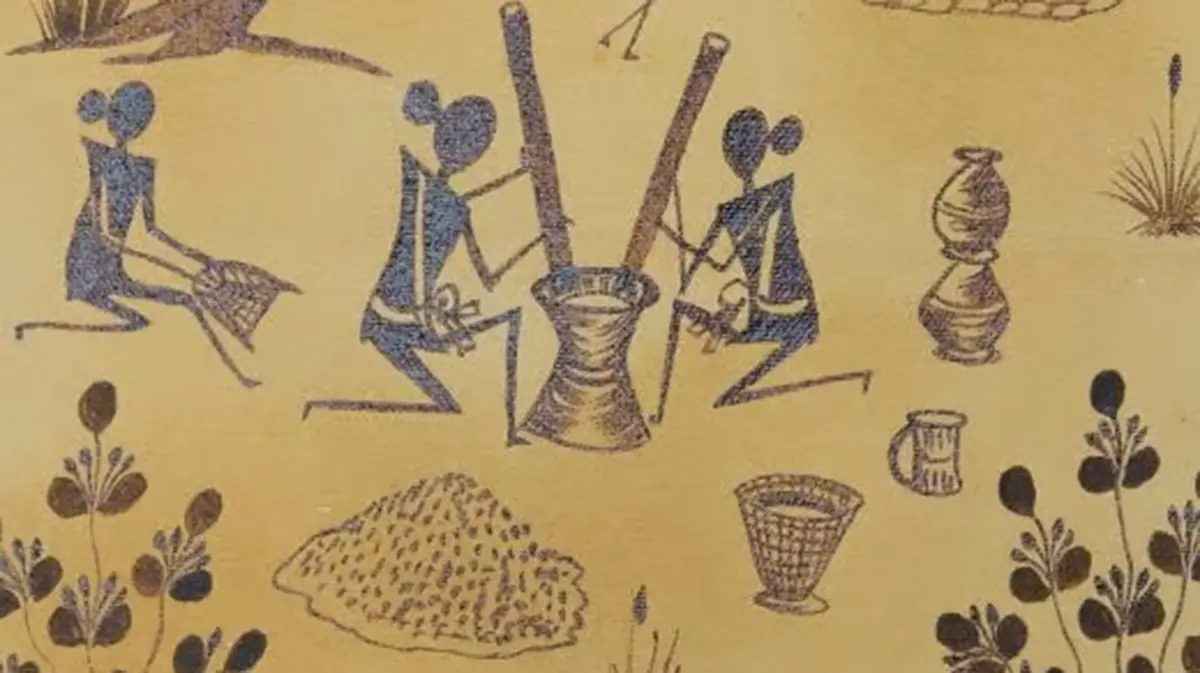
Kurumba painting is a prehistoric art tradition of the Kurumba and other indigenous communities in the Nilgiri mountains of Tamil Nadu. Archaeologists trace its origins back more than 3,000 years to rock art found at sites such as Jackanarai and Eluthu Paarai. In villages like Velaricombai and Kottappadi, artists once adorned the walls of houses and caves with simple figures during festivals and rituals.
Characteristics of Kurumba art
- Natural colours: Artists grind pigments from tree bark, mineral ochres and plant resins to create earthen tones of red, yellow, white and black. These colours are mixed with water and tamarind seeds for durability.
- Minimalist style: Figures are composed of dots, lines and triangles, often depicting hunters, dancers, animals and forest spirits. The paintings capture daily life and spiritual beliefs in a linear, abstract style.
- Ceremonial context: Kurumba paintings are traditionally created during harvest festivals, marriages and house‑building ceremonies. They are believed to invite the protection of ancestral spirits.
Challenges and revival
- Declining practitioners: With modern education and economic pressures, few young Kurumba people learn the art. Less than a dozen artists continue the tradition today.
- Lack of documentation: Because the paintings are made on walls and exposed to weather, many works have faded or been lost. There is limited archival record of techniques and symbolism.
- Revival efforts: Individuals like Krishnan have taught the craft to children and organised exhibitions. Cultural organisations advocate for documentation, financial support and inclusion of tribal art in school curricula.
Significance
Kurumba painting connects living communities with their ancient heritage and the forests they inhabit. Preserving this art fosters cultural pride and offers livelihood opportunities through tourism and handicrafts. Recognition by national awards underscores the need for sustained support.
Source: Indian Express