

Why in news?
Recent soil testing in Kerala’s Kuttanad region showed that aluminium levels in paddy fields are far above safe limits, threatening crop yields and food security. The tests were ordered after farmers noticed stunted growth in rice plants due to unusually acidic soils and poor rainfall. Scientists warned that without timely intervention the unique below‑sea‑level farming system could be badly affected.
Background
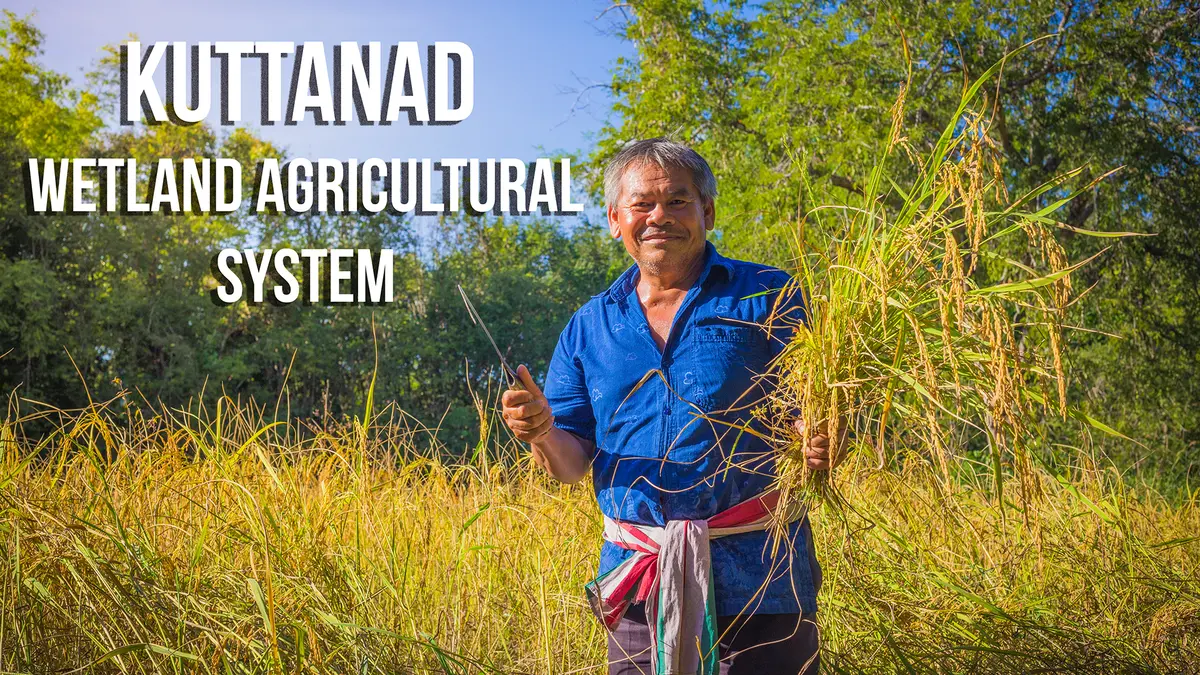
Kuttanad, located in the Alappuzha and Kottayam districts of Kerala, is famous for its below‑sea‑level rice cultivation. Farmers here reclaimed land from brackish lagoons and backwaters over 150 years ago by building earthen bunds and using water‑lifts to drain fields. The system covers about 50 000 hectares and is recognised by the Food and Agriculture Organization as a Globally Important Agricultural Heritage System. It comprises three types of polders – Karapadam, Kayal and Kari – and integrates rice farming with fish rearing, making it an example of sustainable wetland management.
Soil acidity and aluminium toxicity
- During prolonged dry spells, acid sulphate soils of Kuttanad are exposed to air. When rain is scarce and irrigation is inadequate, soil pH drops below 5.0, making aluminium compounds soluble. Soluble aluminium interferes with root growth and blocks uptake of water and nutrients, causing stunted plants.
- A recent survey found aluminium concentrations between 77 ppm and 330 ppm, which is 39–165 times higher than the safe level of about 2 ppm. The contamination has been linked to drought conditions and drainage of wetlands.
- To correct acidity, agronomists recommend applying lime or dolomite to raise the pH above 5.5. Higher pH levels reduce aluminium solubility and allow rice roots to recover.
- Farmers are also being advised to improve drainage management, alternate wetting and drying cycles, and diversify crops to build resilience against climate‑induced stress.
Significance
- Food security: Kuttanad is a major rice‑producing region in Kerala. High aluminium and acidity could reduce yields and affect livelihoods of thousands of farmers.
- Cultural heritage: The below‑sea‑level farming system showcases indigenous knowledge and hydraulic engineering that allowed communities to live with floods. Preserving it is important for cultural identity and tourism.
- Biodiversity: The wetlands support diverse birds, fish and rice varieties. Balanced soil management helps maintain this biodiversity.
- Climate change adaptation: Rising sea levels and erratic monsoons put additional pressure on Kuttanad. The current crisis underscores the need for climate‑resilient farming and wetland conservation.
Source: TH