
Why in news?
The Karnataka High Court has issued notices to the Union and State governments on a public interest litigation (PIL) challenging the approval granted to the proposed Sharavathi Pumped Storage Hydroelectric Project. Petitioners argue that approvals were granted in violation of the Wildlife (Protection) Act because the project lies within the eco‑sensitive zone of the Sharavathi Wildlife Sanctuary.
Background
The Sharavathi pumped‑storage project aims to generate around 2,000 megawatts of electricity by storing water at different elevations and releasing it through turbines during peak demand. Karnataka Power Corporation Limited plans to build the project between two existing reservoirs on the Sharavathi River: the Talakalale dam will form the upper reservoir while the Gerusoppa dam will act as the lower reservoir. Water will be pumped uphill during off‑peak hours and released downhill to generate power when demand rises. Such systems help integrate renewable energy sources by storing excess power.
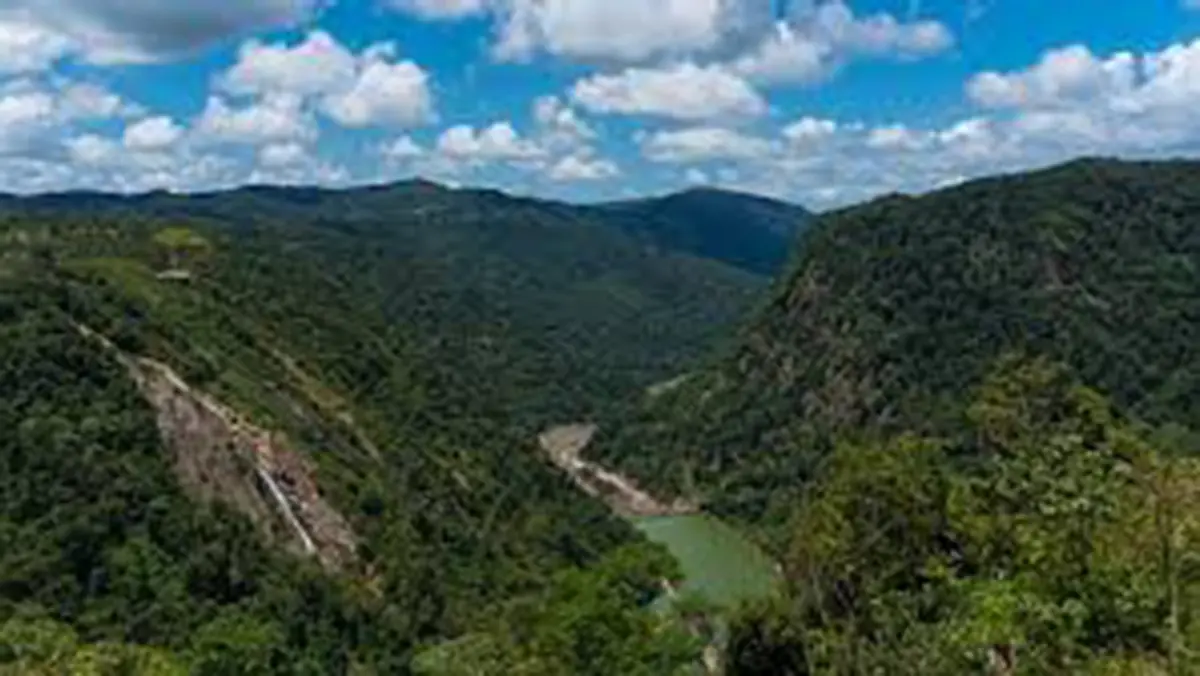
The project lies within the Sharavathi Valley, part of the Western Ghats, an area known for rich biodiversity including endangered species such as the lion‑tailed macaque, hornbills and king cobras. The High Court notice followed a PIL arguing that approvals from the State Wildlife Board and the National Board for Wildlife were inconsistent with Section 29 of the Wildlife (Protection) Act, which restricts activities within sanctuaries. Petitioners contend that the approval process ignored the sanctuary’s eco‑sensitive zone and violated guidelines meant to protect wildlife.
Main points
- Project scale: Planned capacity of 2 gigawatts, making it one of India’s largest pumped‑storage projects.
- Geographic setting: Located in the Sharavathi River basin in the Shivamogga district of Karnataka. The river flows westward and forms the famous Jog Falls before emptying into the Arabian Sea.
- Environmental concerns: The site falls within the eco‑sensitive zone of the Sharavathi Wildlife Sanctuary. Critics warn that construction could disrupt habitats and threaten rare species.
- Legal basis of the PIL: Petitioners cite Section 29 of the Wildlife (Protection) Act, which restricts the destruction, exploitation or diversion of wildlife habitat inside sanctuaries.
- Government response: The High Court has asked the Centre and State government to respond. The case highlights the tension between energy infrastructure and biodiversity conservation.
Sources: The Hindu

