

Why in news?
Botanists have discovered a new species of wildflower on the lateritic plateaus of the Ratnagiri district in Maharashtra’s Konkan region. Named Lepidagathis konkanensis, the bright yellow plant highlights the region’s rich but fragile biodiversity and the need for its conservation.
Background
The genus Lepidagathis belongs to the Acanthaceae family and includes small herbs and shrubs. Researchers from the Agharkar Research Institute were surveying the low‑nutrient lateritic plateaus when they encountered an unusual plant with golden blossoms. After analysing its physical features and DNA, they confirmed it as a previously undescribed species. The plant is restricted to a small area (<65 square kilometres) and grows in open patches between rocks, where it survives the harsh wet–dry cycles of the Konkan plateau.
Distinctive features
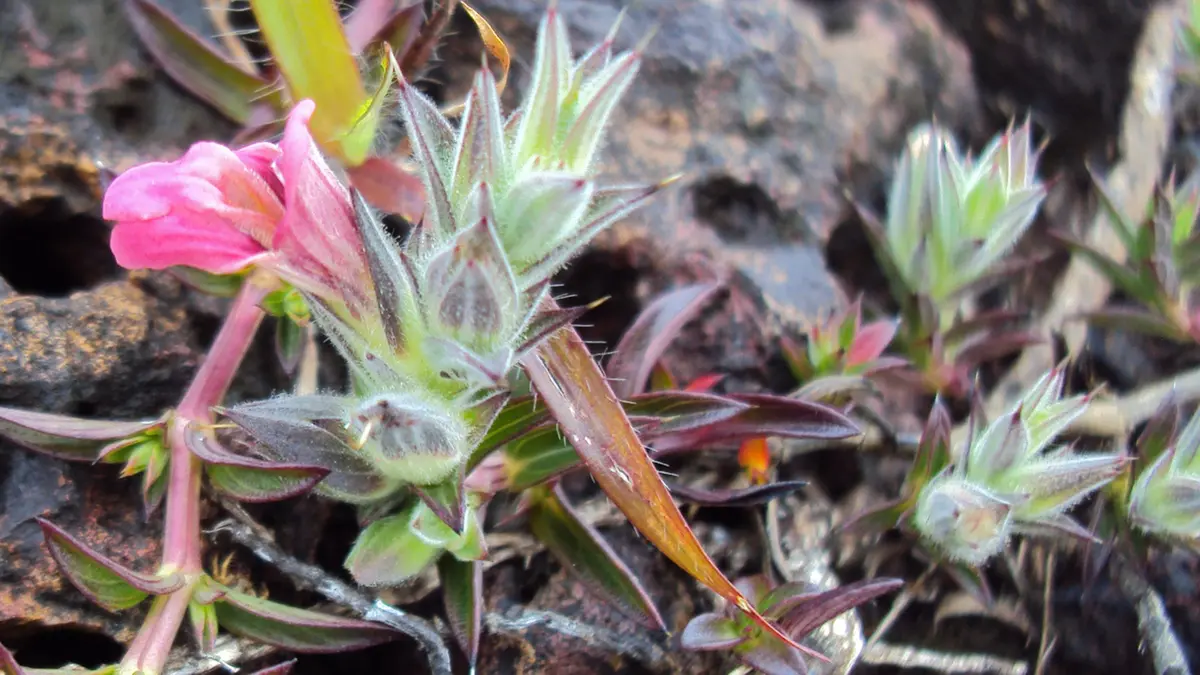
- Bright two‑lipped flowers: The plant produces dense, cylindrical flower heads about two centimetres long. Each flower has yellow two‑lipped petals that attract pollinators.
- Compact growth: Unlike related species that have larger heads, L. konkanensis has shorter inflorescences and smaller seeds. The style (female part) is also shorter than that of its relatives.
- Endemic habitat: It is known only from the Ratnagiri laterite plateaus, where it must survive seasonal fires, grazing and increasing tourism.
Conservation concerns
Because the species has such a small range and faces pressures from development and fire, scientists recommend listing it as Data Deficient on the IUCN Red List until more population data are available. Protecting the lateritic plateaus is vital to prevent the loss of this unique plant and other rare species that call these rocky landscapes home.
Source: Research Matters