

Why in news?
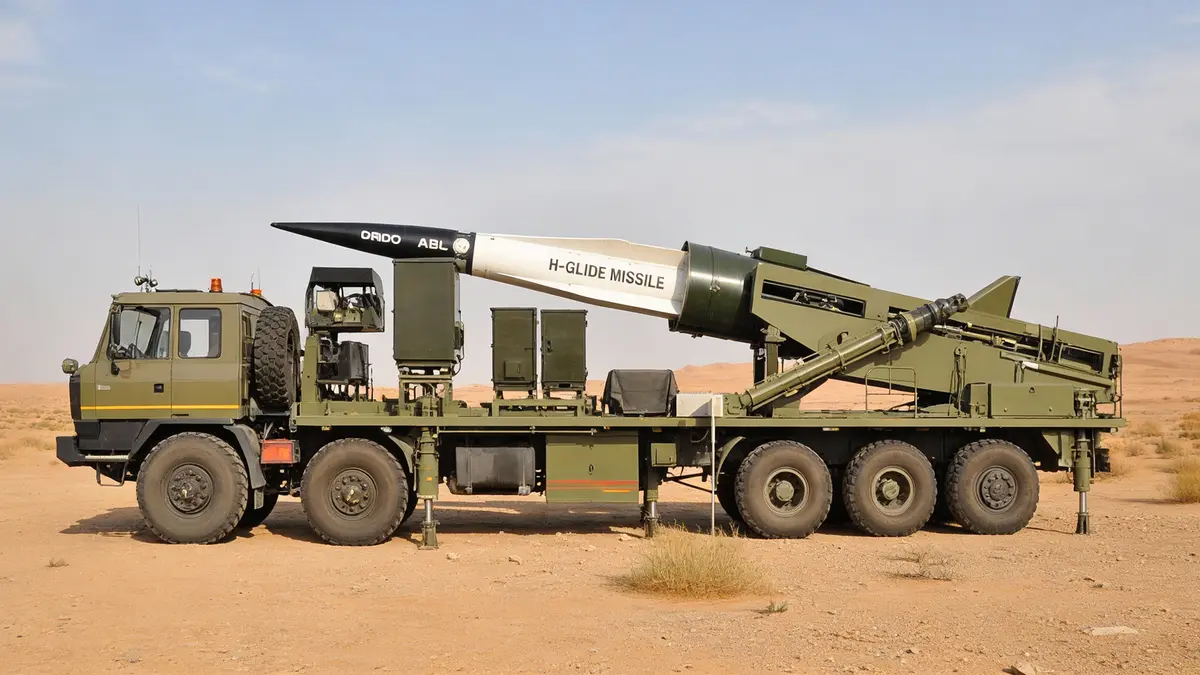
India’s home‑grown Long Range Anti‑Ship Missile (LRAShM) will be showcased during the 2026 Republic Day parade. The missile represents a significant leap in indigenous hypersonic technology, and its parade appearance highlights India’s progress toward self‑reliant defence.
Background
The LRAShM is a hypersonic glide missile developed by the Defence Research and Development Organisation (DRDO). Flight tests conducted in late 2024 demonstrated a range of more than 1,500 kilometres and showed that the weapon can travel at about Mach 10. A distinctive feature is its delta‑wing hypersonic glide vehicle (HGV), which allows the missile to manoeuvre at high altitudes and avoid enemy air defences. The missile can be launched from land‑based launchers or from warships, and it is designed to carry conventional or nuclear warheads.
Features and capabilities
- Speed and range: The missile’s hypersonic glide vehicle enables speeds greater than five times the speed of sound. Its range exceeds 1,500 km, allowing it to hit targets across the open ocean within minutes.
- Guidance system: A radio‑frequency seeker and an X‑band radar provide accurate mid‑course and terminal guidance. The sophisticated guidance allows the missile to make rapid course corrections and strike moving vessels with precision.
- Dual‑platform deployment: LRAShM can be fired from mobile launchers on land or from naval vessels. This versatility means it can complement existing cruise missiles like BrahMos while extending India’s maritime strike reach.
- Heat‑resistant materials: Special alloys and thermal protection systems allow the missile to withstand the extreme temperatures generated by hypersonic flight.
- Deterrence and deterrent effect: By giving India the capability to threaten adversary ships far from its shores, the missile strengthens maritime deterrence and supports doctrines of sea denial and anti‑access/area‑denial.
Significance
- Technological advancement: The LRAShM showcases progress in India’s hypersonic and guidance technologies. Success in indigenous development reduces reliance on foreign systems and advances the Aatmanirbhar Bharat initiative in the defence sector.
- Strategic reach: A range of over 1,500 km gives India the ability to deter hostile naval movements deep within the Indian Ocean Region. The missile fills a capability gap between supersonic cruise missiles and long‑range ballistic missiles.
- Comprehensive deterrence: The option to equip the missile with either conventional or nuclear warheads provides flexibility across a spectrum of conflict scenarios.
- Export potential: Once fully tested and inducted, India may offer variants to friendly countries, boosting defence exports and international partnerships.
Conclusion
The Long Range Anti‑Ship Missile demonstrates how India is moving from buyer to developer of cutting‑edge weapons. As testing continues and production ramps up, the LRAShM is expected to significantly enhance the Indian Navy’s maritime strike capabilities and contribute to stability in the region.
Sources: Zee News