
Why in news?
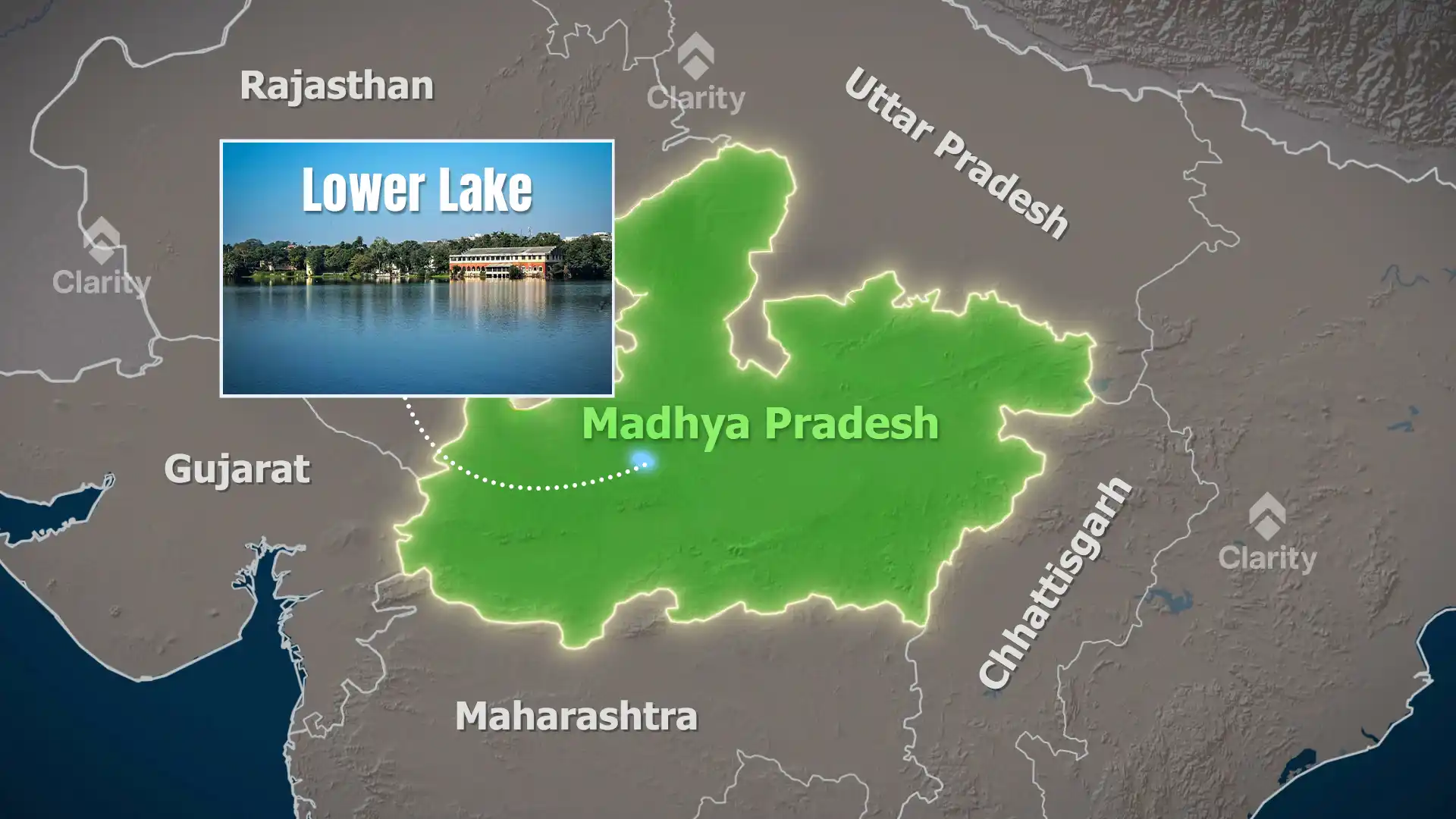
The National Green Tribunal (NGT) has directed the Madhya Pradesh Pollution Control Board to inspect the Lower Lake in Bhopal. The order followed petitions about illegal encroachments on the lake’s banks, untreated sewage flowing into the water and a general decline in water quality. The tribunal’s action draws attention to the challenges facing this historic lake.
Background
The Lower Lake (also known locally as Chota Talab) was built in 1794 by Chote Khan, a minister in the court of Nawab Hayat Muhammad Khan Bahadur. Together with the larger Upper Lake, it forms the Bhoj Wetland in the heart of Bhopal. The lake covers about 1.29 square kilometres, with a catchment area of 9.6 square kilometres. As a part of the Bhoj Wetland, it was designated a Ramsar site in 2002 because of its ecological importance and because it supplies drinking water to a large part of the city. Despite this status, the Lower Lake receives no fresh water inflow; it depends on seepage from the Upper Lake and rainfall. Over the years it has suffered from encroachments along its banks, the discharge of sewage and solid waste, and a reduction in depth and area.
Key concerns highlighted by NGT
- Encroachment and shrinking area: Petitioners alleged that boulders and construction debris are being placed along the lake’s margins to create land, reducing the surface area and fragmenting the wetland.
- Sewage inflow: Without proper sewage treatment, wastewater from nearby settlements flows directly into the lake. This leads to eutrophication, algal blooms and foul odours.
- Water quality degradation: Tests have shown high levels of biochemical oxygen demand (BOD) and coliform bacteria, making the water unfit for most uses and threatening aquatic life.
- Loss of cultural and ecological value: The lake is part of Bhopal’s heritage and supports fish, migratory birds and other wildlife. Degradation endangers this biodiversity and reduces recreational and religious uses for local residents.
Significance and the way forward
- Protecting urban wetlands: The Lower Lake is an example of how unplanned urban growth can harm natural water bodies. Restoring it requires clearing encroachments, enforcing buffer zones and creating alternative housing for displaced families.
- Sewage treatment: Upgrading or constructing new sewage treatment plants and ensuring that only treated effluent enters the lake is crucial. Decentralised sewage management in surrounding colonies can also reduce pollution.
- Community involvement: Local communities, fishing cooperatives and heritage groups should be involved in conservation. Public awareness campaigns about the lake’s importance can help prevent littering and illegal dumping.
- Long‑term monitoring: Continuous monitoring of water quality and strict enforcement of environmental regulations will help prevent future deterioration. Periodic desilting and removal of invasive weeds can improve ecological health.
Source: Times of India

