

Why in news?
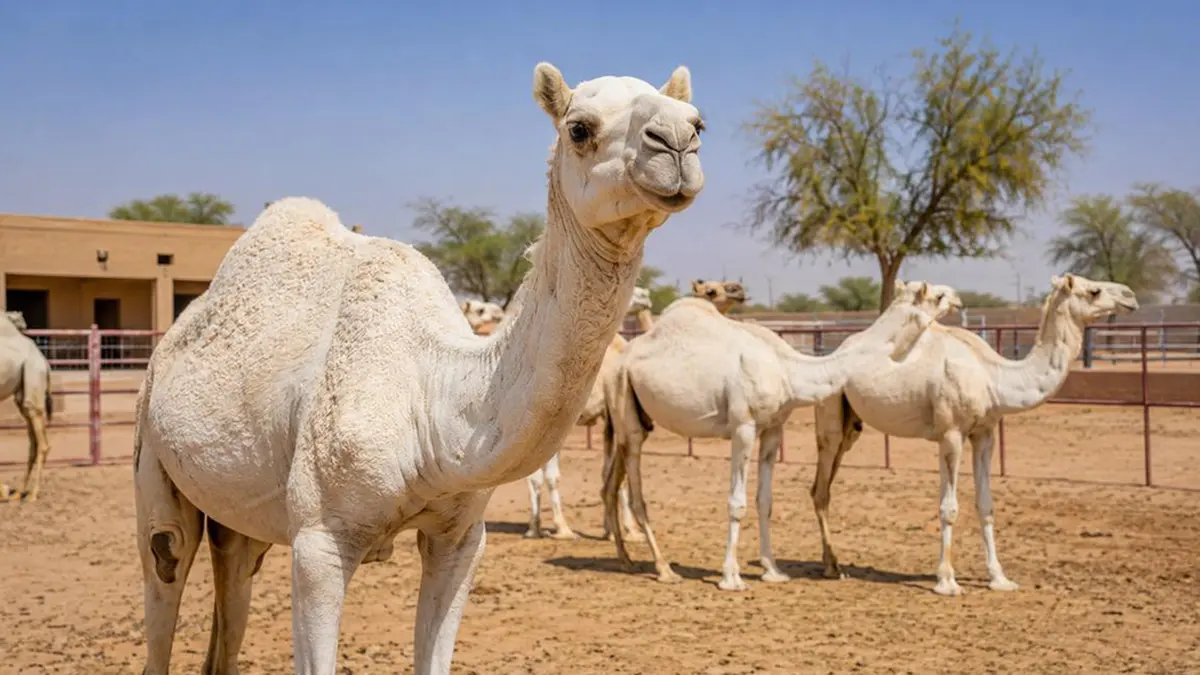
A July report warned that only 102 Malvi camels remained in the 2019 breed count. The National Research Centre on Camel began a conservation breeding effort. Malvi is one of India’s nine registered camel breeds. Its very small population threatens both genetic diversity and pastoral livelihoods.
Background
The Malvi camel is a recognised Indian breed associated with Madhya Pradesh’s Malwa region.
It is a one-humped dromedary, scientifically belonging to Camelus dromedarius.
Its coat is usually very light brown or nearly white.
Malvi camels are comparatively small, compact and suited to local farming and transport conditions.
Where is the breed found?
The registered home tract lies in Madhya Pradesh, especially around the Malwa landscape.
News reports recorded animals across Mandsaur, Neemuch and Ratlam, with adjoining Rajasthan populations.
Pastoral movement can take herds across administrative borders during changing grazing seasons.
A breed’s home tract therefore differs from every place where individual animals may appear.
Traditional economic value
- Male camels pull carts, carry loads and support demanding agricultural work.
- Females provide valuable milk under difficult dryland feeding conditions.
- Herding supports mobile pastoral knowledge, cultural practices and rural livelihoods.
- Breed adaptation preserves useful genes for heat, drought and seasonal feed scarcity.
Older breed research reported average daily milk production near two kilograms under ordinary management.
Well-fed animals could produce more, but output varies with nutrition, health and lactation stage.
How serious is the decline?
The 2019 breed-wise count recorded only 102 Malvi camels.
A project scientist described populations below 300 breeding females as facing an extreme survival risk.
This is a domestic-breed conservation assessment, not an International Union for Conservation of Nature listing.
The global Red List mainly assesses wild species rather than individual livestock breeds.
India’s wider camel decline
India counted about 252,000 camels during the Twentieth Livestock Census in 2019.
This total was 37.1 per cent lower than the corresponding 2012 figure.
The decline affects several breeds, although their population sizes and pressures differ considerably.
Why are camel numbers falling?
| Pressure | Effect on herders and animals |
|---|---|
| Transport mechanisation | Tractors and vehicles reduce demand for draught camels. |
| Grazing loss | Enclosures, roads and land conversion restrict customary routes. |
| Weak milk markets | Herders receive limited returns despite camel milk’s potential value. |
| Small breeding base | Few animals increase inbreeding risks and make recovery difficult. |
| Changing livelihoods | Younger families may leave herding because incomes remain uncertain. |
What conservation has begun?
The Indian Council of Agricultural Research runs the National Research Centre on Camel at Bikaner.
The centre began procuring suitable Malvi animals for scientific breeding and herd development.
Conservation breeding can increase numbers while maintaining records of ancestry and genetic diversity.
However, a research herd alone cannot restore the breed’s complete pastoral economy.
Long-term recovery also needs grazing access, veterinary care, fair milk markets and herder participation.
Registered Indian camel breeds
The National Bureau of Animal Genetic Resources lists nine registered Indian camel breeds.
They are Bikaneri, Jaisalmeri, Jalori, Kutchi, Malvi, Marwari, Mewari, Mewati and Kharai.
Why livestock diversity matters
Local breeds contain adaptations shaped by climate, disease exposure, food availability and human selection.
Losing a breed also removes knowledge, livelihood practices and options for future climate adaptation.
Conservation must therefore protect living production systems, not only animals inside institutional farms.
Conclusion
Saving the Malvi camel requires careful breeding alongside a viable future for its pastoral keepers.