

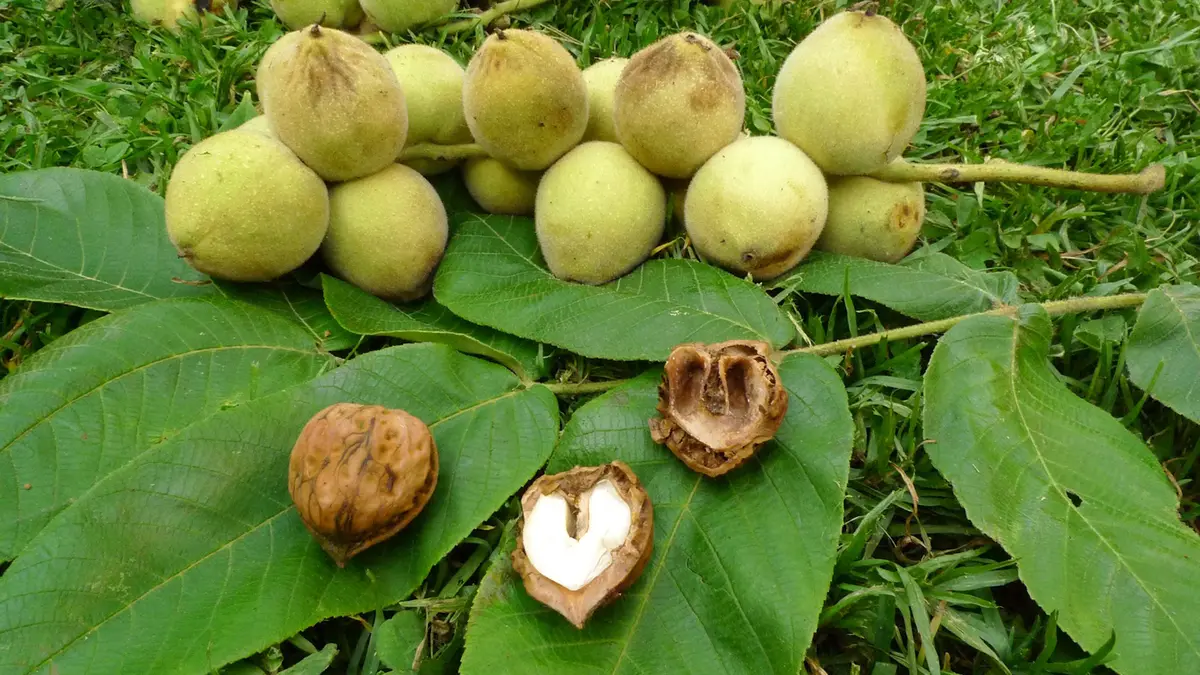
Why in news?
Scientists have discovered that leaves from the Manchurian walnut tree contain compounds that can suppress the growth of common agricultural weeds. The finding has generated interest because it may lead to natural herbicides that are less harmful to the environment. Reports note that extracts from the tree’s leaves stunted root growth in laboratory weeds and disrupted their stress‑response pathways, making them more effective than some existing commercial products.
Background
The Manchurian walnut (Juglans mandshurica) is a hardy, deciduous tree native to the temperate forests of northeastern China, Korea and parts of the Russian Far East. It tolerates very cold winters, surviving temperatures as low as –45 °C, and grows quickly during its first two decades. Mature trees can reach heights of 30 metres and live for several centuries. The tree thrives on well‑drained soils with neutral pH and begins bearing nuts seven to ten years after germination. Its wood is valued in furniture‑making, while oils and extracts from its fruits are used in folk medicine for their analgesic and antifungal properties.
Research findings
- Allelopathic compound: Researchers isolated a chemical called 2Z‑decaprenol from Manchurian walnut leaves. In laboratory tests it halted root growth in several weed species, including pigweed and lamb’s‑quarters, by interfering with the plants’ ability to manage stress.
- Eco‑friendly potential: Because the compound is naturally derived and biodegradable, it could form the basis of safer herbicides. Unlike many synthetic weed killers, it breaks down rapidly and poses fewer risks to soil and water.
- High potency: Experiments showed that small concentrations of the extract were more effective than some commercial weed‑control products. Scientists believe this is due to the compound’s ability to disrupt multiple biological pathways simultaneously.
- Future development: Further research is needed to assess how the compound behaves in field conditions, whether it affects non‑target plants and how it can be produced at scale without damaging forests.
Significance
The discovery highlights the value of studying under‑explored species for sustainable agriculture. If developed responsibly, herbicides based on Manchurian walnut could reduce dependence on synthetic chemicals, benefit organic farmers and help manage herbicide‑resistant weeds. However, scientists caution that large‑scale extraction of leaves should not threaten the tree’s natural populations.
Sources: The Times of India ·