
Why in news?
The Supreme Court declined to interfere with a Bombay High Court order allowing the removal of nearly 45,700 mangrove trees for the Versova–Bhayandar coastal road in Mumbai. Environmentalists had challenged the clearance, but the Court upheld the project’s permission while emphasising compensatory afforestation.
Background
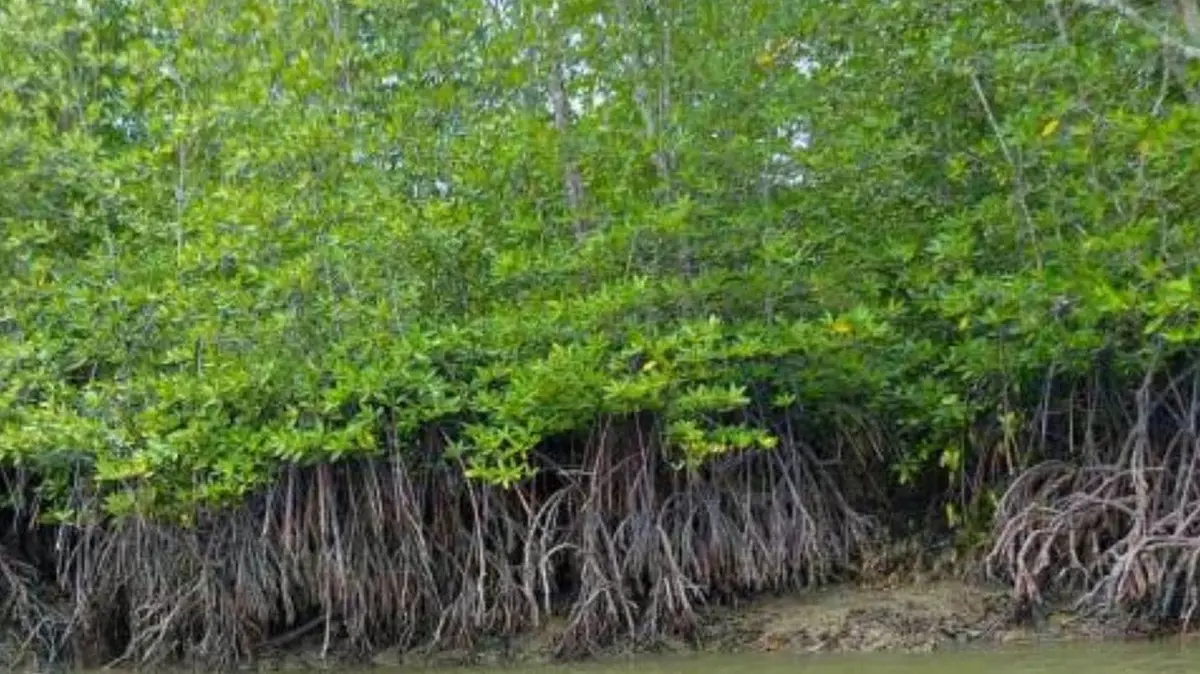
Mangroves are salt‑tolerant trees and shrubs that inhabit tidal coastal zones in tropical and subtropical regions. Their complex root systems enable them to survive in brackish water, low‑oxygen soils and fluctuating tides. India’s major mangrove ecosystems include the Sundarbans, Mahanadi, Godavari and Krishna deltas; the Pichavaram and Bhitarkanika forests; and the Gulf of Kutch and Andaman–Nicobar islands.
Ecological importance of mangroves
- Coastal protection: Mangrove forests buffer shorelines against storms, erosion and flooding. Their roots stabilise sediments, reducing the impact of waves and storm surges and protecting coastal communities.
- Habitat and biodiversity: These ecosystems support more than 1,500 species of fish, birds and other wildlife. They serve as nurseries for many marine organisms and provide nesting sites for migratory birds.
- Water filtration: Mangroves filter pollutants and trap sediments, improving water quality in adjacent seas and estuaries.
- Carbon sequestration: Despite covering less than 1 % of the world’s tropical forests, mangroves store large amounts of carbon in their biomass and soils, helping mitigate climate change.
Supreme Court’s decision
The Bombay High Court had allowed Mumbai’s civic body to remove the mangroves after examining environmental clearances and assurances of compensatory afforestation. Petitioners argued that the loss of trees would harm biodiversity and violate earlier Supreme Court orders protecting mangroves. The apex court observed that development and environmental protection must be balanced, noted the High Court’s detailed reasoning and declined to reopen the case.
Conclusion
While infrastructure projects can ease congestion and foster economic growth, mangroves play a critical role in safeguarding coasts and sustaining marine life. Effective compensatory afforestation and long‑term monitoring are essential to offset the ecological losses caused by such projects.
Source: IE

