
Why in news?
India and Mauritius have signed agreements to implement projects under a special economic assistance package worth US$ 680 million. During External Affairs Minister S. Jaishankar’s visit to Port Louis, both sides agreed to advance infrastructure, health, education and energy projects. They also finalised a government‑to‑government pact for supplying oil and gas to Mauritius and launched a “Karmayogi” training portal for Mauritian civil servants.
Background
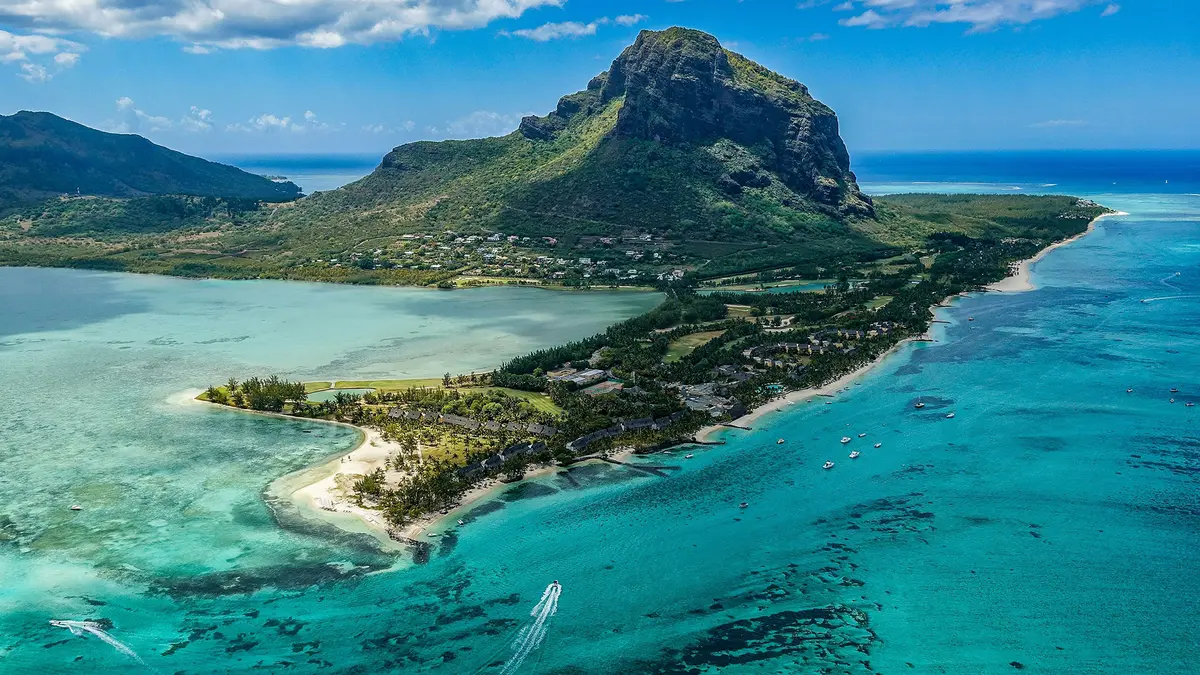
Mauritius is an island country situated about 2,000 kilometres off the southeast coast of Africa in the Indian Ocean. It forms part of the Mascarene Islands, which also include Réunion and Rodrigues. The main island is volcanic in origin and is surrounded by coral reefs. Mauritius gained independence from British rule on 12 March 1968 and became a republic in 1992. Port Louis is its capital and largest city.
Geography and climate
- Terrain: The island rises from a coastal plain to a central plateau bordered by volcanic mountain ranges. The highest point is Piton de la Petite Rivière Noire at 828 metres. Extensive coral reefs create shallow lagoons around much of the coastline.
- Rivers and lakes: The Grand River South East and the Black River provide hydroelectric power. Lake Vacoas is a key freshwater reservoir.
- Climate: Mauritius enjoys a maritime subtropical climate with two seasons – a hot, humid summer from December to April and a cooler, drier winter from June to September. Annual rainfall ranges from 900 millimetres on the west coast to over 5,000 millimetres on the central plateau.
People and culture
- Diverse population: About two‑thirds of Mauritians are of Indo‑Pakistani origin, descended from indentured labourers who worked on sugarcane plantations during the 19th century. The rest are of Creole (mixed African and French), Chinese and Franco‑Mauritian descent.
- Languages: English is the official language, but most people speak Mauritian Creole (a French‑based creole). French, Bhojpuri, Hindi, Tamil and other languages are also common.
- Religion: Roughly half the population is Hindu, one third is Christian (mainly Roman Catholic) and the remainder are Muslims or Buddhists. Mauritians typically speak multiple languages and practise religious tolerance.
Economy and relations with India
- Economic structure: Mauritius has transitioned from a monocrop sugar economy to a diversified one based on manufactured exports, tourism, financial services and information technology. It is a member of the Common Market for Eastern and Southern Africa (COMESA) and the Southern African Development Community (SADC).
- Ties with India: India and Mauritius share close historical and cultural bonds. India has provided lines of credit, grants and development assistance for infrastructure, metro projects, education and healthcare in Mauritius. The new $680 million package includes 11 community projects and supports energy security through supply of oil and gas.
- Strategic location: Located astride major sea lanes, Mauritius hosts the Indian Ocean Commission and the Indian Ocean Rim Association secretariat, making it important for maritime security and regional cooperation.
Conclusion
The implementation of India’s economic assistance package reflects the deepening partnership between the two countries. Beyond infrastructure and energy projects, cooperation in education, governance and security will help Mauritius address challenges such as climate change, energy dependence and sustainable development.
Source: Hindustan Times

