

Why in news?
The World Health Organisation has warned that measles killed about ninety‑five thousand people worldwide in 2024, mostly unvaccinated children under five. First‑dose vaccination coverage fell to eighty‑four percent during the pandemic, far below the ninety‑five percent needed to stop outbreaks. Health agencies are urging countries to intensify immunisation drives.
Background
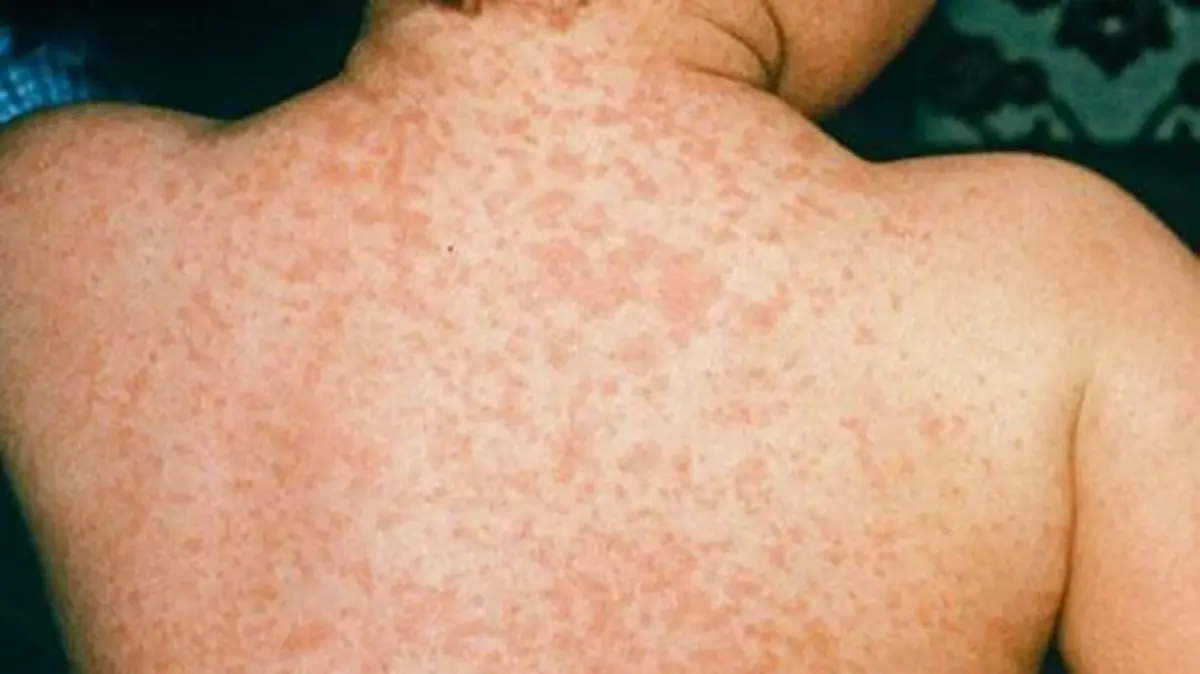
Measles is a highly contagious viral disease caused by a paramyxovirus. It spreads through droplets when infected people cough or sneeze. After an incubation period of ten to fourteen days, symptoms appear: high fever, runny nose, cough, red watery eyes, tiny white spots on the inside of the mouth (Koplik’s spots) and a spreading red rash.
Risks and prevention
- Measles can lead to serious complications such as blindness, encephalitis (swelling of the brain), severe diarrhoea, pneumonia and death, particularly in malnourished children and those with weakened immune systems.
- There is no specific antiviral treatment; care involves hydration, nutrition and vitamin A supplementation to prevent eye damage.
- The measles vaccine, given in two doses (often as part of the Measles‑Mumps‑Rubella or MMR shot), provides long‑term immunity. Global vaccination campaigns between 2000 and 2024 prevented an estimated fifty‑nine million deaths.
- To stop outbreaks, at least ninety‑five percent of the population must be immunised. Disruptions during the COVID‑19 pandemic allowed measles to resurge.
Health agencies encourage parents to ensure their children receive both doses of the vaccine on schedule and call for governments to strengthen routine immunisation programmes. Improved surveillance and rapid response to outbreaks are also essential to prevent needless deaths from this preventable disease.
Source: The Times of India