

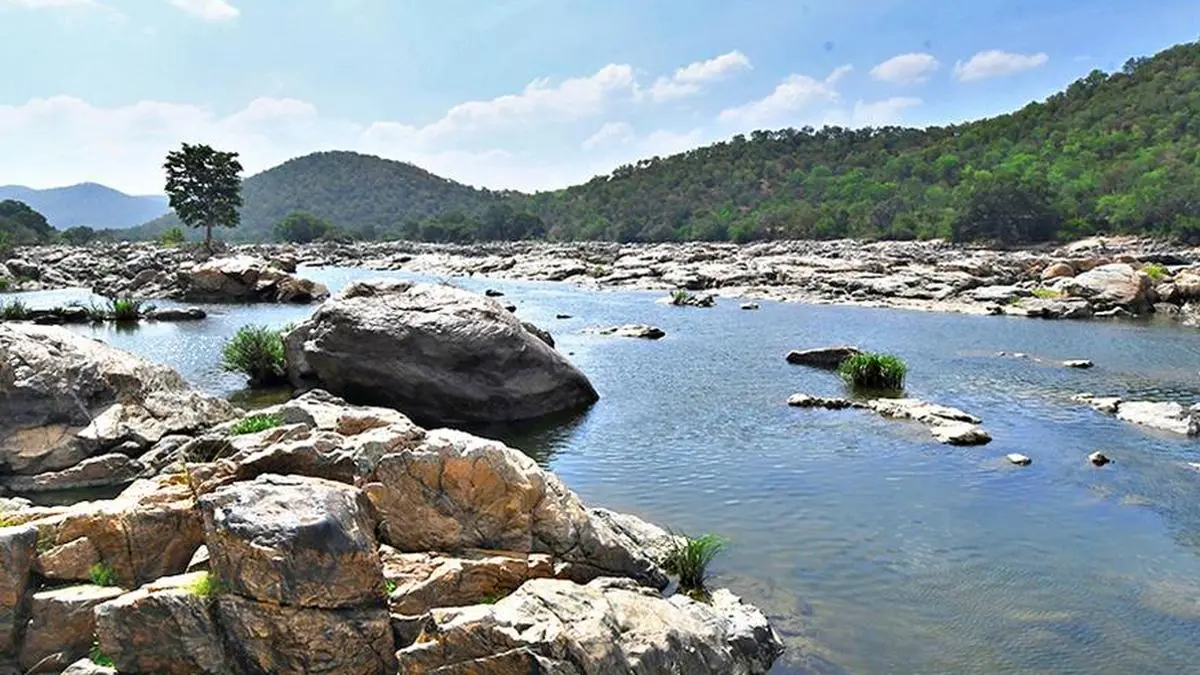
Why in news?
The Karnataka government announced that it would submit a revised detailed project report for the proposed Mekedatu balancing reservoir on the Cauvery river. The multibillion‑rupee project has been delayed for years because of objections from the neighbouring state of Tamil Nadu. Karnataka claims the reservoir is needed to supply drinking water to Bengaluru and generate hydroelectricity, while Tamil Nadu worries it will reduce the downstream flow of the Cauvery.
Background
The Mekedatu scheme is a multi‑purpose project planned at a narrow gorge (‘Mekedatu’ literally means “goat’s leap”) on the Cauvery river in Kanakapura taluk of Ramanagara district, about 90 kilometres from Bengaluru. The project envisions building a concrete gravity dam near the confluence of the Cauvery and Arkavathi rivers. The reservoir would hold roughly 66 thousand million cubic feet (TMC) of water and feed an underground powerhouse capable of generating 400 megawatts of electricity. Once operational it could supply over 4 TMC of drinking water to the growing metropolis of Bengaluru.
Key features
- Location: The proposed dam site lies 4 km upstream of the Karnataka–Tamil Nadu border at Mekedatu, near the confluence of the Cauvery and its tributary Arkavathi.
- Purpose: The project aims to balance river flows by storing flood waters during the monsoon and releasing them in dry months. It is designed to supply drinking water to Bengaluru while also generating hydroelectric power.
- Physical specifications: Plans call for a 99‑metre‑high, 735‑metre‑long concrete gravity dam, an underground powerhouse and water conductor system. The reservoir would have a capacity of about 66 TMC and produce 400 MW of power.
- Benefit sharing: According to Karnataka, the project will not reduce Tamil Nadu’s share of Cauvery water because releases downstream will continue in accordance with the 2018 interstate water allocation upheld by the Supreme Court. Tamil Nadu however fears that the last free flow point will be blocked.
Issues and implications
- Interstate dispute: Tamil Nadu has repeatedly opposed the dam, arguing that any storage upstream threatens its agricultural and drinking water needs. Karnataka maintains that the balancing reservoir will manage floods and does not reduce flows mandated by the Cauvery Water Dispute Tribunal.
- Environmental concerns: Building a large dam in a forested gorge requires diverting forest land and may affect downstream ecosystems. Detailed environmental impact assessments will be necessary before construction can begin.
- Benefits to Bengaluru: The city of Bengaluru suffers chronic water shortages and currently depends on pumping Cauvery water over long distances. Supporters argue that the new reservoir would supply drinking water reliably while generating renewable energy.
- Current status: The revised project report must be approved by India’s Central Water Commission and Ministry of Environment, Forest and Climate Change, after which the two states need to reach consensus on water sharing for construction to proceed.
Source: TH