
Why in news?
The Deendayal Port Authority (Kandla Port) on India’s western coast has advanced its methanol bunkering capabilities, positioning itself as a key hub in emerging green shipping corridors. The port completed a trial shore‑to‑ship bunkering operation and was rated Level 6 on the International Association of Ports and Harbors’ Port Readiness scale. These steps support India’s ambition to decarbonise maritime transport and transition to low‑carbon fuels.
Background
Methanol (CH3OH), also known as methyl alcohol or wood alcohol, is the simplest alcohol. Historically produced by distilling wood, it is now manufactured by reacting carbon monoxide and hydrogen (syngas) over a catalyst. Syngas can be derived from natural gas, coal or biomass, making methanol a potential renewable fuel.
Properties and applications
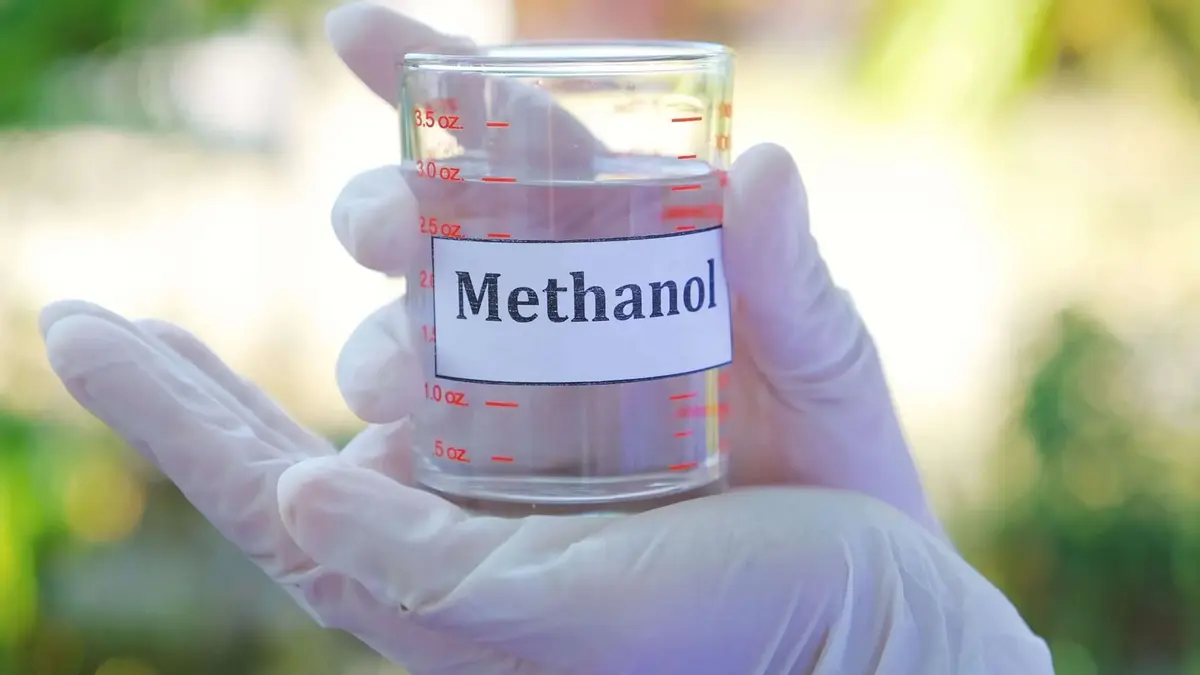
- Physical characteristics: Methanol is a colourless, volatile liquid with a faintly sweet odour. It mixes completely with water and burns with a nearly invisible flame. While useful as a fuel, it is toxic if ingested.
- Chemical feedstock: Large volumes of methanol are converted into formaldehyde for resins, plastics and textiles, and into dimethyl ether used in aerosol propellants and as a diesel substitute. It is also used as a solvent and in the production of pharmaceuticals and perfumes.
- Fuel potential: Methanol has a high octane rating and can be blended with gasoline or used directly in specially designed engines. It is increasingly considered for marine fuel because it produces fewer particulates and sulphur oxides than conventional bunker fuel.
Deendayal Port’s initiative
- Existing infrastructure: Kandla Port has long handled methanol as cargo and possesses storage tanks, pipelines and jetties compatible with the fuel. Upgrading these facilities for bunkering prepares the port to refuel dual‑fuel ships.
- Trial bunkering: In April 2026 the port, along with partners such as Stolt Tankers and Indian Oil Corporation, conducted a shore‑to‑ship bunkering trial to validate safety protocols and transfer procedures.
- Green shipping corridors: The port aims to supply about 500,000 tonnes per year of renewable e‑methanol by 2028–29 for vessels operating between Asia and Europe. By embracing cleaner fuels like methanol and ammonia, India aligns with global efforts to achieve net‑zero emissions in shipping by 2050.
Benefits of methanol as a marine fuel
- Lower emissions: Compared to heavy fuel oil, methanol produces fewer greenhouse gases, particulates and nitrogen oxides. When made from renewable feedstocks, it can significantly reduce a ship’s carbon footprint.
- Safety advantages: Methanol has a lower risk of catastrophic fires or spills compared to gasoline or diesel because it dissolves in water and evaporates quickly.
- Diverse feedstocks: The ability to produce methanol from natural gas, biomass or captured carbon provides energy security and flexibility.
Conclusion
By pioneering methanol bunkering, Kandla Port is positioning India at the forefront of sustainable maritime transport. Widespread adoption of methanol and other low‑carbon fuels will be crucial for the global shipping industry to meet climate goals while keeping trade flowing.
Source: PIB

