
Why in news?
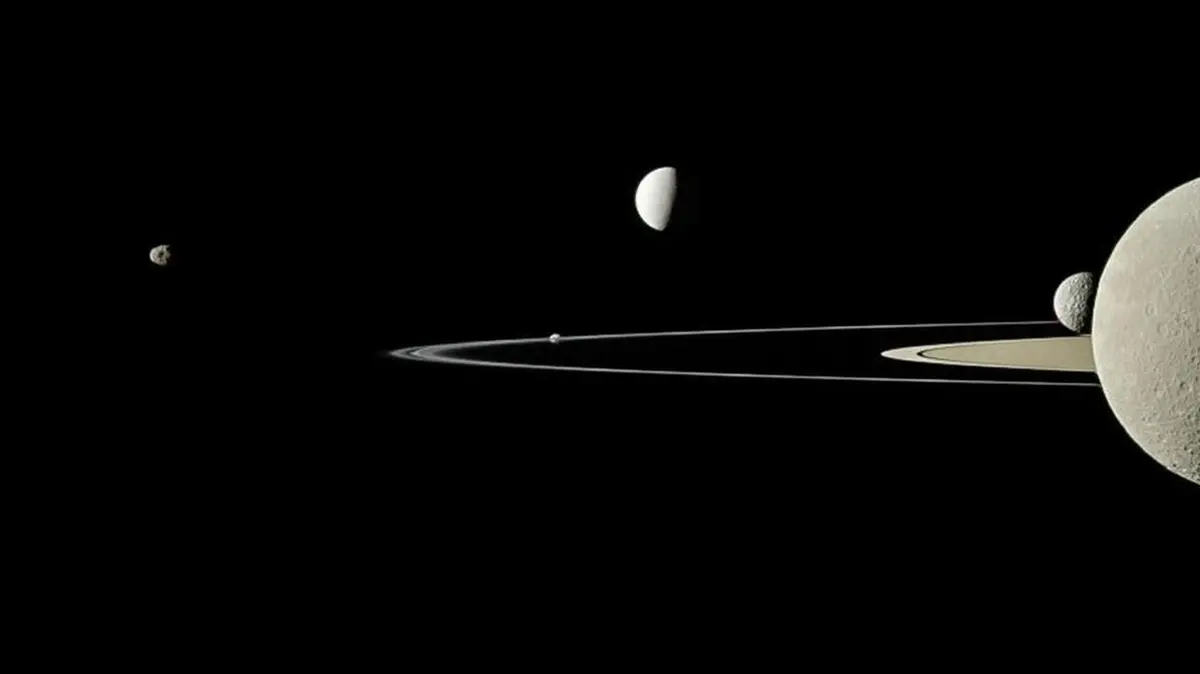
On 16 March 2026, the Minor Planet Center (MPC) announced the confirmation of 15 new moons: 11 orbiting Saturn and 4 orbiting Jupiter. With these additions, Saturn’s tally of known natural satellites rose to 285 and Jupiter’s to 101. The discoveries highlight advances in astronomical surveys and underscore the MPC’s central role in tracking small bodies in the Solar System.
Background
The Minor Planet Center operates under the International Astronomical Union and is hosted by the Smithsonian Astrophysical Observatory in the United States. It acts as the global clearing‑house for observations of asteroids, comets and irregular satellites collected by professional and amateur astronomers. The MPC compiles measurements, computes orbits, assigns provisional designations and publishes data, making positional information on over 700,000 minor planets — including more than 18,000 near‑Earth objects — publicly available. The centre’s work is funded by NASA and is vital for monitoring objects that could pose a hazard to Earth.
The new moons
- Small and faint: The newly catalogued moons are tiny, measuring only about 2–3 km in diameter. Their apparent brightness is extremely low (25–27th magnitude), making them challenging to detect.
- Discovery process: Astronomers used wide‑field telescopes and long exposure times to spot these faint objects. The Vera C. Rubin Observatory, scheduled to begin operations soon, will dramatically increase the discovery rate of small moons through its automated survey system.
- Verification: Once candidate objects are found, repeated observations over months confirm that they orbit a giant planet rather than orbit the Sun. The MPC collates and cross‑checks these data before assigning official designations.
Significance
- Understanding planetary formation: Irregular moons are thought to be captured asteroids. Studying their orbits provides clues about the early history of the Solar System and the gravitational interactions of the giant planets.
- Improved tracking: Adding more satellites to the catalogue helps astronomers refine planetary mass estimates and ensures that potential spacecraft encounters are planned safely.
- Public outreach: The MPC’s open database allows researchers and sky enthusiasts worldwide to access up‑to‑date information on asteroids, comets and moons, fostering citizen science.
Conclusion
The confirmation of 15 new moons demonstrates how far detection techniques have progressed since the days of Galileo. The Minor Planet Center’s meticulous work ensures that even the smallest celestial companions are recorded, deepening our understanding of the Solar System’s diversity.
Source: The Hindu

