

Why in news?
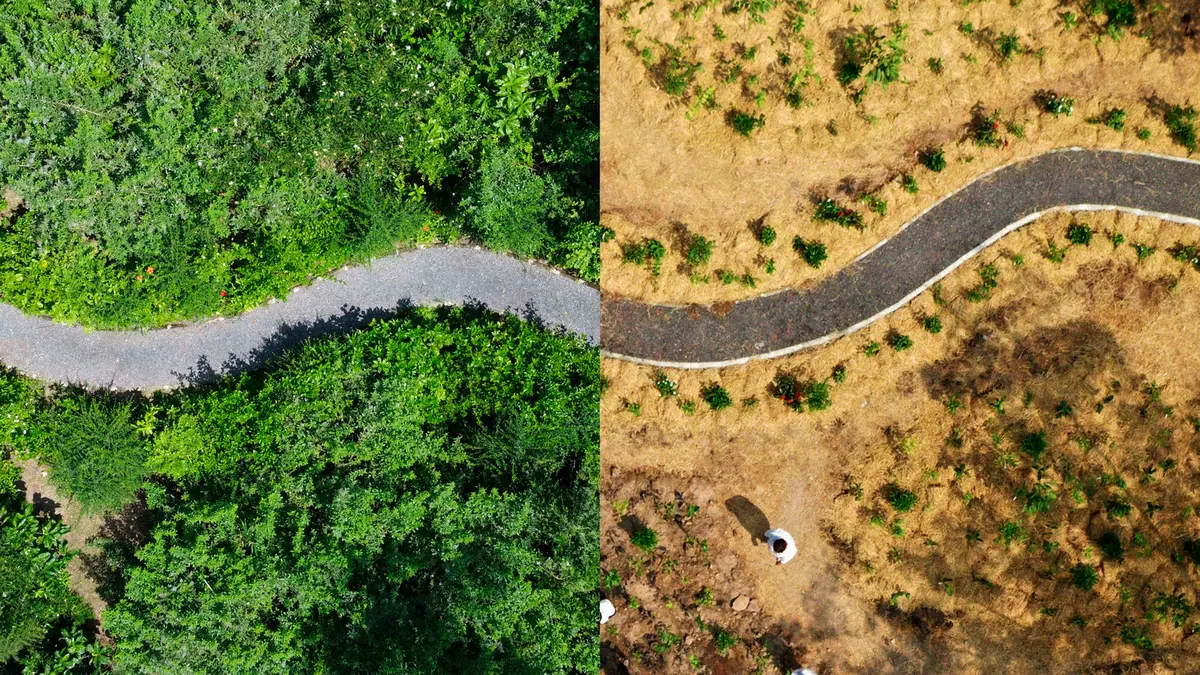
The G20 Global Land Initiative, at a symposium in January 2026, spotlighted the Miyawaki method as a promising way to restore green cover in cities. In India, this dense planting technique has gained popularity for converting small urban plots into thriving mini‑forests that improve air quality and biodiversity. Recent success stories from schools and neighbourhoods have renewed interest in how Miyawaki forests work.
Background
Developed in the 1970s by Japanese botanist Dr Akira Miyawaki, the method replicates natural forest succession. Instead of orderly rows of a single species, it involves planting a mix of native trees, shrubs and groundcover very close together. By mimicking the layers of a mature forest, it jump‑starts ecological processes that would otherwise take decades. The idea was inspired by the sacred chinju‑no‑mori groves that protect local temples in Japan.
How a Miyawaki forest is created
- Site and soil preparation: Before planting, the soil is loosened and enriched with compost. This helps young roots penetrate easily and stores moisture.
- Species selection: A diverse mix of 30 or more native species is chosen to reflect the forest’s natural layers – canopy trees, sub‑canopy, shrubs and groundcover. Native plants support local wildlife and are suited to the climate.
- Dense planting: Three to five saplings are placed in each square metre. The close spacing forces plants to compete for sunlight and grow vertically, quickly forming a closed canopy.
- Mulching and maintenance: A layer of mulch conserves moisture and suppresses weeds. Regular watering and weeding are required only for the first two or three years; after that the forest becomes self‑sustaining.
Benefits and challenges
- Rapid growth and density: These mini forests grow up to ten times faster than conventional plantations and become 30 times denser, providing shade, absorbing carbon and reducing noise within a few years.
- Biodiversity boost: Native plants attract birds, butterflies and insects, bringing life back into concrete landscapes. Studies have shown that Miyawaki plots in India can sequester more than six times the carbon they stored in their first year within five years.
- Urban cooling and well‑being: Dense foliage lowers local temperatures, improves air quality and offers residents a green retreat. Small plots can be created in schools, housing societies or roadside verges, making the approach scalable.
- Misconceptions and care: Some critics worry the method is unnatural because of its density; however, it mimics how forests naturally regenerate after disturbance. Site selection is vital — the technique should not replace grasslands or wetlands. Choosing unsuitable species or neglecting early maintenance can hinder success.
Conclusion
The Miyawaki method demonstrates how communities can reclaim degraded urban land and restore ecological balance. While not a silver bullet for all types of ecosystems, it offers a practical and inspiring tool for greening cities, provided local species, careful planning and community involvement guide the process.
Source: TOI