

Why in news?
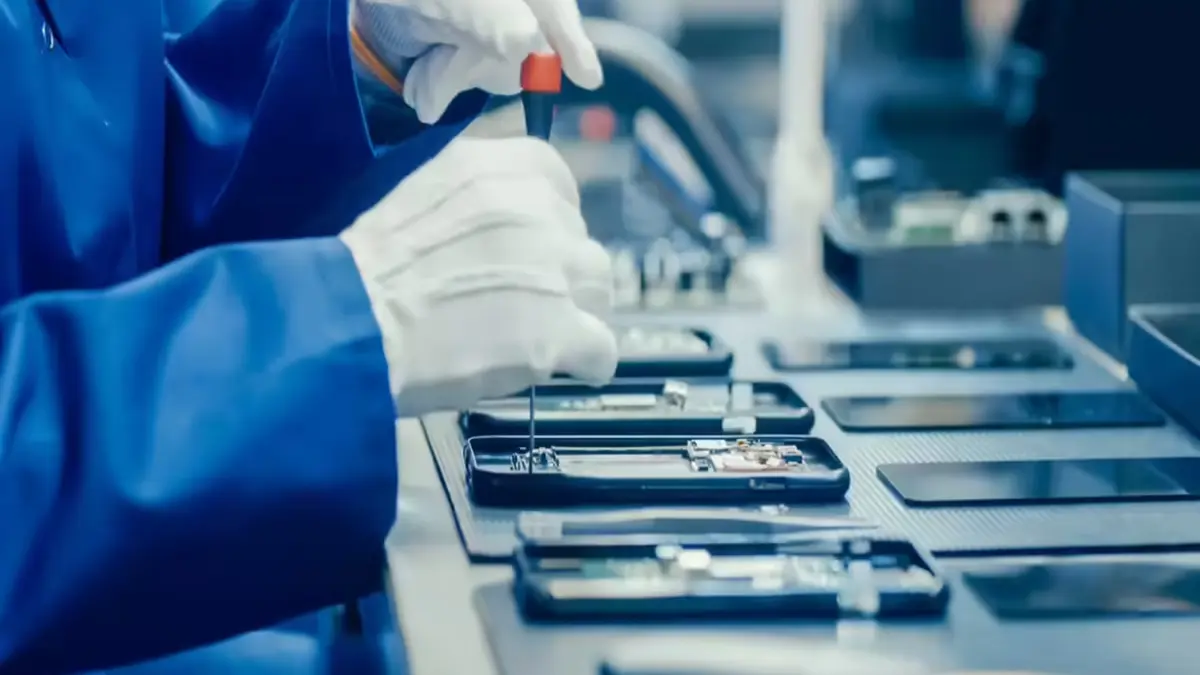
The Union Cabinet approved the Mobile Phone Manufacturing Scheme. It carries an outlay of ₹62,500 crore. Incentives will run for five financial years from 2026–27. The scheme seeks deeper production, design and component-making within India.
Background
India once imported most finished mobile phones sold domestically, and local factories later expanded assembly and increasingly supplied export markets.
The government supported this shift through tariffs, infrastructure and production incentives. Global companies also diversified manufacturing beyond existing Asian centres.
India is now the world’s second-largest mobile phone manufacturer by volume, and China holds the leading position.
About 99.2 per cent of phones used in India are manufactured domestically. However, many high-value components still come from abroad.
Domestic assembly and domestic value addition are therefore different. Assembly can occur locally while imported parts retain much product value.
What is the new scheme?
The Ministry of Electronics and Information Technology will administer the Mobile Phone Manufacturing Scheme.
The scheme provides performance-linked financial support, and approved firms must achieve specified production, sales or sourcing conditions.
Its five-year period covers financial years 2026–27 through 2030–31, and a financial year runs from April through March.
The approved outlay is ₹62,500 crore, and an outlay is the government’s maximum planned expenditure, subject to scheme rules.
Do not confuse: ₹62,500 crore is the incentive outlay. ₹39 lakh crore is projected cumulative production under the scheme.
How will incentives work?
- Base incentives range from 2.25 to 5 per cent of eligible sales.
- Eligible phones must be manufactured in India under approved conditions.
- Domestic sourcing can earn an additional incentive up to 1.5 per cent.
- The sourced items must be identified components or important subassemblies.
- Product design and research can earn another 3 per cent incentive.
- This design incentive aims to help Indian brands build intellectual property.
Eligible sales are not necessarily a company’s entire turnover, and scheme guidelines define which products and transactions qualify.
The percentages should not be added automatically for every firm, and each incentive has separate eligibility and performance requirements.
What does domestic value addition mean?
Domestic value addition is the value created inside India, and it includes local components, labour, design, software and manufacturing services.
Simple assembly adds some value, but advanced components add considerably more. Displays, cameras, batteries and chip packaging are important examples.
Higher domestic value addition reduces exposure to overseas disruptions, and it can also create specialised skills and supporting industries.
Why does the scheme support design?
Contract manufacturing builds scale, but product ownership creates lasting commercial power. Brand owners control design, marketing and customer relationships.
Research and development can generate patents and reusable technology, and these assets may earn revenue beyond one manufacturing contract.
The added design incentive therefore targets Indian brands, and it also seeks stronger technological capability and economic security.
What preceded the new scheme?
- The electronics sector expanded rapidly after financial year 2014–15.
- Electronics manufacturing became about seven times larger over the following period.
- Electronics exports rose about eleven times during the same broad period.
- The Production Linked Incentive Scheme for large-scale electronics began during 2020.
- That scheme rewarded incremental production from approved mobile and component manufacturers.
- Its operating period ended on 31 March 2026.
- The new scheme begins from the next financial year.
The new programme follows the earlier incentive scheme. The Cabinet release does not simply describe it as an identical replacement.
What outcomes does the government expect?
The scheme projects cumulative mobile production near ₹39 lakh crore, and this figure covers all five years together.
It also projects about 60,000 direct jobs, and supplier, logistics and service activities could create additional indirect employment.
These figures are expected outcomes, not completed achievements, and actual results will depend upon investment, demand and global competition.
Smartphones became India’s single-largest exported product category during 2025, and they moved ahead of diesel fuel and cut diamonds.
Prelims facts: India ranks second in mobile manufacturing volume. The new programme runs from 2026–27 through 2030–31.
What wider benefits are possible?
- A deeper supplier network can reduce imported component dependence.
- Large production runs can lower average manufacturing costs.
- Design capability can strengthen Indian brands in overseas markets.
- Research investments can create patents and specialised employment.
- Diverse supply chains can improve resilience during international disruptions.
What challenges remain?
India still imports several sophisticated parts and production machines, and semiconductor capability also requires large capital and dependable infrastructure.
Incentives must reward genuine additional value, not routine production, and transparent verification can reduce inflated claims or repeated counting.
Factories also require skilled workers, reliable power and efficient ports, and environmental rules must address electronic waste and industrial pollution.
Finally, firms should remain competitive after incentives end, and permanent dependence would weaken the scheme’s long-term purpose.
Conclusion
The scheme moves policy beyond basic assembly towards components and design. Strong monitoring will determine whether projected scale creates lasting capability.