Why in news?
Wildlife experts have raised the alarm that untreated sewage from hotels and lodges serving pilgrims in Kollur is flowing into the Souparnika river and entering the core area of the Mookambika Wildlife Sanctuary. The pollution threatens aquatic life and the fragile ecosystems of this Western Ghats reserve.
Background
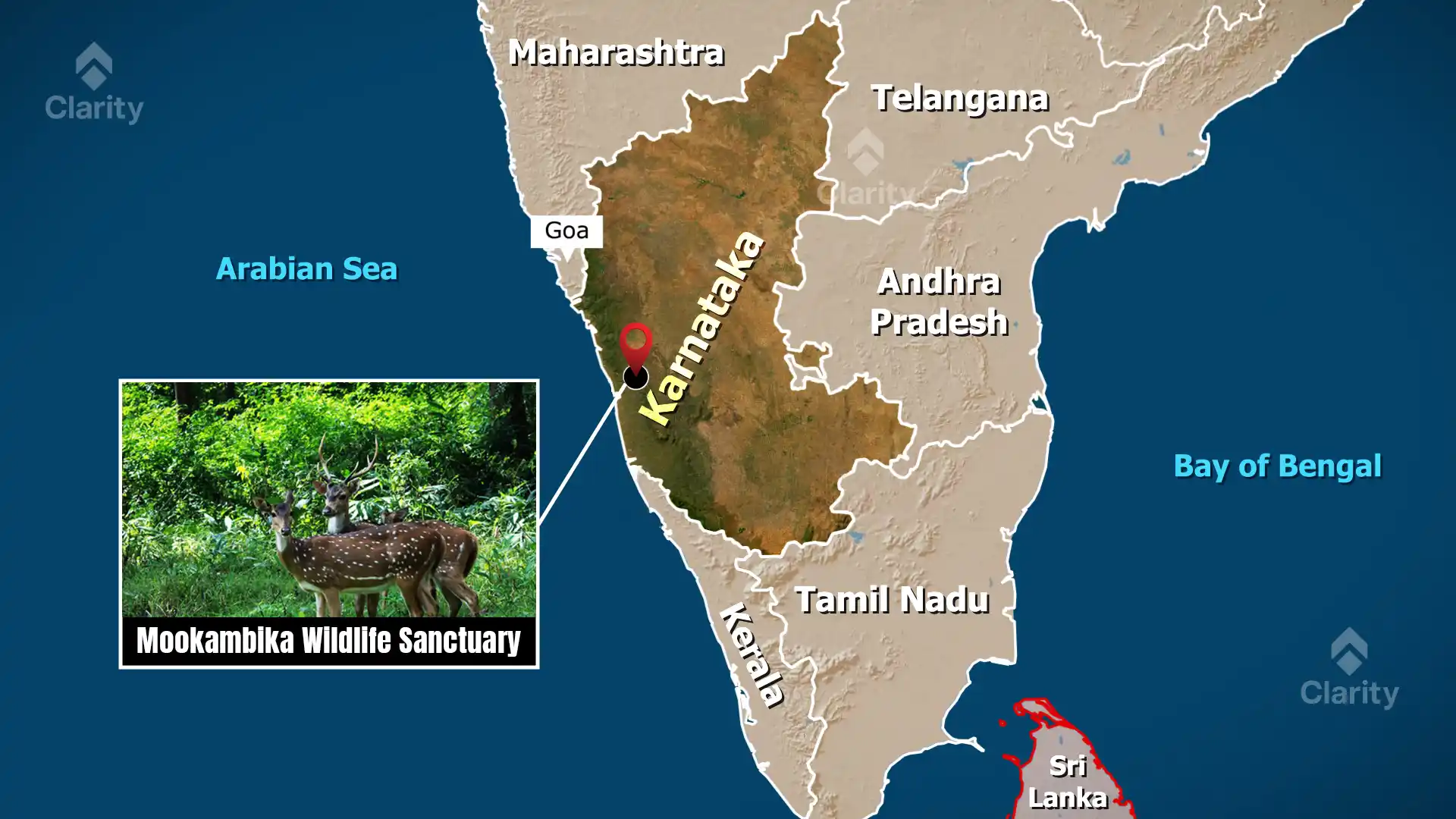
Mookambika Wildlife Sanctuary is located in Udupi district of Karnataka and spans roughly 370 square kilometres. Situated in the biodiversity‑rich Western Ghats, it forms a corridor between Someshwara Wildlife Sanctuary to the south and Sharavathi Wildlife Sanctuary to the north. The sanctuary takes its name from the Mookambika Temple at Kollur, a major pilgrimage centre on its periphery. At its heart rises the Kodachadri peak, often called a “botanical paradise”. Rivers Chakra and Souparnika flow through the reserve, nourishing evergreen, semi‑evergreen and moist deciduous forests.
Ecological features
- Flora: The forests host trees such as Dipterocarpus indicus, Calophyllum tomentosum and Hopea parviflora. A rare climbing plant, Coscinium fenestratum, also grows here. Small pockets of teak plantations exist along with natural vegetation.
- Fauna: The sanctuary is home to elusive species like the slender loris and the lion‑tailed macaque. Large mammals include tigers, leopards, sloth bears, sambar and chital deer, gaur and wild pigs. Otters and other aquatic life depend on clean rivers.
Pollution concerns
- Sewage discharge: Commercial establishments serving pilgrims have been discharging sewage and sludge into the Souparnika river. During the dry summer months the river’s flow is reduced, so untreated waste travels directly into the sanctuary’s core area.
- Legal action: An activist filed a petition before the National Green Tribunal (NGT). In January 2026 the NGT directed the Udupi Deputy Commissioner and the Karnataka Urban Water Supply and Drainage Board to submit a plan for stopping the pollution, including details of waste volumes, treatment capacity and timelines.
- Importance of clean rivers: Souparnika and Chakra rivers sustain the sanctuary’s forests and wildlife. Pollution can harm fish, amphibians and other aquatic organisms and may bioaccumulate in animals that drink from or feed in the rivers.
Significance
Mookambika Wildlife Sanctuary lies within the Western Ghats, a UNESCO World Heritage site and one of the world’s biodiversity hotspots. Protecting its rivers from sewage is essential for conserving rare species and maintaining ecological connectivity. The issue also highlights the need to balance religious tourism with environmental stewardship.
Sources: Deccan Herald