

Why in news?
Researchers have shown that spores of the common moss Physcomitrium patens can survive extended exposure to the harsh environment of space. After nearly nine months outside the International Space Station (ISS), over 80 percent of the spores remained viable and later germinated, sparking discussion about using simple plants to support human missions to the Moon or Mars.
Background
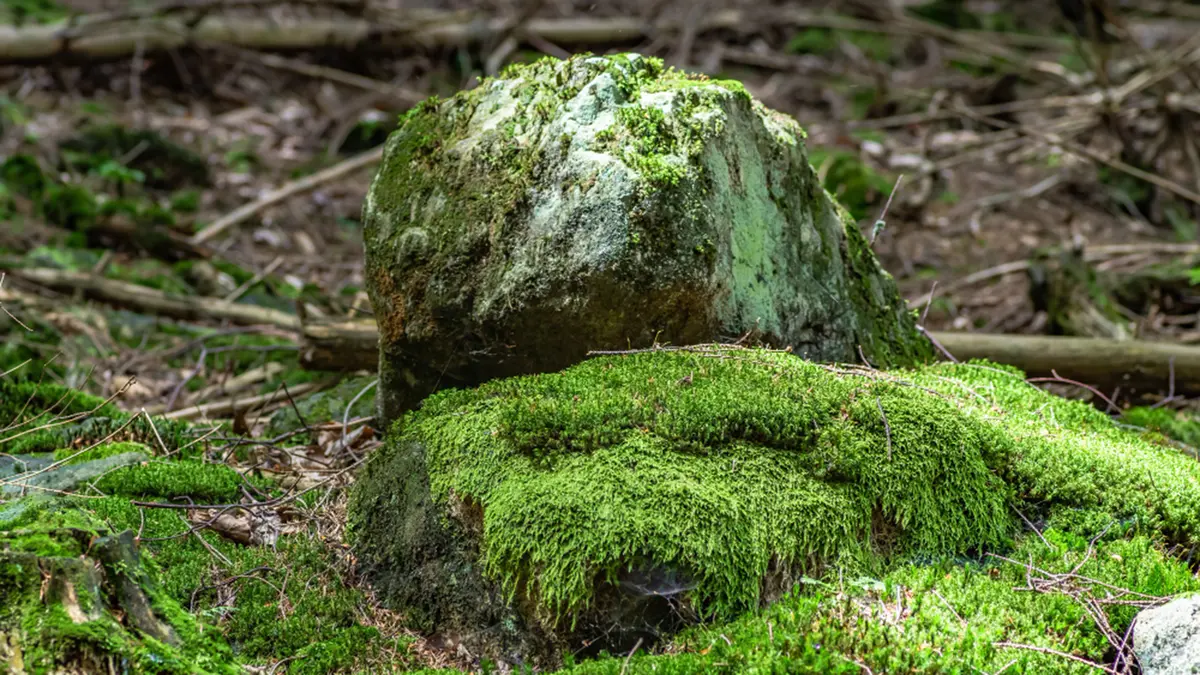
Mosses are small, non‑vascular plants belonging to a group called bryophytes. They lack roots and vascular tissue, absorbing water and nutrients directly through their leaves. Mosses reproduce via tiny spores rather than seeds and can colonise rocks, walls and barren soils across the globe, from deserts to polar regions. Because they can withstand desiccation and quickly resume growth when water is available, mosses are among the earliest colonisers of new environments.
The space experiment
- Experiment design: Japanese scientists placed around 20,000 moss spores on a platform outside the ISS for 283 days. The spores were exposed to extreme temperature swings, cosmic radiation and the vacuum of space.
- Survival and germination: Upon return to Earth, more than 80 percent of the spores germinated. While the amount of chlorophyll a dropped by about 20 percent, chlorophyll b and carotenoid levels remained largely normal.
- Protective mechanisms: The spores’ multiple wall layers and naturally dehydrated state appear to provide passive shielding from radiation and temperature extremes. Researchers estimate that similar spores could survive in low‑Earth orbit for up to 15 years.
Significance
- Life‑support systems: Mosses photosynthesise, releasing oxygen and absorbing carbon dioxide. They can also regulate humidity and contribute to the formation of soil by trapping dust and secreting organic acids.
- Space agriculture: Demonstrating that moss can survive space exposure suggests that hardy plants could be grown on lunar or Martian bases for air purification, water recycling and psychological well‑being.
- Astrobiology insights: The experiment improves our understanding of how plant propagules tolerate cosmic radiation, aiding the search for life on other planets and informing planetary protection measures.
Conclusion
The resilience of moss spores highlights the adaptability of seemingly simple plants. As humanity plans longer missions beyond Earth, such hardy organisms may play a role in creating sustainable habitats in space by providing oxygen, regulating humidity and helping to establish soil on otherwise barren worlds.
Sources: The Indian Express,