

Why in news?
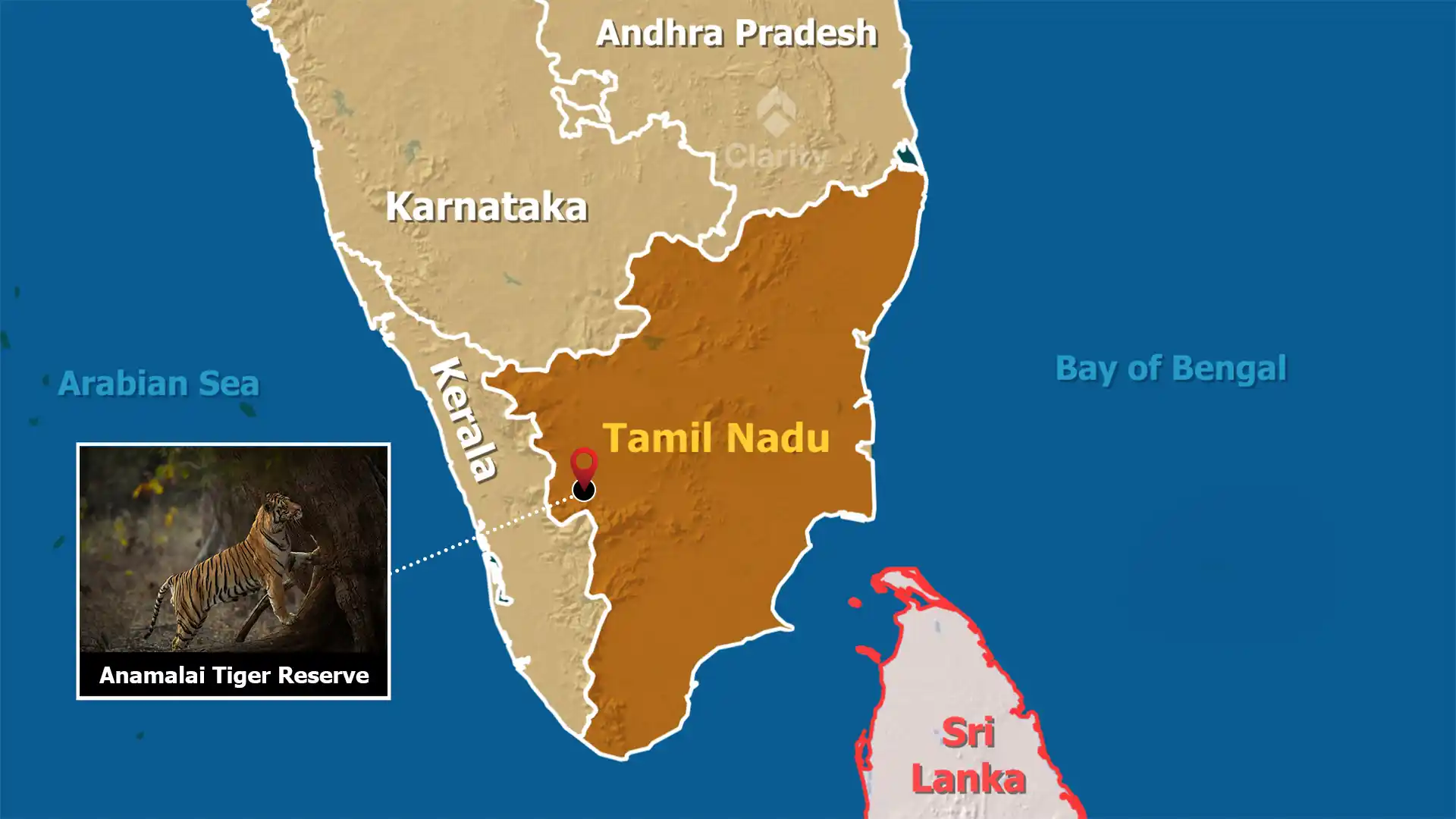
Forest staff in Tamil Nadu’s Anamalai Tiger Reserve began using the Monitoring System for Tigers: Intensive Protection and Ecological Status (M‑STRiPES) mobile application as part of the All India Tiger Estimation survey starting on 8 January 2026. The app replaces paper‑based forms and is expected to improve data collection.
Background
M‑STRiPES was launched in 2010 by the National Tiger Conservation Authority (NTCA) in collaboration with the Wildlife Institute of India. It is a software and mobile‑based system that allows forest staff to record observations such as tiger sightings, scat, pugmarks and prey abundance along pre‑defined transects. The app uses the Global Positioning System (GPS) and remote‑sensing data to geo‑tag each observation. Information is uploaded to a central database where it is analysed using geographic information systems (GIS) to assess tiger populations and habitat quality.
How the app works
- Digital data collection: Field staff enter observations into the smartphone app rather than filling out paper sheets. The app records the GPS track of the patrol and ensures that sightings are accurately located.
- Integration with GIS: Observations are processed along with satellite imagery to map tiger ranges, movement corridors and habitat disturbances. This helps identify areas needing increased protection.
- Real‑time monitoring: Through regular uploads, managers receive near‑real‑time updates on field activities. This improves accountability and reduces data loss.
- Capacity building: Training programmes are organised to familiarise forest guards with smartphone usage, ensuring reliable data entry even in remote areas.
About Anamalai Tiger Reserve
- Location: Spread over about 1,108 km² in the Western Ghats along the Tamil Nadu–Kerala border, the reserve comprises tropical evergreen forests, deciduous woods, grasslands and plantations.
- Biodiversity: The area harbours tigers, elephants, leopards, gaurs, Nilgiri tahrs and endemic primates like the lion‑tailed macaque. Many indigenous communities, including the Malasar and Pulayar people, live in and around the reserve.
- Conservation success: The tiger population has risen from around ten individuals in 2014 to at least 25 in 2022, according to previous surveys. Officials expect the new digital methods to reveal further increases.
Significance
- Improved accuracy: Digital records reduce errors associated with manual data entry and provide spatially explicit information for better decision‑making.
- Enhanced protection: By tracking patrol efforts and tiger signs, managers can allocate resources to vulnerable areas and respond quickly to threats such as poaching or human–wildlife conflict.
- Nationwide application: M‑STRiPES has been adopted across many tiger reserves in India, contributing to more reliable national population estimates.
Conclusion
The adoption of the M‑STRiPES app in Anamalai Tiger Reserve reflects India’s shift toward technology‑driven wildlife conservation. By strengthening data collection and accountability, such tools support the long‑term recovery of the country’s tiger population.
Sources: The New Indian Express