

Why in news?
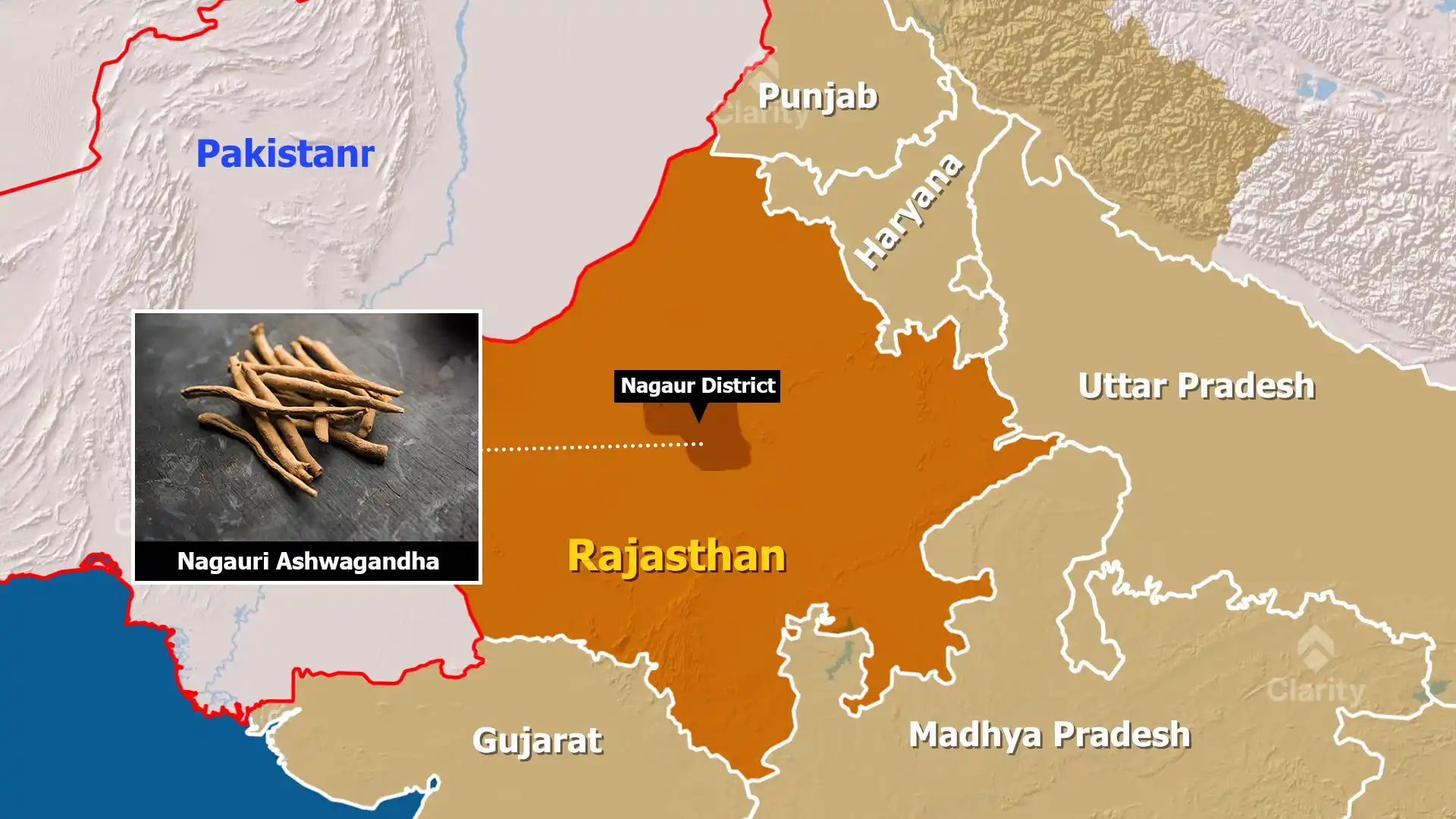
The Centre has granted a Geographical Indication (GI) tag to Nagauri Ashwagandha, a distinctive variety of the medicinal herb Withania somnifera grown mainly in Rajasthan’s Nagaur district. The GI tag recognises the herb’s unique qualities and is expected to boost its marketability and protect farmers against imitation products.
Background
Ashwagandha, often called Indian ginseng or winter cherry, is an undershrub that has been used in Ayurvedic medicine for centuries to reduce stress, strengthen immunity and improve vitality. It grows well in dry, semi‑tropical regions on sandy loam soils with pH 7.5–8.0 and tolerates temperatures from 20 °C to 38 °C. The semi‑rainfed crop thrives with annual rainfall of 500–750 mm. Major producing states include Madhya Pradesh, Rajasthan, Punjab, Haryana, Uttar Pradesh and Gujarat.
What makes Nagauri Ashwagandha special?
- Ideal habitat: Nagaur district’s arid climate and sandy soil produce robust plants with thick, starchy roots rich in medicinal alkaloids.
- Characteristic roots and berries: The roots are longer and denser than those of other varieties, while the berries turn a dark, bright red, signalling high quality.
- High alkaloid content: The roots are prized in Ayurveda for their concentration of withanolides and other compounds believed to reduce inflammation, boost energy and relieve anxiety.
Growing conditions and benefits
- Soil and climate: The plant prefers well‑drained sandy loam or light red soils. It is sown late in the rainy season and harvested in winter.
- Medicinal uses: Ashwagandha acts as an adaptogen, helping the body cope with stress. It is used to reduce inflammation, improve sleep, ease pain and support overall well‑being.
- Regional importance: This is only the second agro‑herbal product from Rajasthan to receive a GI tag (after Sojat henna), highlighting the state’s herbal heritage.
Significance of the GI tag
- Authenticity and protection: The tag legally protects the name “Nagauri Ashwagandha” and prevents misuse by producers outside the region.
- Market value: The recognition can increase demand and help farmers secure better prices in domestic and international markets.
- Promotion of traditional knowledge: The tag draws attention to India’s rich tradition of herbal medicine and encourages sustainable cultivation.
Source: ETV Bharat